
According to Reuters reporter Lucia Mutikani, initial applications for unemployment benefits rose by 13,000 to 225,000, the highest level in four months. Continuing claims edged lower, indicating that many displaced workers eventually find employment. The figures arrive alongside strong payroll reports and low unemployment, illustrating that hiring and job loss are occurring simultaneously rather than sequentially.
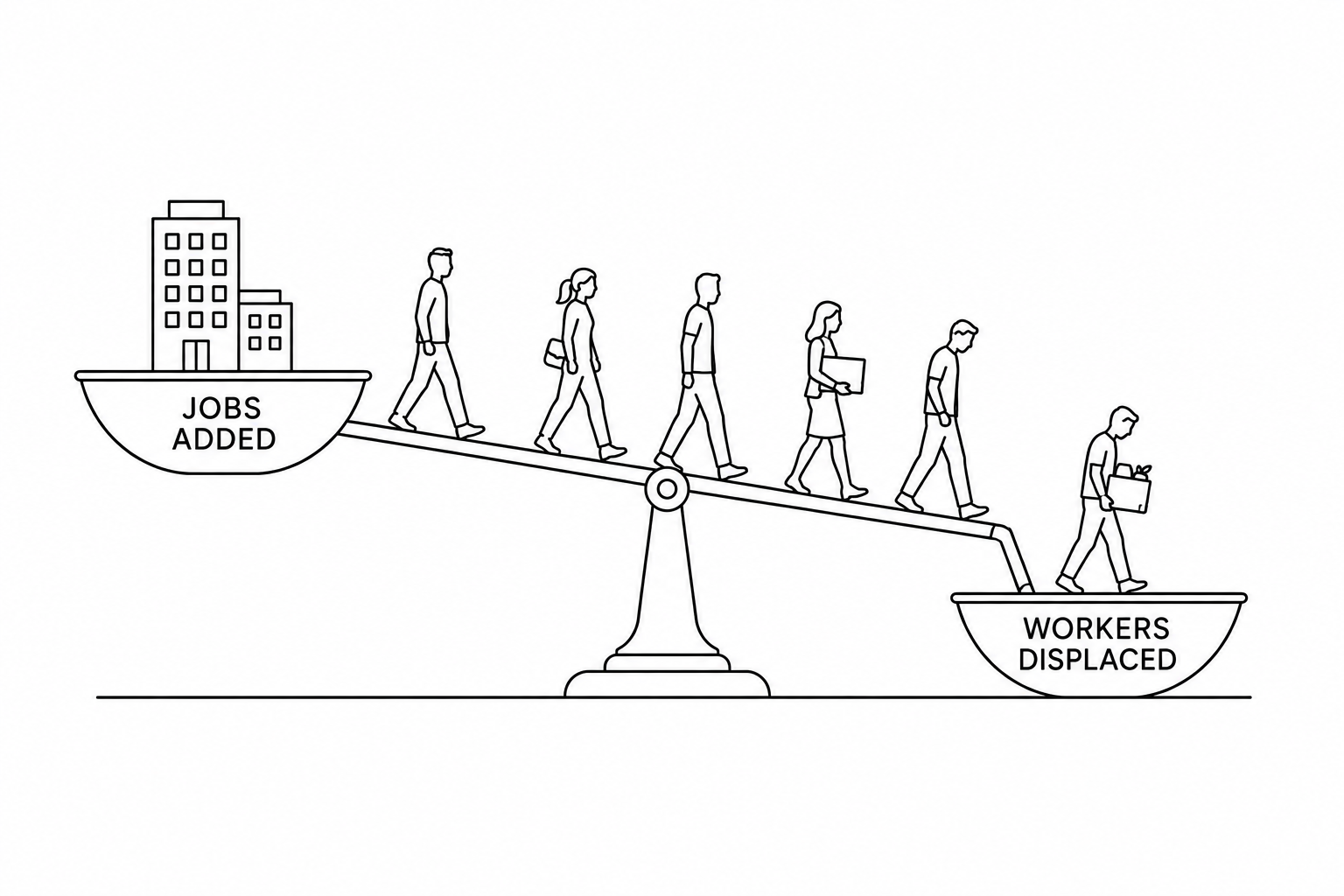
The defining feature of today’s labor market is churn. Employers continue adding workers while restructuring departments, adopting artificial intelligence, automating routine functions, and eliminating existing positions. Employment growth and displacement are increasingly part of the same economic cycle rather than opposite conditions.
Every new unemployment claim represents more than a statistical event. It marks an interruption of income, retirement contributions, and often employer-sponsored healthcare coverage. At precisely the moment many households become financially vulnerable, they must also navigate a healthcare system in which eligibility and access are becoming more uncertain. The economic cost of churn extends well beyond the paycheck that disappears.
Those costs are not distributed evenly. Workers in lower-wage occupations, smaller businesses, and positions requiring fewer formal credentials are more likely to cycle between employment and unemployment. The same segments of the workforce that benefit from headline hiring gains frequently absorb the greatest instability when restructuring occurs. Aggregate labor strength can coexist with concentrated worker insecurity.
Challenger, Gray & Christmas documented ongoing job cuts, with employers citing artificial intelligence as the leading stated cause for the third consecutive month — the highest May cut total since 2020. Millions of Americans remain disconnected from stable work despite positive headline indicators, with long-term unemployment producing documented mental health consequences that compound the financial ones. The ADP payroll report showed continued hiring in the same period. These are not competing narratives. They are measurements of the same labor market viewed from different angles.
Public confidence in the economy increasingly reflects lived experience rather than aggregate statistics. A worker who watches colleagues laid off, spends months navigating algorithmic hiring systems, or repeatedly cycles between jobs does not experience the labor market as stable simply because payroll totals remain strong. Employment statistics measure how many jobs exist. They do not measure how secure those jobs feel.
The challenge confronting policymakers is not merely creating employment. It is determining who bears the risks created by an economy built around continuous restructuring. If hiring continues while instability is transferred onto workers through recurring layoffs, automation, interrupted healthcare coverage, and repeated job searches, the United States will sustain a statistically healthy labor market while producing a workforce that experiences permanent economic insecurity.