
Part of Global / Structural Reality — examining how systems produce unequal outcomes across borders.
The United States has been quietly building a deportation infrastructure across the African continent, and the Democratic Republic of Congo became its latest node this week.
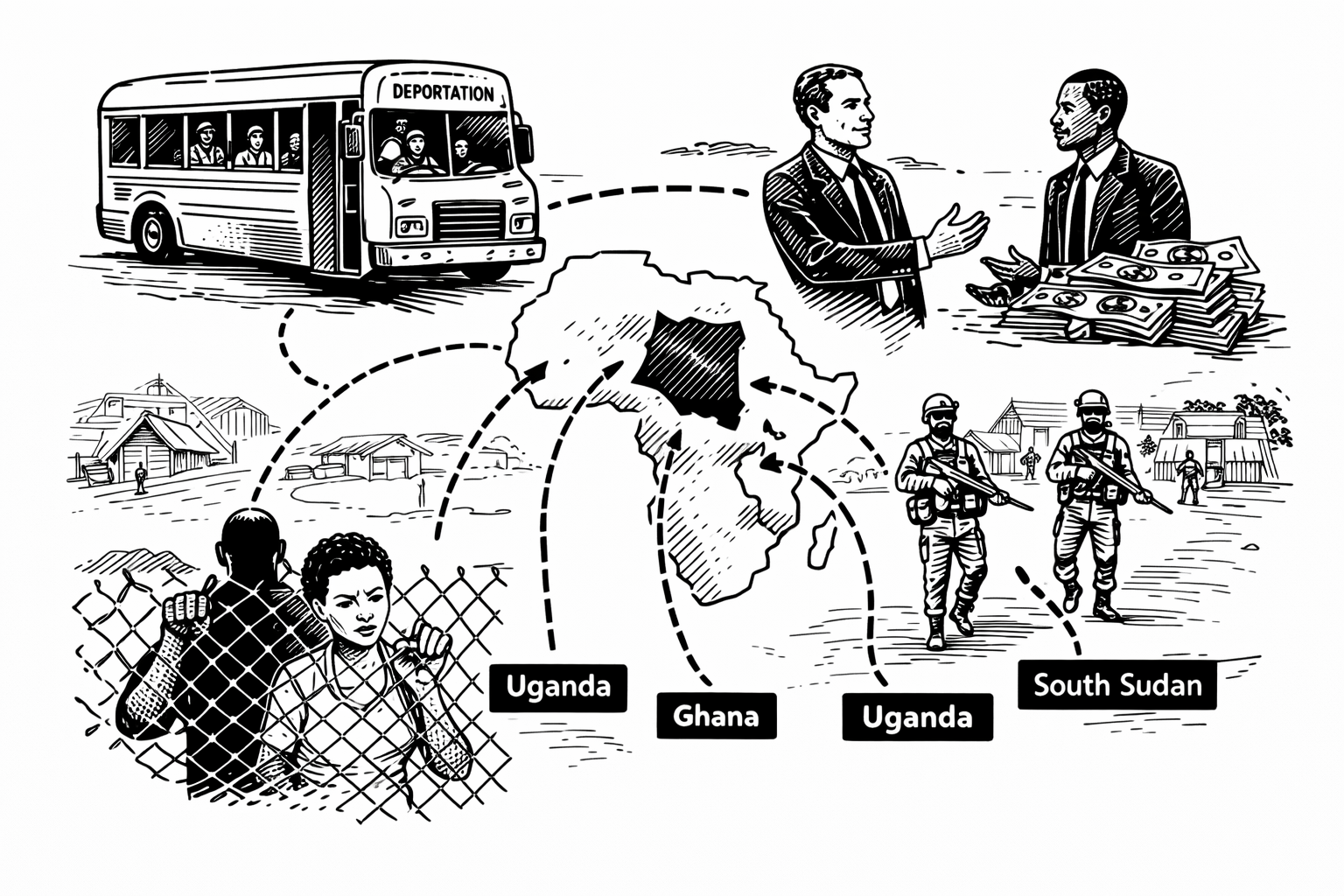
DR Congo agreed in early April to accept US deportees under the controversial third-country deportation policy — joining Uganda, Rwanda, Ghana, Eswatini, Cameroon, South Sudan, and Equatorial Guinea in a network of African countries receiving people deported from the United States, with the US having spent an estimated $40 million on the program as of April 2026, including $32 million distributed to five countries. The logic of the program is transactional: African governments receive financial and diplomatic consideration in exchange for accepting deportees, including people with no prior connection to the receiving country. The people being deported did not choose the country they are being sent to. They have no cultural ties, no language, no family networks, no legal infrastructure to navigate upon arrival. They are being placed in a country selected by a bilateral agreement they had no voice in negotiating.
The DR Congo deal arrives the same week that Nigerian soldiers were rescuing civilians from an Easter church attack in Kaduna state — a reminder that the security conditions into which deportees are being sent across the continent are not abstractions. At least 26 people were killed in three separate Easter attacks in northern Nigeria, with gunmen targeting worshippers and kidnapping dozens of civilians. The US-Africa deportation network is being built in political and diplomatic negotiations. The people living inside it are navigating ongoing security crises, economic instability, and governance challenges that the bilateral agreements do not address.
As SSC documented in its Canadian immigration coverage, the immigration policy environment is tightening simultaneously across multiple geographies — Canada restructuring its asylum pathways, the UK raising fees and signing deportation agreements, and now the US expanding its third-country deportation network across Africa. These are not isolated national policy decisions. They are a coordinated global contraction of the pathways through which people — disproportionately Black, disproportionately from the Global South — have historically been able to move toward greater safety and opportunity. The African governments joining these programs are making sovereign choices within constrained circumstances, accepting agreements that offer financial resources their governments need while absorbing populations their citizens did not vote to receive.
The communities most directly affected by these agreements — Nigerian Americans, Ghanaian Americans, Congolese Americans, the broader African diaspora navigating an immigration enforcement environment that is more aggressive and less predictable than it has been in decades — are largely absent from the diplomatic negotiations producing them. That absence is structural, and it is the same structural absence SSC has been documenting across its coverage of immigration enforcement, access, and the uneven distribution of who gets to participate in decisions that reshape their lives.