
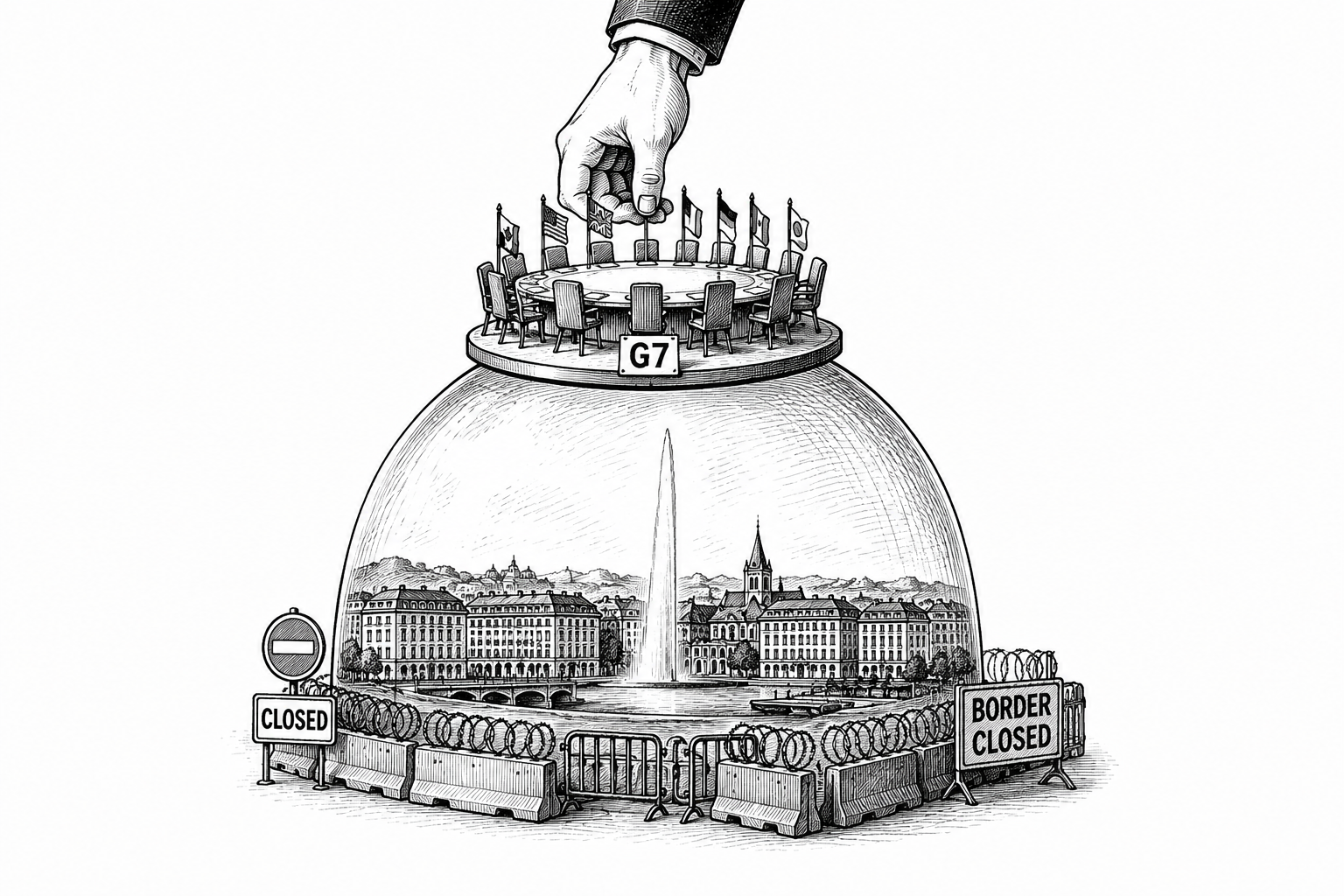
Reuters reported that Geneva is tightening security ahead of a 50,000-person protest against the G7 summit hosted in nearby Évian-les-Bains, France. Geneva will close or control 27 French-Swiss border crossings, Switzerland is deploying 4,000 soldiers, and France will have 8,000 police officers on duty. The security operation is expected to cost Geneva about 20 million Swiss francs, or roughly $25 million.
The summit is not in Geneva, but Geneva is paying for the geography around it. Leaders will land through the city. Protesters will gather there. Businesses are boarding up. Streets, parks, borders, and local routines are being reorganized around an event whose decision-making authority sits above the city — and that is how global governance often works in practice. The official meeting happens inside secure rooms. The disruption travels outward. Small businesses lose sales. Workers face detours. Taxi drivers lose fares. Residents live with barriers erected for people they will never meet.
Security planning makes this rational. Governments anticipate risk and contain it before it becomes damage. But the incentive produces a familiar redistribution: elite mobility is protected by limiting ordinary mobility. The border becomes flexible for leaders and rigid for residents. Power moved from the local public realm to summit security architecture — Geneva’s streets temporarily belong less to residents and more to a cross-border security plan designed around heads of state.
Cities will keep competing for proximity to global power while absorbing the inconvenience of protecting it. The public cost of diplomacy is no longer confined to host venues. It now spreads across the urban systems that make global meetings possible.
SSC News Desk | Social Storytellers Collective
Get SSC analysis delivered to your inbox every day. Subscribe: https://246481934.hs-sites-na2.com/newsletter