
Part of Culture in Motion — examining who defines culture, how it moves, and what it reveals about the moment.
A post circulating online connects two things that don’t belong in the same sentence by the old rules of celebrity culture. Job loss data and a personal relationship. Economic harm and private choice. The tone is blunt, almost deliberately flat. But the reaction it represents is not random, and it is not primarily about Chilli. It is about a shift in how audiences have decided to read proximity to power — and what they’ve decided to do with that reading.
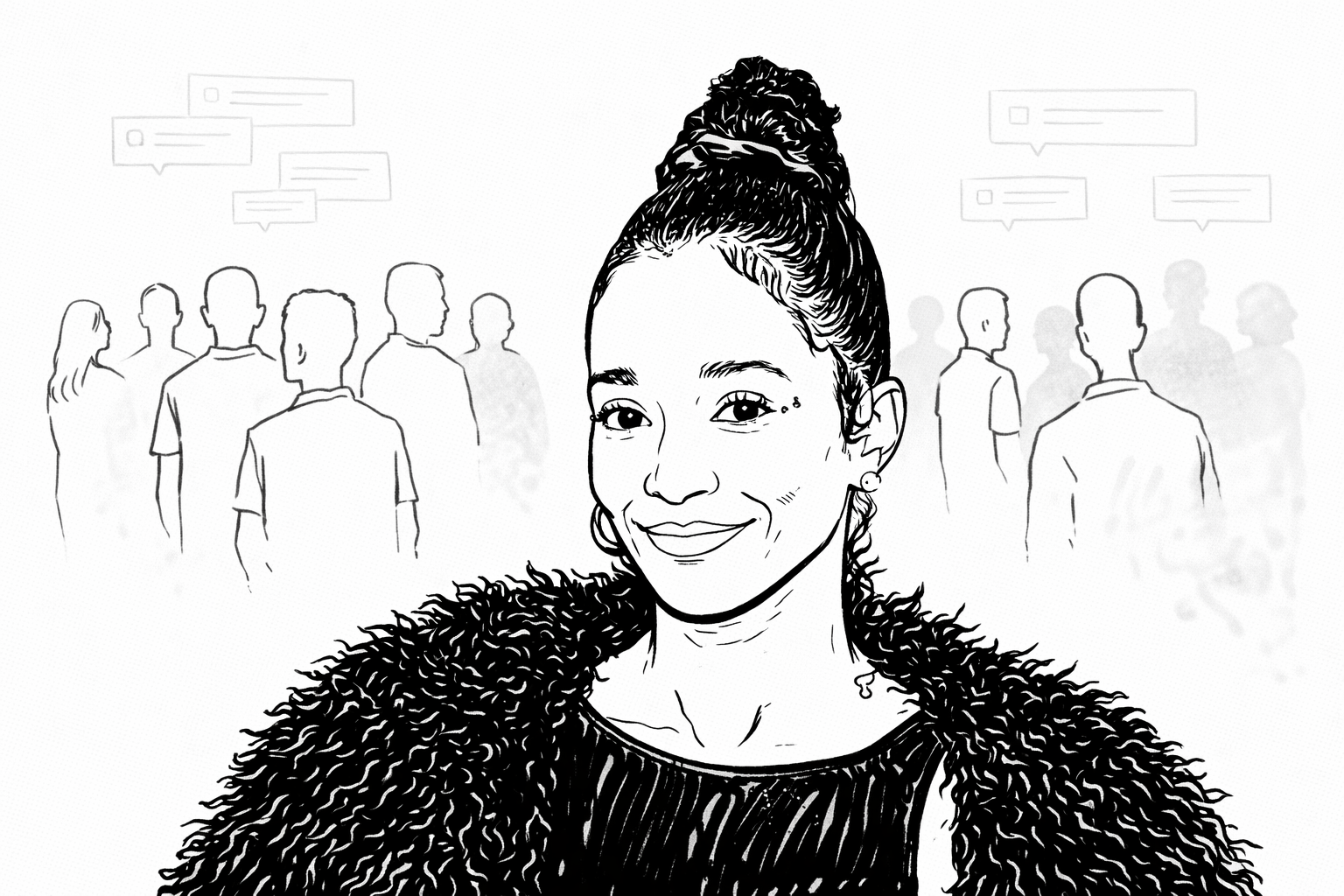
The conversation centers on Chilli, whose relationship has become a point of public scrutiny because of perceived political associations. What might have remained gossip in a different moment is now being processed as signal. Not just who someone is with, but what that relationship implies about where they stand — and more specifically, where they stand relative to the communities that built the platform they occupy. In a different era, the separation between personal life and public meaning held. That separation is no longer holding, and audiences are not mourning its collapse.
That shift is happening alongside a broader change in how people understand consequences. The post references Black women losing jobs, invoking a specific economic vulnerability that has been documented in labor data across multiple cycles of political transition. Whether or not the attribution in any particular post is precise, the emotional logic is clear and deliberate. People are connecting political outcomes to lived experiences — their own and their communities’ — and then extending accountability outward to anyone perceived to be adjacent to those outcomes. The personal has always been political. What is new is how quickly that accounting travels, and how little patience audiences have for the gap between association and acknowledgment.
What makes this moment distinct is how quickly that logic moves and how little it tolerates softening. Social media collapses the distance between policy, personality, and perception. A decision made in one arena becomes commentary in another. A relationship becomes a referendum. And the audience is no longer separating the personal from the political in the way it once did — not because the distinction doesn’t exist, but because the stakes have become too concrete to respond to with abstraction. When Black women are losing jobs, the question of who is adjacent to the power producing that outcome is not theoretical.
As SSC documented in the first piece in this series — The Apology Industrial Complex — the machinery surrounding celebrity controversy has a predictable shape: the mistake, the reaction, the explanation, the repositioning. What this moment adds is a different variable. Audiences who are no longer waiting for the statement. Backlash that is not asking for explanation. The tone of the response to Chilli is not outrage demanding accountability. It is indifference expressing a boundary — a signal that certain kinds of proximity will not be negotiated or softened through narrative, and that the apology cycle, if it comes, will not be received the way it once was.
This creates a specific kind of pressure for Black public figures whose audiences have historically expected a clearer alignment with collective interests. Visibility now comes with interpretation. Silence reads as positioning. Association reads as endorsement. And the margin for neutrality continues to shrink — not because audiences are being unreasonable, but because the framework they are applying is shaped by politics, economics, and identity simultaneously. As SSC covered in When Influence Becomes a Liability , the communities that built these platforms have long understood that their investment in Black public figures — cultural, emotional, economic — was not necessarily being reciprocated. The recalibration happening now is what it looks like when that understanding becomes action.
What’s unfolding here is less about one person and more about a broader shift in the terms of celebrity accountability. Culture is no longer just observing public figures. It is evaluating them in real time, using a framework that has become more immediate, more collective, and less forgiving — because the conditions producing it have become more immediate, more collective, and less abstract.
Why This Matters
As the line between personal life and public meaning continues to dissolve, the cost of association changes — not just for celebrities, but for anyone with visibility. The question is no longer only what you say or do. It is what your proximity signals over time, and who has decided they are done negotiating what that signal means. The backlash to Chilli is one data point in a larger recalibration. Audiences who built these careers through decades of loyalty are not required to absorb the cost of alignment they were never consulted about. That boundary is not new. What is new is how clearly it is being drawn — and how little explanation it is asking for.