
The Supreme Court leaves a free-speech win for UC researchers in place, Washington state heads toward a record eviction year, and the ILO closes its forced-labor case against Saudi Arabia. Meanwhile, an undercover film questions the safeguards inside a British asylum camp, and a string of outages shows how much rides on a few shared systems.
Tuesday opens with five stories about who gets protection when a system fails, and who pays when it doesn’t. A court draws a line around government retaliation, renters meet a shrinking safety net, an international body trades an inquiry for a workplan, a private contractor’s checklist stands in for care, and aging infrastructure keeps failing in public. Here are five things that matter today.
1. The Supreme Court Leaves UC Researchers’ Free Speech Win in Place
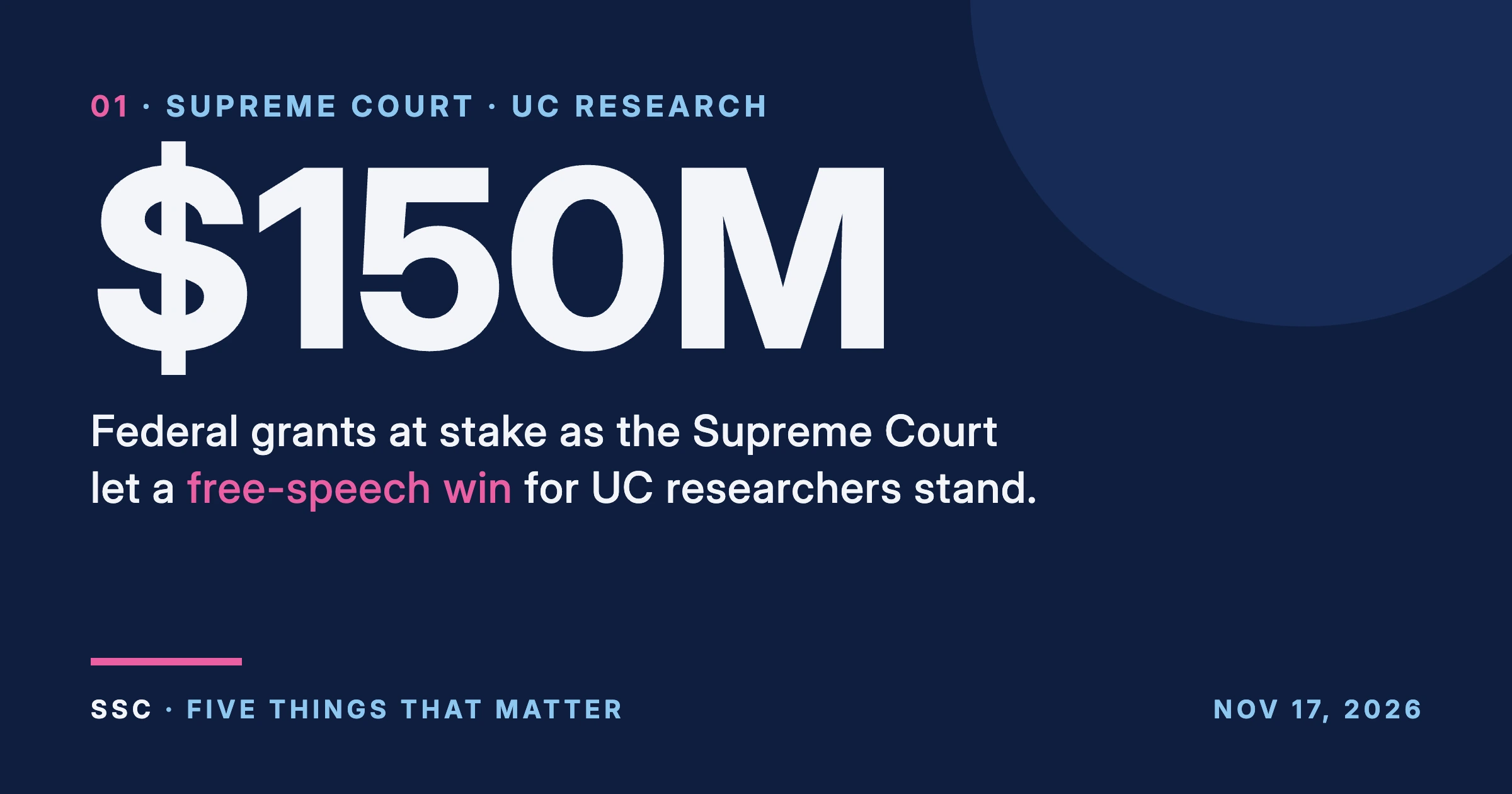
The Supreme Court on Monday refused to rescue the Trump administration’s cancellation of University of California research grants, NBC News’ Lawrence Hurley reported. The order in Trump v. Thakur came without comment or dissent and leaves in place lower-court rulings that cutting grants over keywords like diversity and environmental justice violated researchers’ First Amendment rights. About $150 million in National Science Foundation and National Endowment for the Humanities grants was at stake, according to the Los Angeles Times’ David G. Savage and Jaweed Kaleem. Researchers who want the money back still have to file a separate lawsuit in the Court of Federal Claims.
2. Washington State Is on Pace for Its Worst Eviction Year on Record
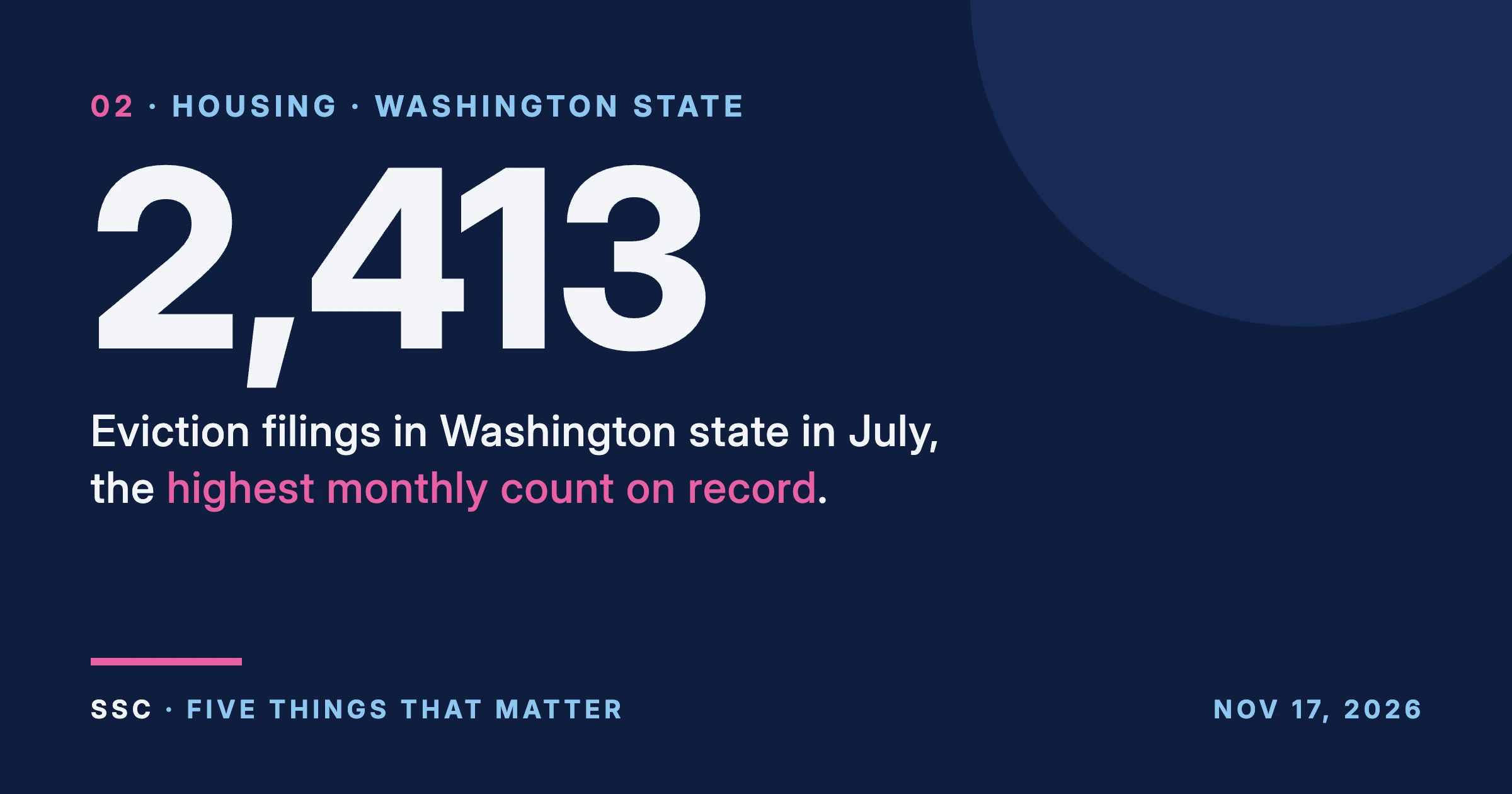
Washington state is on pace for its worst eviction year on record, according to UC Berkeley sociologist Tim Thomas of the Eviction Research Network. July set a monthly high of 2,413 filings, and the 2026 total is projected at about 26,342. One in 44 renter households received a filing in the past year, roughly 52% above the pre-pandemic norm. The help is thinning at the same time: a Bipartisan Policy Center analysis found the share of cities with active emergency rental assistance fell from 28% in 2022 to 12% in 2025, and the federal housing rule we flagged Monday takes effect Dec. 14.
3. The ILO Closes Its Forced-Labor Case Against Saudi Arabia
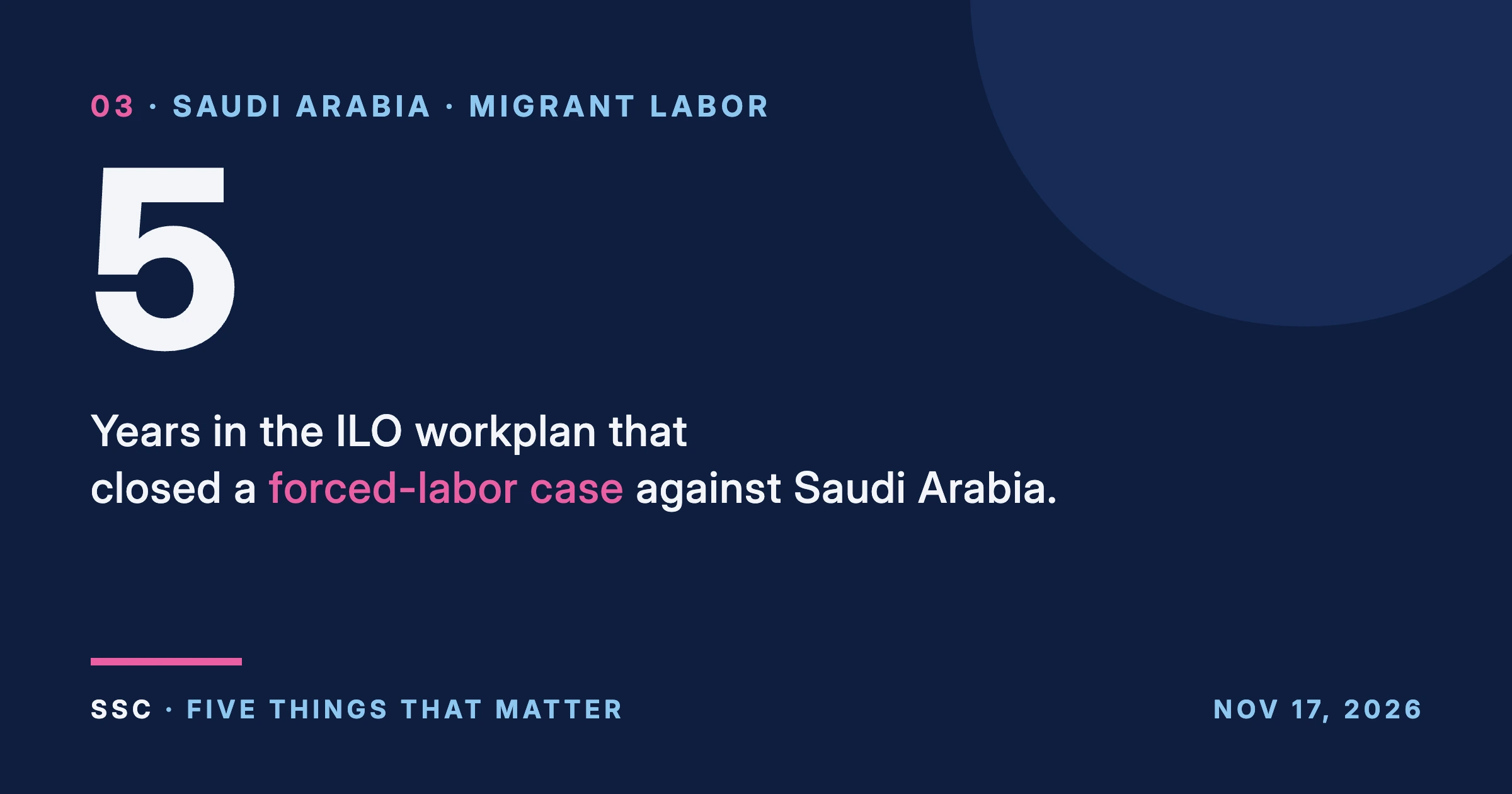
The International Labour Organization on Monday dropped its forced-labor case against Saudi Arabia, accepting a five-year workplan built around six priority areas instead of opening a commission of inquiry. Workers’ delegates from 36 countries filed the complaint in 2025 over forced labor and wage theft under kafala, the system that ties a migrant worker’s legal status to one employer. The ILO closed Qatar’s case the same way in 2017, and Human Rights Watch says migrant workers there still face widespread abuse. Meanwhile, The Star reported that Kenya is targeting 10,000 monthly jobs in Saudi Arabia under a new deal.
4. An Undercover Film Tests the Safeguards Inside a British Asylum Camp
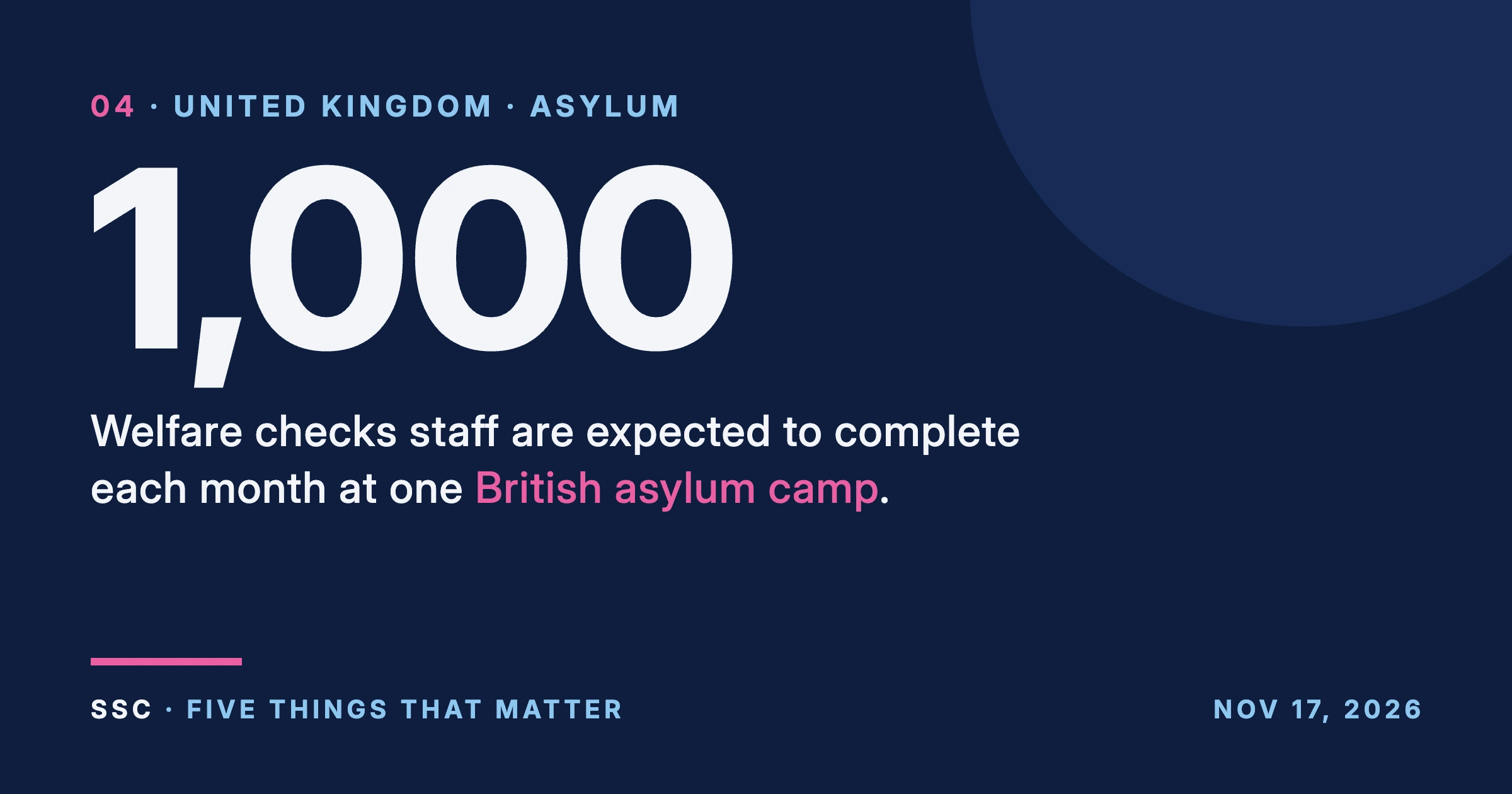
The Guardian’s Diane Taylor reported that an ITV documentary, Inside the Asylum Camp, put an undercover welfare officer inside Crowborough, a former military site where asylum seekers sleep in large dormitories. The camp is run by the private company Clearsprings Ready Homes under contract with the Home Office. The investigator recorded staff describing incomplete welfare checks and identified four or five torture survivors who may have been placed there improperly, although a High Court ruled in May that making torture survivors share rooms was unlawful. Staff are expected to complete about 1,000 checks a month, and Clearsprings says it staffs the camp at roughly 34 people for every 200 residents.
5. A Router, a Bug and a Hold on the Tracks Show the Same Weakness
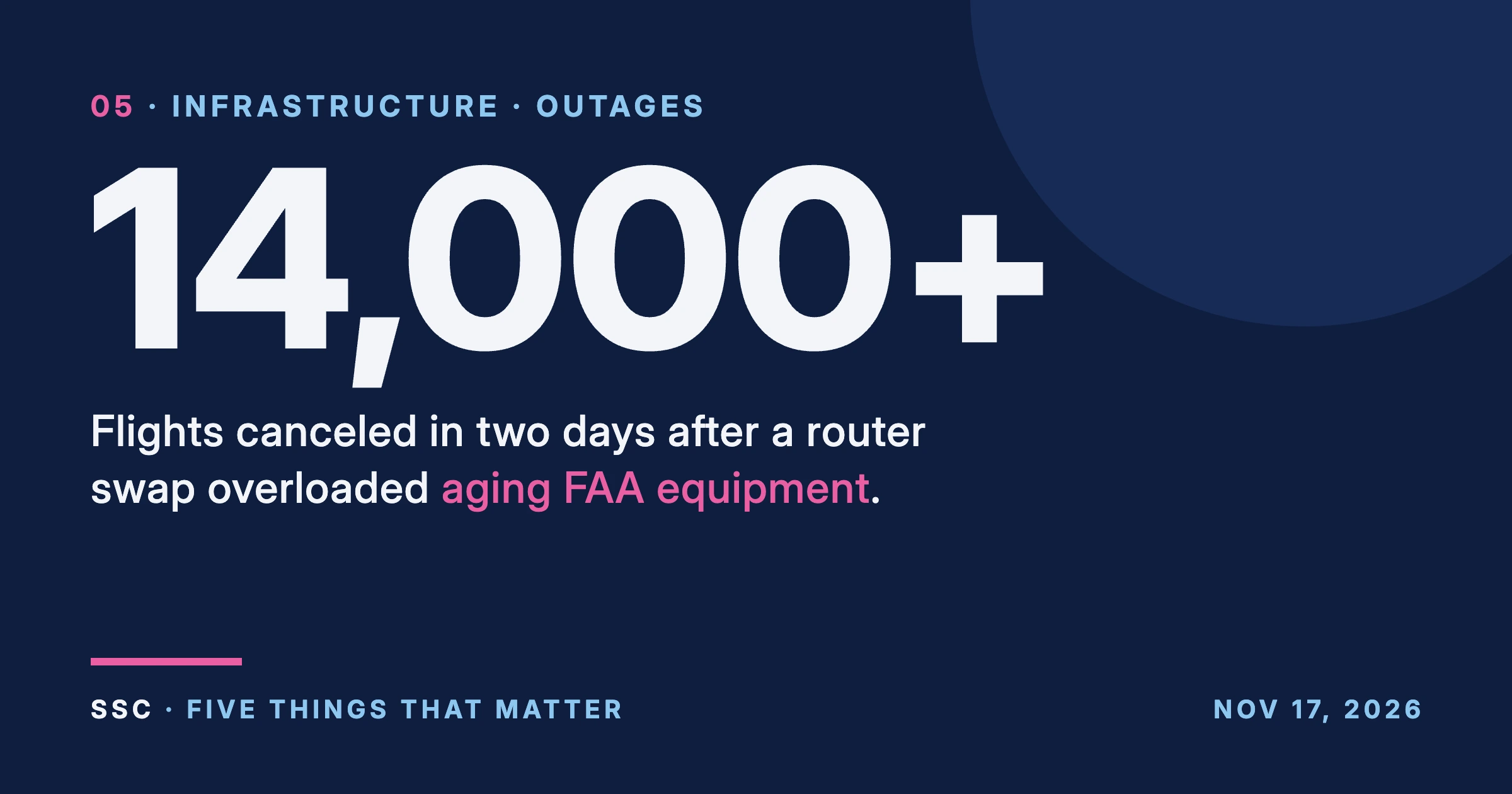
On Monday, Amtrak service around Washington stopped after local municipal officials placed a hold on the tracks, Patch’s Gaby Arancibia reported, and officials said service would resume at reduced speeds shortly before 5 p.m. That followed Friday’s nationwide FAA ground stop, which Al Jazeera reported began with a routine replacement of communications routers that overloaded antiquated equipment. ABC News counted more than 14,000 flights canceled on Friday and Saturday, and Chase blamed a bug in its own hardware for delayed transactions at other banks. Transportation Secretary Sean Duffy warned there will be more outages unless the system is upgraded.
The Bottom Line
A court, a landlord, an international labor body, a contractor and a router each decided who carries the cost when something breaks. In each case the people with the least power to push back, from researchers waiting on a second lawsuit to migrant workers waiting on a reform, are the ones holding the consequences. Context matters.
Five Things That Matter is produced by the Social Storytellers Collective News Desk. Get the End of Day Closing Note free in your inbox.