

The Degree Economy is a Social Storytellers Collective series examining what happens when the credentialing system that previous generations used to build economic stability is stress-tested from every direction at once. MBA tuition is being slashed at schools that can afford to discount. AI is eliminating the entry-level jobs the degree was designed to access. The workers who most need a credential upgrade to survive the restructuring are the least positioned to use a sale that still costs tens of thousands of dollars and requires time away from an income they cannot afford to lose. And the institutions built specifically to serve those workers are absorbing funding cuts while a discount war plays out around them. This is not a story about business schools adjusting their pricing. It is a story about who the credential was always designed to serve — and what happens when the system that sustained that promise stops working.
The discount looks generous on paper. 40% off at Purdue. 38% off at UC Irvine. 50% scholarships at Johns Hopkins. The headlines frame this as a moment of expanded access — the MBA finally within reach for working professionals who could never afford the sticker price.
But access requires more than a lower number. It requires the ability to stop working long enough to earn the degree. And the people who most need a credential upgrade to navigate the restructuring labor market are, in large part, the people least positioned to use a discount that still costs between $36,000 and $99,000 — and still requires time away from an income they cannot afford to lose.
The “job hugger” statistic is the clearest window into this. As of February 2026, 57% of American workers describe themselves as job huggers — people clinging to current positions rather than exploring career changes, new opportunities, or graduate education. That number was 45% in August 2025. In six months, the share of workers afraid to move rose by twelve percentage points.
The fear is rational. The average MBA program — even a discounted one — requires either part-time enrollment stretched over years or a full-time commitment that means leaving the workforce. For a worker at the median U.S. household income, stepping away for a degree is not a calculated risk. It is a financial crisis in waiting. The discounted MBA at $36,000 assumes you have $36,000 — or the credit history and debt capacity to borrow it — plus the ability to cover rent, food, childcare, and healthcare during the enrollment period. None of those assumptions hold for the workers the discount is nominally designed to attract.
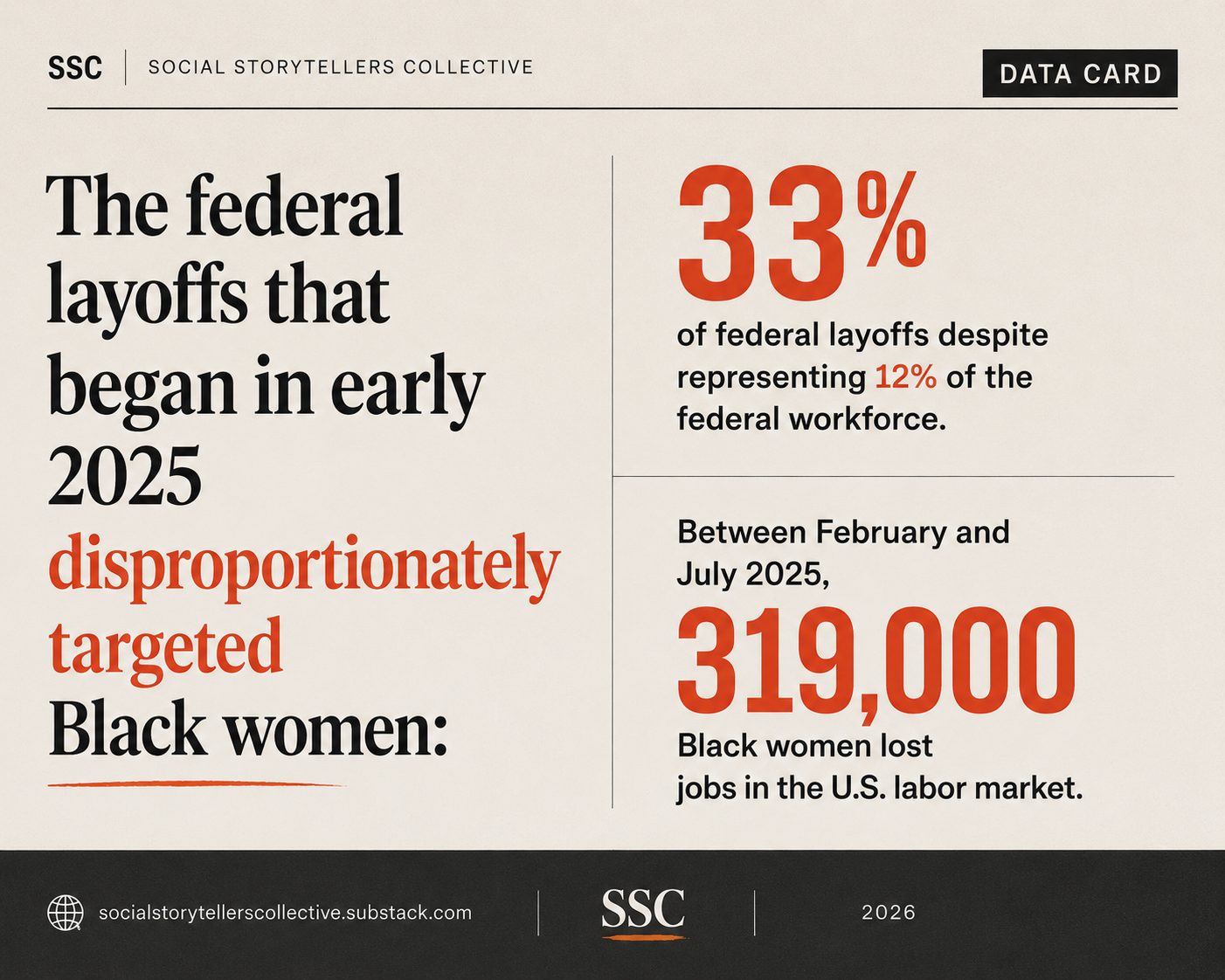
The workers most urgently displaced by the current restructuring are not the workers best positioned to use a discounted credential to recover from it. The federal layoffs that began in early 2025 disproportionately targeted Black women: 33%of federal layoffs despite representing 12% of the federal workforce. Between February and July 2025, Black women lost 319,000 jobs in the U.S. labor market — while white women gained 142,000 and white men gained 365,000 during the same period. By March 2026, the unemployment rate for Black women had reached 6.1%, against a national average of 4.4%.
These are not workers who can use a 40% tuition discount. They are workers navigating an average unemployment duration of 27 weeks, disproportionately without the savings, networks, or employer-backed tuition reimbursement programs that make graduate education tractable for workers with more cushion. The MBA fire sale is occurring in the same moment as a targeted dismantling of the professional infrastructure those workers used to access and sustain middle-class careers.
DEI job postings — a category that represented a significant professional pathway for mid-career Black women with HR, communications, and organizational development experience — dropped 43% between 2022 and 2024. The total number of DEI positions fell from 20,000 in 2023 to 17,500 by April 2025. The federal government, which historically offered Black women the closest thing to pay equity and job security available in the American labor market, is contracting. The private sector pathways AI is eliminating most aggressively are the same mid-level professional roles those workers most recently gained access to.
There is also the matter of what the discounted credential is actually worth to someone who completes it. The Brookings Institution noted that the Trump administration’s broader economic agenda — including the One Big Beautiful Bill Act’s Medicaid cuts, federal workforce reductions, and the elimination of safety net programs — is creating financial conditions that disproportionately harm the students HBCUs and regional schools serve. A degree earned under financial strain, from a school whose own margins are under pressure, entering a job market that is restructuring faster than any curriculum can track, is not the same investment as the MBA has historically represented.
The discount addresses the price. It does not address the structural conditions that determine whether the degree pays off. A 40% cut on a credential does not restore the jobs that credential was supposed to access. It does not rebuild the DEI infrastructure that helped workers get in the room. It does not stabilize the federal workforce that provided the career floor. It reduces the number on the brochure.
The most honest version of what the fire sale offers is this: a lower barrier to an investment whose return is less certain than it has ever been, available primarily to workers who have enough stability to take on the risk of uncertainty, in an economy where the workers who most need the upgrade are the ones least able to absorb a bet that doesn’t pay off.
That is not nothing. For some workers, the discount genuinely changes the calculus. But the framing of the MBA price cuts as a democratization of access mistakes a lower price for a cleared path. The path has not been cleared. The price has been reduced on a road with more obstacles than ever — and the workers the headlines claim to be helping are often standing at the beginning of it, without the resources to reach the other end.
Who gets left out of the sale is not a mystery. It is the same people who have always been left out when institutions optimize for their own survival and call it access.
This is Part III of The Degree Economy, a Social Storytellers Collective series. Part IV — The HBCU Squeeze — publishes next.
— SSC