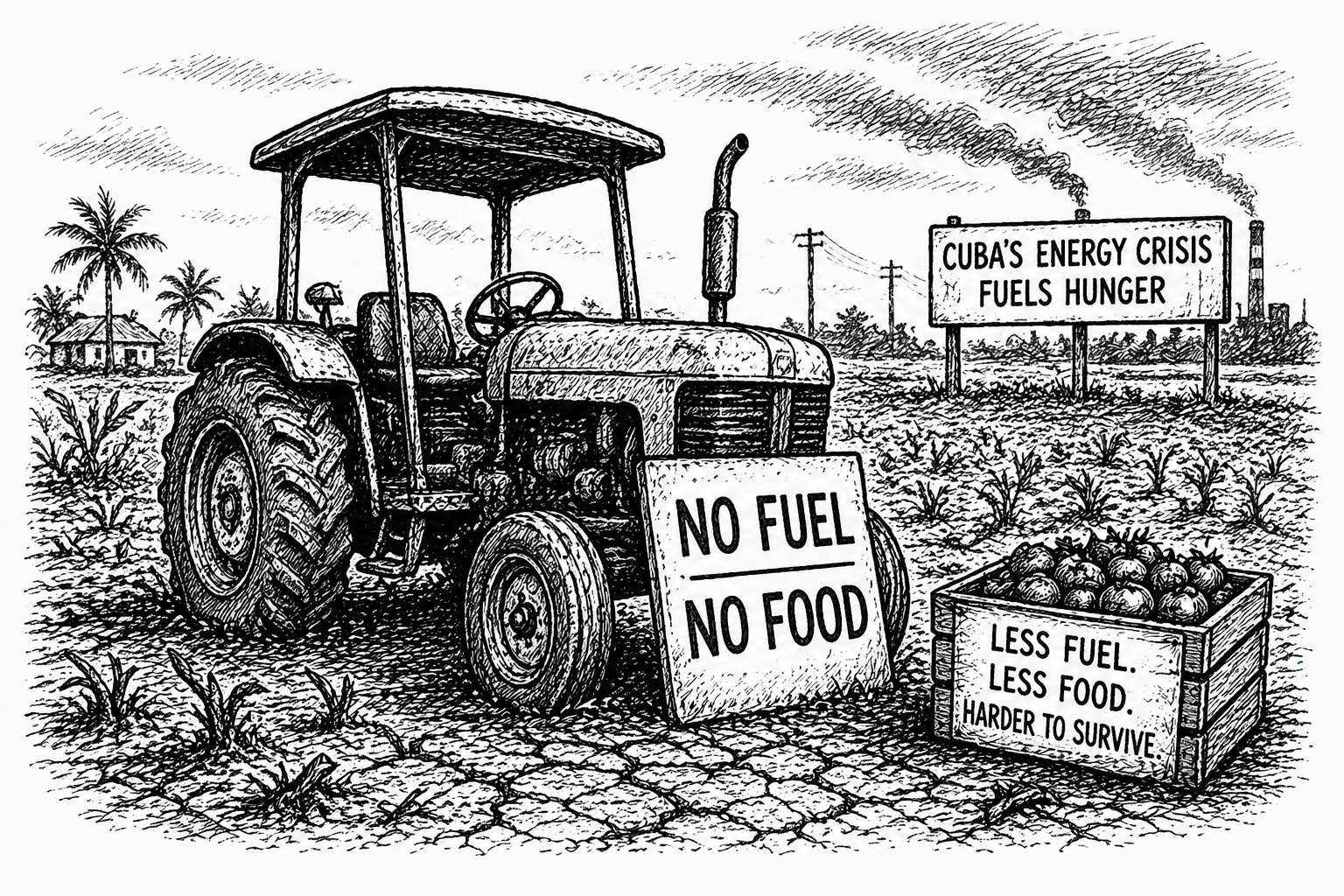
Cuba’s ongoing energy crisis has reached a point where farmers are struggling to operate machinery, transport goods, and sustain production, according to recent reporting. The country has received shipments of roughly 100,000 metric tons of oil, equivalent to about 700,000 barrels, but officials estimate that as many as eight such shipments per month would be needed to meet demand. The gap between supply and requirement is now being felt across the food system.
The situation reflects a convergence of factors, including long-standing U.S. sanctions, limited access to international financing, and reduced fuel imports. These constraints have created a system that operates below the threshold needed for stability, where even temporary relief does not resolve underlying shortages. The impact is visible in both urban and rural areas, where blackouts and fuel scarcity disrupt daily routines.
What makes this moment distinct is how quickly energy constraints are translating into food access issues. Without reliable fuel, farmers cannot run tractors, irrigation systems, or transport networks. Some have reverted to manual labor or animal-powered equipment, reducing efficiency and output. The shift is not just technological regression, but a reflection of how tightly energy and food systems are interconnected.
There is a structural vulnerability embedded in this relationship. Modern agriculture depends on consistent energy inputs at every stage, from production to distribution. When those inputs become unreliable, the entire system becomes unstable. This mirrors patterns seen in other countries facing energy crises, where shortages cascade into multiple sectors, amplifying their impact.
The implications for households are immediate. Reduced agricultural output contributes to higher food prices and limited availability, forcing changes in consumption patterns. For many Cubans, this means navigating a system where access to basic necessities becomes unpredictable, shaped by factors beyond individual control.
Historically, food shortages have often been attributed to agricultural inefficiency or climatic factors. The current situation highlights a different dynamic, where energy access becomes the primary constraint. This reframes the crisis, shifting the focus from production capacity to systemic input availability.
The broader pattern is one of cascading pressure. Constraints in one part of a system do not remain isolated; they move through connected structures, reshaping outcomes in ways that are not immediately visible. In Cuba, energy scarcity is no longer just about electricity. It is redefining how food is produced, distributed, and accessed.