
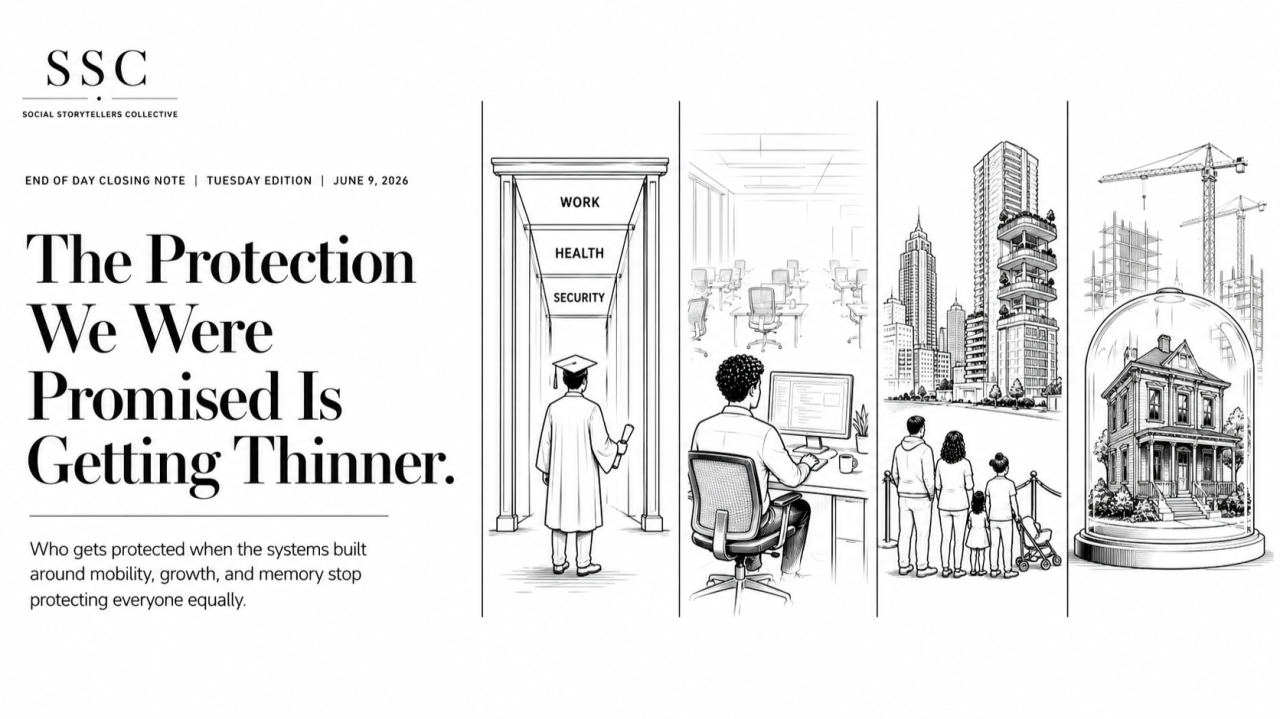
June 9, 2026
The Protection We Were Promised Is Getting Thinner
Today: the credential bargain weakening, labor security thinning, civil rights infrastructure retreating, growth becoming uneven, and preservation becoming a form of protection.
The promise was always simple enough to repeat: earn the credential, build the résumé, move toward the opportunity, and the institutions around you would do their part. That bargain shaped how families talked about education, how workers justified debt, how cities sold growth, and how public systems described fairness. The difficulty now is not that ambition disappeared. It is that the institutions attached to ambition are delivering less protection than the promise implied.
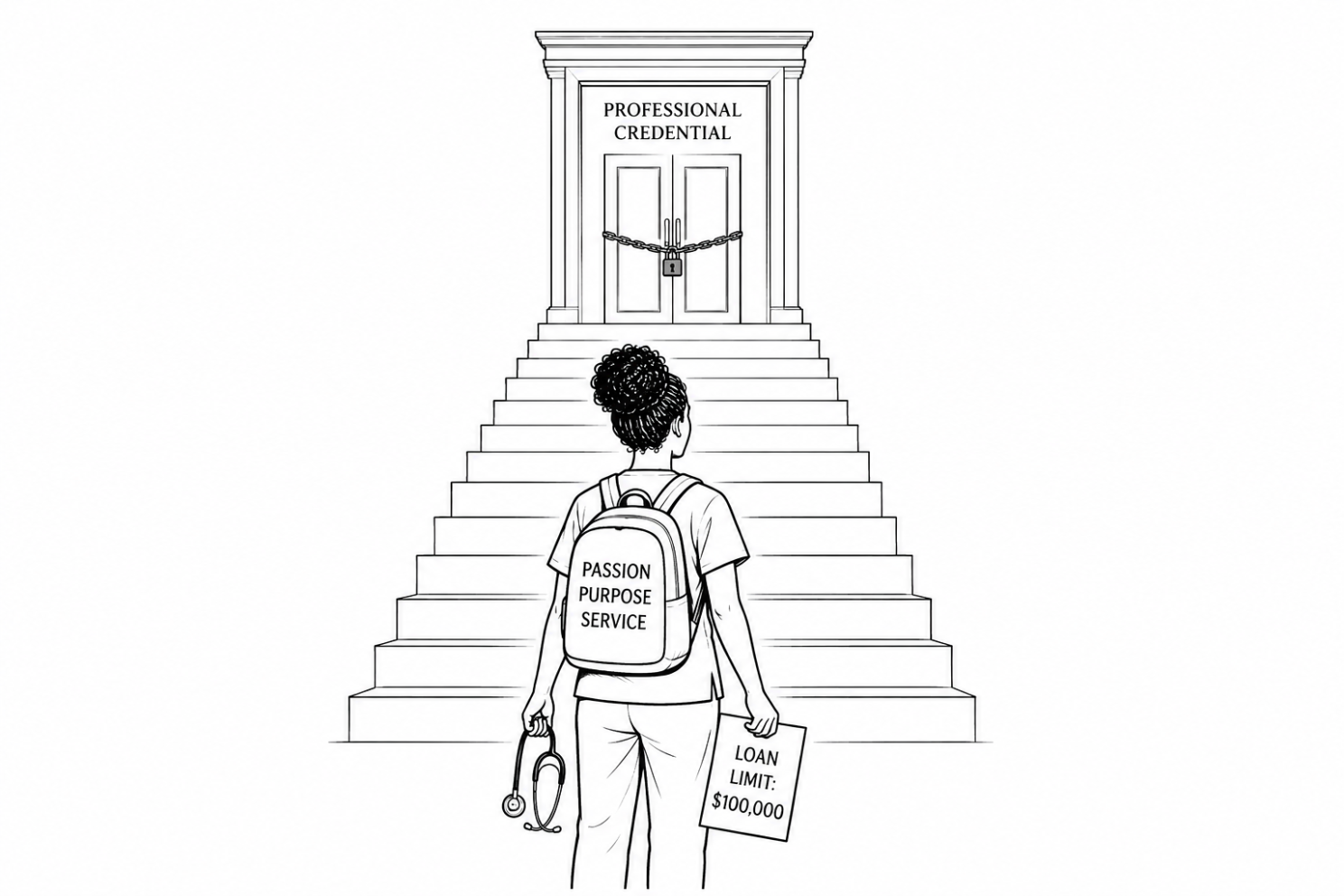
The credential economy is entering a harder phase because the degree is no longer carrying the same emotional or economic certainty it once did. In The Credential Just Got Harder to Sell, SSC traced the pressure building around a bargain that asks people to pay more, wait longer, and absorb greater risk in exchange for security that feels less guaranteed. Education still matters. The problem is that the story around education has depended on a cleaner exchange than many workers are now experiencing. When that exchange weakens, the strain does not stay inside higher education. It spreads into hiring, family planning, debt, career identity, and the basic question of whether individual advancement can still compensate for institutional instability.
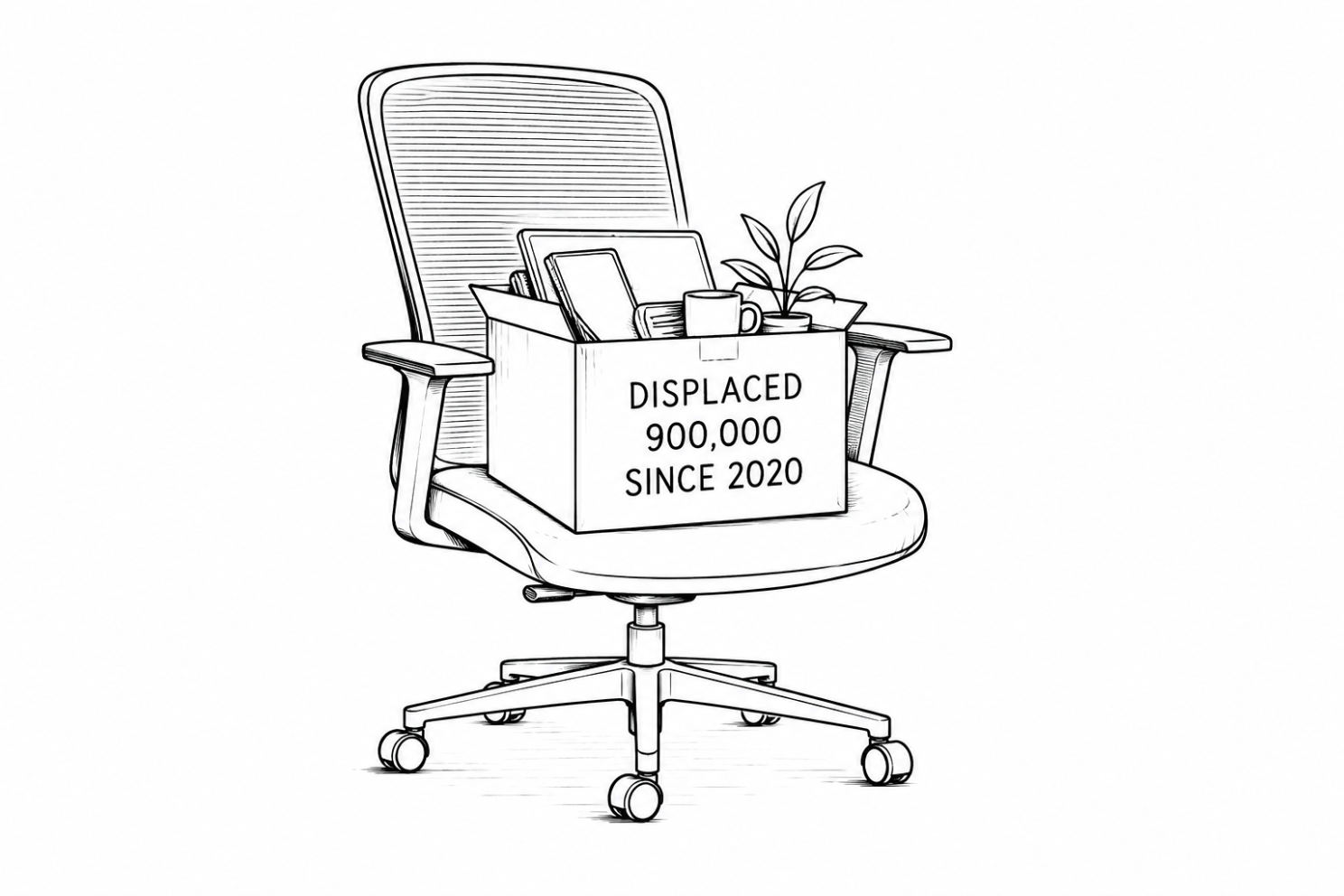
The labor market is already showing what happens when professional security thins. 900,000 Tech Workers Have Been Displaced moves the tech labor story beyond a standard layoff cycle. The industry that spent years selling innovation as a pathway to elite professional security is now using the same innovation language to reset the terms of work itself. Workers are not only losing jobs. They are watching the definition of durable employment change in real time, with automation, investor pressure, and restructuring operating under the banner of efficiency.
The health data makes the credential bargain even harder to defend as a complete theory of mobility. The Health Gap Persists Even After the Degree shows that education can improve earnings, access, and status, but it does not erase the conditions that shape health long before someone enters a classroom or reaches a professional title. That is the structural limit of the individual achievement story. A degree may help someone move through a system, but it does not guarantee that the system stops producing unequal exposure, unequal care, unequal stress, or unequal outcomes.
The same thinning is happening inside public protection. Civil rights enforcement does not have to disappear through one sweeping repeal. In The Civil Rights Infrastructure Is Being Dismantled in Plain Sight, SSC followed how protections can be weakened through staffing decisions, enforcement priorities, legal definitions, budget pressure, and administrative retreat. That kind of dismantling is harder to track because it often looks procedural until the consequences become personal. The public experiences the loss after the infrastructure has already been reduced.
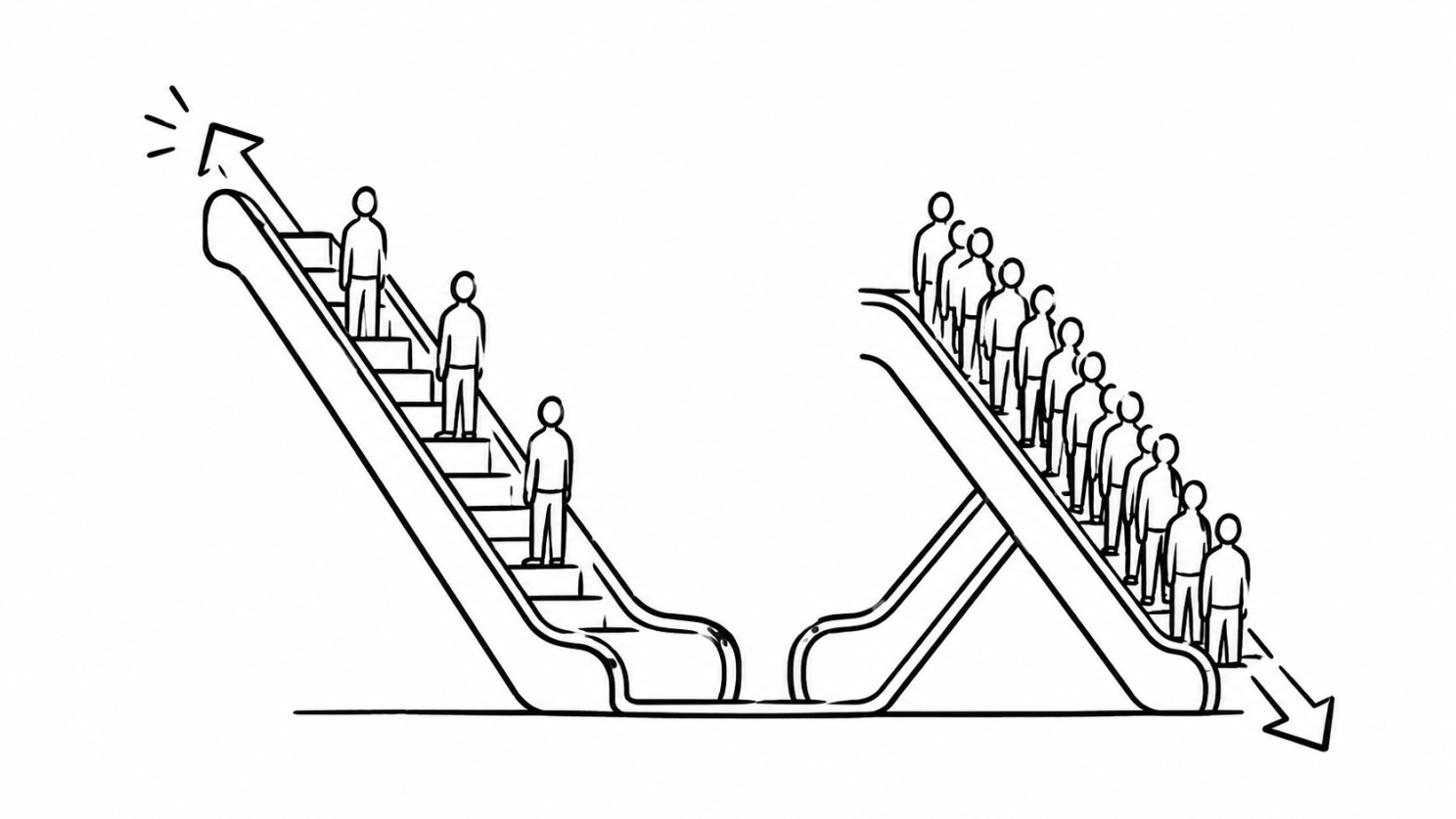
Growth is producing its own version of the contradiction. Miami shows how a city can attract capital, attention, and new residents while becoming less accessible to the people who gave it its cultural and civic identity. Miami’s Growth Is Creating a Two-Speed City follows that split: one city for capital, newcomers, and high-income mobility, another for residents carrying the cost of transformation. Growth still arrives with cranes, restaurants, luxury housing, and new money. Access arrives more selectively. The city expands, but not everyone gets to remain inside the future being marketed.
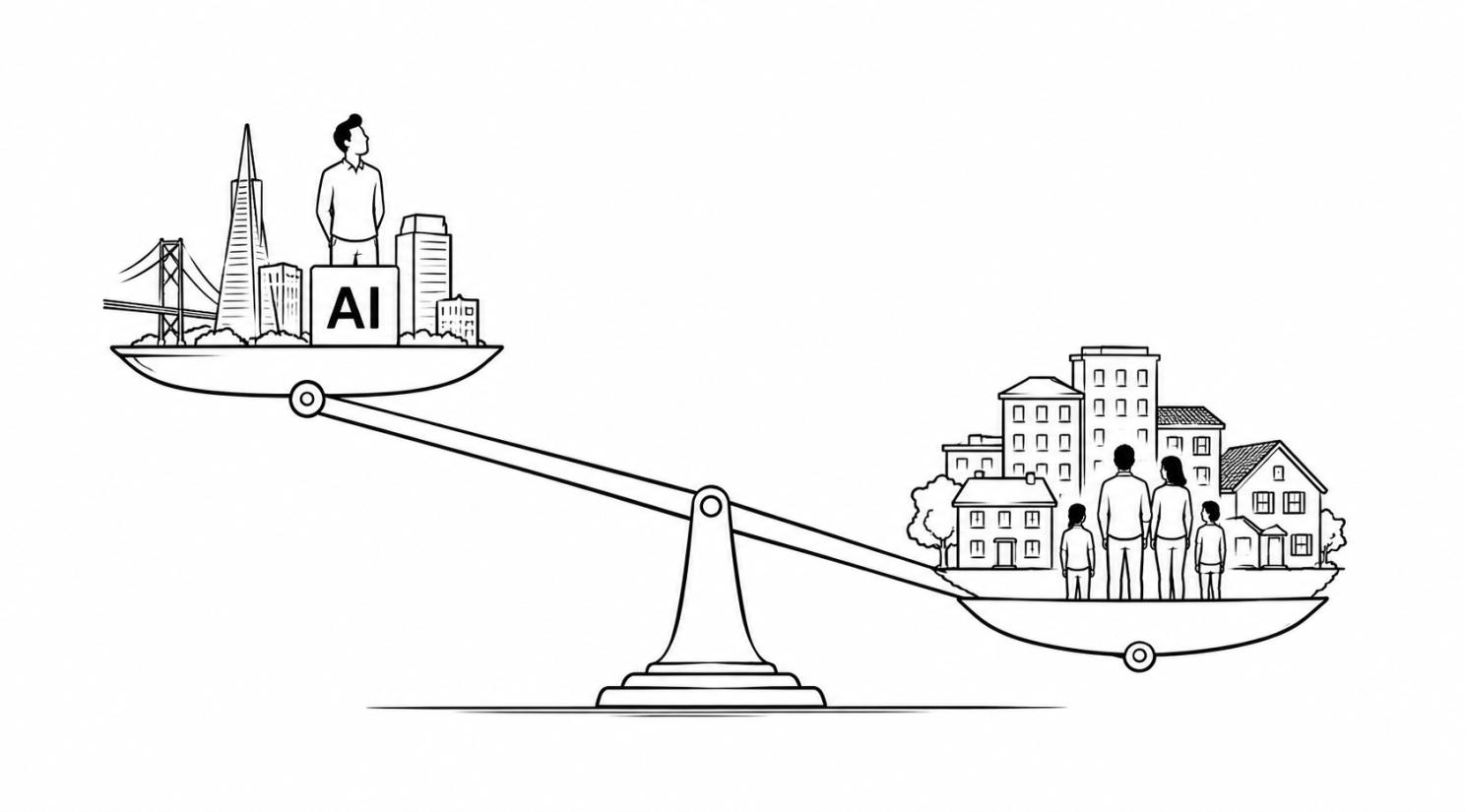
San Francisco is facing a different version of the same test. San Francisco’s AI Boom Is Becoming an Infrastructure Story places the AI boom inside the physical city rather than treating it only as a company, venture capital, or technical talent story. The technology may be new, but the urban question is familiar: who gets the jobs, who pays the rent, who absorbs the congestion, who benefits from the tax base, and who is asked to be patient while the boom reorganizes the city around them.
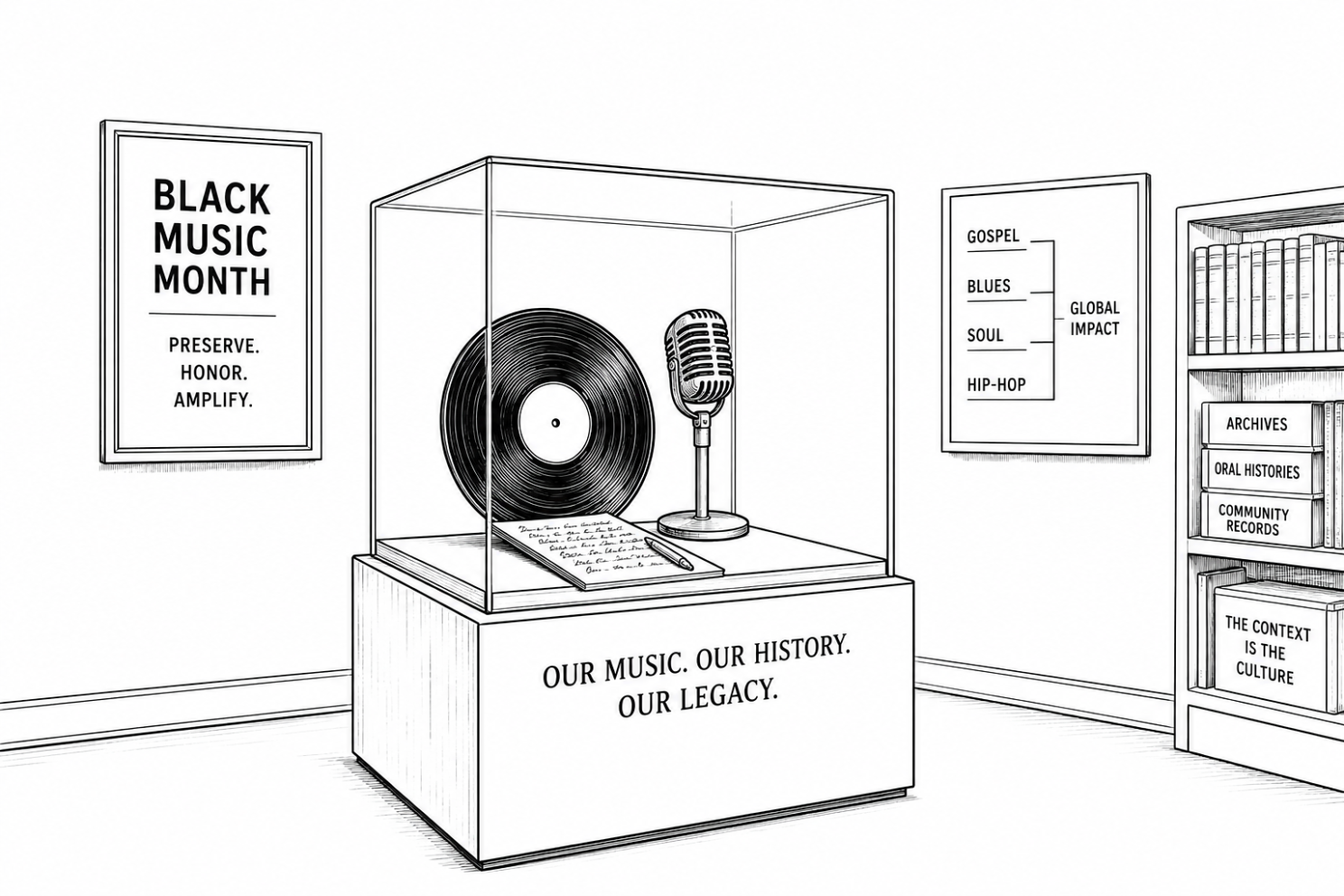
That is why preservation keeps appearing in SSC’s coverage as a form of protection. Black Music Month Is Becoming Preservation Infrastructure argues that celebration is not enough when cultural memory is constantly extracted, platformed, repackaged, and monetized without equal protection for ownership or history. Black music has always shaped American culture, but the institutions built to preserve it have rarely matched the scale of what the culture produced. Preservation becomes infrastructure when memory needs protection from the same markets that profit from it.

Houston brings that argument home. Houston’s Fifth Ward Is Preserving What Development Usually Erases treats neighborhood preservation as more than saving buildings. It is about protecting memory, belonging, and continuity in a city where development can treat history as disposable. Fifth Ward matters because the fight over preservation is also a fight over who gets to define what counts as value. Land has a price. Memory has a cost when it is erased.
The thread running through today’s record is not decline. It is conditional protection. The degree still matters, but less evenly. The job market still creates opportunity, but less securely. The city still grows, but less inclusively. The archive still celebrates culture, but preservation now requires its own infrastructure. The institutions remain visible. The protection they provide is becoming more selective.
That is where tomorrow’s story begins. The next phase will not be defined only by which systems fail. It will be defined by who notices the terms changing early enough to build something sturdier before the old promise runs out.
Daily Visual Signal
The Protection Gap
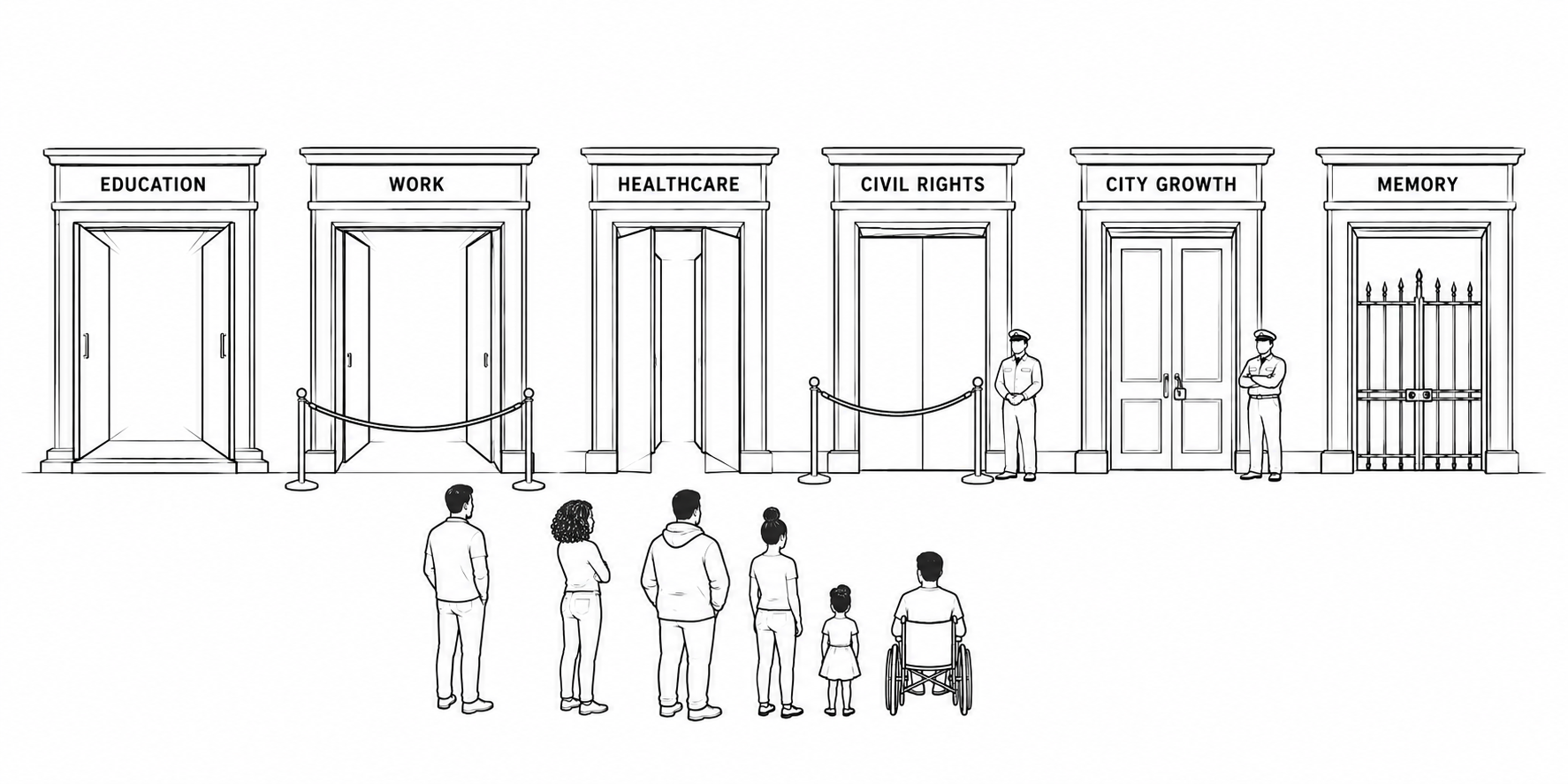
One image that translates the day’s structural tension into a single frame: the systems built around mobility, work, health, civil rights, growth, and memory still stand, but the access they provide is no longer evenly distributed. The visual should not suggest total collapse. It should show conditional protection — open for some, narrowed for others, and quietly redesigned without public consent.
Get SSC analysis delivered to your inbox every day. Subscribe free on Beehiiv: socialstorytellerscollective.beehiiv.com