
Cracker Barrel Did Not Lose Its CEO Over a Logo. It Lost Control of the Brand.

Part of Society, Economy & Wellness — examining how economic pressure reshapes labor, access, and everyday life.
NEWS DESK | SOCIAL STORYTELLERS COLLECTIVE
Julie Masino will step down as Cracker Barrel’s chief executive on August 10, nearly one year after the company abandoned a widely criticized logo redesign. Her departure comes as the business is beginning to stabilize — comparable restaurant sales improved from a 7.1% decline in the quarter ending January 30 to a 2.6% decline in the following quarter, and management raised its fiscal-year revenue and profitability forecasts. David Deno, the former chief executive of Outback Steakhouse parent Bloomin’ Brands, will take over a company that is performing better than it was several months ago but remains culturally damaged by a transformation its customers never authorized.
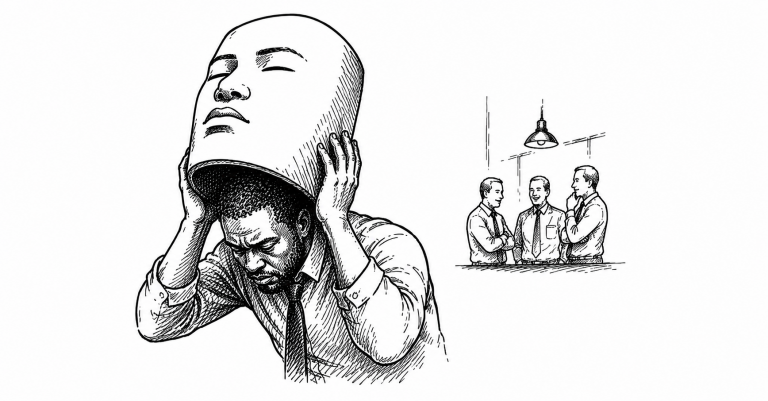
The simplified version of this story is that Masino changed a beloved logo, customers revolted, and the board eventually removed her. That explanation is emotionally satisfying but strategically incomplete. Cracker Barrel did not lose its way because an executive selected the wrong typeface or removed the image of an older man leaning against a barrel. The company created a crisis because it treated its identity as a collection of outdated design elements rather than as the central product customers were purchasing.
When Cracker Barrel announced its new logo in August 2025, the company presented the change as practical modernization. The cleaner design would be easier to read on road signs, digital platforms, and mobile applications. Remodeled restaurants were replacing darker, antique-filled interiors with lighter walls, updated seating, and a more contemporary atmosphere. The individual decisions were defensible when examined separately. Digital branding does require legibility. Aging restaurants do require investment. Younger consumers cannot be ignored indefinitely.
But Cracker Barrel is not an ordinary casual-dining chain. The rocking chairs, general store, crowded walls, wooden tables, roadside signs, and Old Country Store identity are not decorative layers surrounding the restaurant. They are the restaurant’s competitive distinction. Customers can buy pancakes, chicken and dumplings, or breakfast plates from dozens of national and regional chains. Cracker Barrel’s advantage is that it offers those meals inside a carefully constructed version of cultural continuity.
Modernization strategies often assume customers are primarily buying function. Under that model, executives can update the environment, simplify the visual identity, and preserve only the most recognizable fragments of the past. Cracker Barrel’s customers were buying memory. The company attempted to change the physical and visual language through which that memory was delivered while insisting the underlying experience would remain intact. It did not remain intact because the aesthetics were carrying more meaning than management understood.
The backlash escalated because the new logo did not arrive by itself. Customers had already seen remodeled locations, menu experimentation, and a broader transformation plan designed to make the company more relevant. The logo became evidence that management was not simply repairing the business but replacing its cultural center. Cracker Barrel restored the old design within days and paused additional remodels, but reversing a visible decision does not immediately restore confidence in the judgment behind it.
Restaurant sales fell 5% during the fall and 7.1% in the quarter ending January 30, while retail-store sales declined 9.2%. It would be analytically reckless to attribute every lost transaction to a logo — traffic was also being pressured by inflation, weakened consumer confidence, and broader affordability concerns. But the timing demonstrates that the rebrand failed to provide insulation against those pressures and may have weakened the emotional loyalty Cracker Barrel needed most.
Strong brands function as reservoirs of trust. Customers tolerate price increases, uneven service, and changing menus because they believe the company remains recognizably itself. Once management signals that the familiar identity is negotiable, every other change becomes more threatening. A lighter dining room is no longer a renovation. A new menu item is no longer experimentation. Each decision becomes part of a suspected effort to exchange the existing customer for a more fashionable one. That is why the controversy became politically useful — Cracker Barrel represents a specific version of American tradition, making the redesign easy to frame as another institution becoming embarrassed by its own audience. Once that interpretation took hold, corporate explanations about mobile icons and roadside visibility were irrelevant. The company had entered a cultural argument with a technical defense.
The uncomfortable part of this story is that Masino correctly identified Cracker Barrel’s underlying problem. The company needed younger customers, stronger dinner traffic, more effective digital engagement, operational improvements, and stores that did not feel neglected. Its 2024 transformation plan included menu innovation, updated restaurant experiences, digital expansion, employee investments, and a refined brand position. Cracker Barrel initially projected hundreds of millions of dollars in investment through fiscal 2027 because maintaining the status quo was not a credible growth strategy.
Some of that work produced results. Before the rebrand crisis fully affected traffic, Cracker Barrel recorded five consecutive quarters of comparable restaurant-sales growth. Fiscal 2025 adjusted EBITDA increased 9%, and fourth-quarter comparable restaurant sales rose 5.4%. Even in 2026, after the steep winter decline, performance began improving enough for the company to increase its revenue forecast to between $3.27 billion and $3.30 billion and lift its adjusted EBITDA outlook to between $120 million and $125 million.
That record complicates the idea that Masino was simply an outsider who misunderstood the business. She was attempting to solve real structural problems, and several operational measures were moving in the right direction. Her failure was sequencing. Cracker Barrel changed the symbolic expression of the brand before proving that modernization would improve the customer experience. Customers might have accepted brighter restaurants after receiving faster service, better food consistency, and greater value. They might have accepted digital simplification after seeing technology make ordering and rewards easier. Instead, the company made identity the most visible element of a transformation whose operational benefits were still emerging.
Deno’s appointment signals what the board now values. His background leading Bloomin’ Brands and holding senior roles at Yum Brands gives Cracker Barrel an experienced restaurant operator rather than another executive primarily associated with reinvention. His immediate responsibility will not be to create a new Cracker Barrel. It will be to convince customers, employees, and investors that the existing one can still operate effectively.
The company is already narrowing its focus. It sold 26 restaurant properties through a sale-leaseback transaction that generated approximately $77 million for debt reduction, divested most of Maple Street Biscuit Company, announced the closure of the remaining locations, and noted the business contributed less than 2% of annual revenue. These moves reduce complexity, strengthen the balance sheet, and concentrate management attention on the core chain.
Focus alone will not resolve the central tension. Cracker Barrel still needs to evolve, and the audience that rejected the redesign will not necessarily produce long-term growth. The company cannot freeze itself in 1969 and expect changing demographics, travel patterns, and dining habits to stop around it. The lesson is not that heritage brands should never modernize. It is that they must distinguish between what customers consider obsolete and what customers consider sacred. Improvements that feel like stewardship land differently than improvements that feel like correction. The company must modernize the machinery without dismantling the mythology.
Masino’s departure is larger than a logo controversy. It is a signal about what happens when corporate strategy recognizes the economic value of a brand but misunderstands the emotional contract underneath it. Cracker Barrel did not merely introduce an unpopular design. It told customers that the company saw its most recognizable traditions as obstacles to growth. The next chief executive must prove that progress and continuity are not opposing choices — and that a legacy brand can move forward without communicating that the people who sustained it are being left behind.
Why This Matters
The Cracker Barrel story is not primarily about a logo. It is about the gap between what a company thinks it is selling and what its customers believe they are buying. That gap exists in every legacy brand navigating demographic change, and the companies that close it successfully are the ones that treat their audience’s emotional investment as information rather than obstacle. The ones that don’t tend to find out the hard way — as Cracker Barrel did — that customers defending a brand identity are not resisting progress. They are protecting something the company never fully understood it had.