
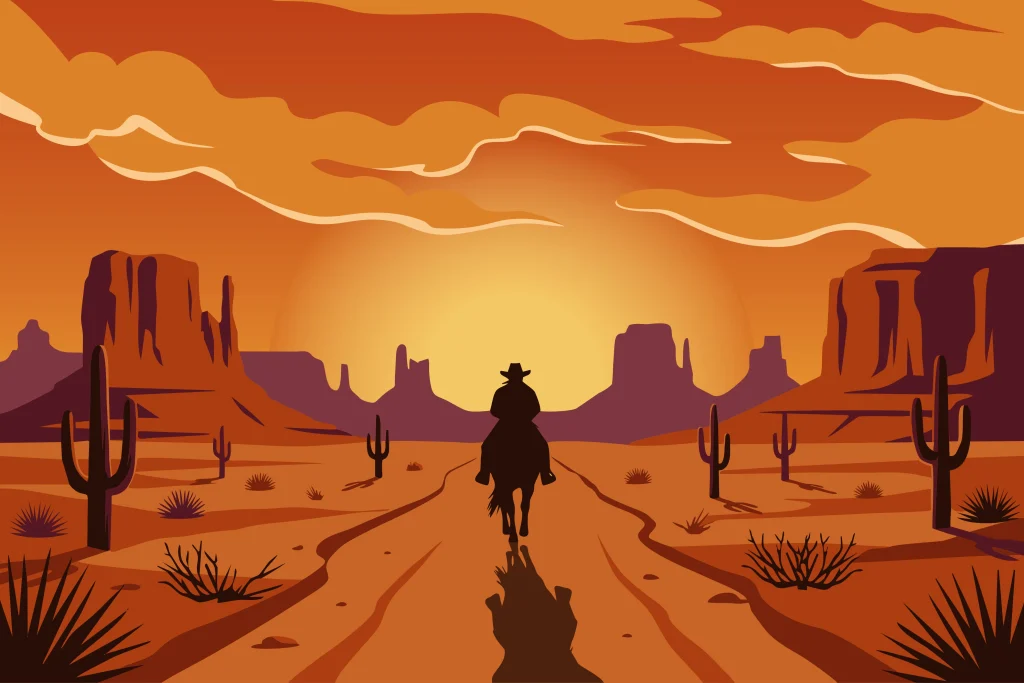
The cowboy hat is having a moment. In 2025, Shopify reported that its merchants saw a 141% year-over-year jump in cowboy hat sales, which it tied to Beyoncé’s Cowboy Carter tour, according to ABC News in Australia. Fashion designers are reviving rodeo boots from the 1940s and ’50s. TikTok and Instagram have turned “cowboy core” into everyday wear.
The revival raises a question most of its fans never ask: whose culture is this?
The answer is not the one Hollywood taught. The American cowboy started in Mexico, and some of the most skilled riders of the Old West were Black.
It started with the vaquero
Before the Spanish arrived in the Americas, there were no cattle on the continent. After Spaniards landed in 1519 on land later known as Mexico, they built a ranching economy. The first people trained to manage those herds on horseback were vaqueros, a word drawn from vaca, Spanish for cow. They were largely Indigenous Mesoamerican men, History.com reports.
Vaqueros developed the skills that define the cowboy: taming wild horses, braiding rope, building saddles and throwing the lasso. The language followed. “Lasso” comes from the Spanish lazo. “Chaps” comes from chaparreras.
Even the rodeo is Mexican. The word comes from the Spanish verb rodear, “to encircle or round up,” and the sport took its name in Mexico, according to Smithsonian magazine. The magazine says the rodeo “owes just about everything — its traditions, its attitudes, its fashions” to Mexican cowboys of the early 1800s. That includes the look now selling in malls: “leather boots, chaps, big hats.”
Anglo ranchers began picking up these skills in the mid-1800s. After Texas was annexed in 1845, many vaqueros stayed on ranches taken over by new owners and trained the newcomers, History.com reports.
One in four was Black
The great cattle drives ran roughly from 1866 to 1890, moving herds from Texas to railheads in the north. The men who drove them were far more diverse than the movies showed.
“One out of every four cowboys was African American,” according to the National Park Service. Historians treat that as an estimate, but it appears across the Park Service, Smithsonian and History.com accounts.
The Park Service notes that cowboy work offered Black men decent wages without much oversight from white employers, in the years right after emancipation.
Some became legends in their time. Nat Love won six events at a rodeo in Deadwood on July 4, 1876, Smithsonian reports. Bose Ikard rode with the crew that forged the Goodnight-Loving Trail. Rodeo star Bill Pickett was the subject of a 1922 silent western, The Bull-Dogger.
How the story got rewritten
By the 1890s, barbed wire was closing the open range, the Park Service notes. The working cowboy began turning into a performer.
Buffalo Bill’s Wild West show launched in 1883. In 1893, his shows near the Chicago World’s Fair drew 3 million people, Smithsonian reports. Then came dime novels, silent films and decades of Hollywood westerns, which turned a multiracial workforce into a mostly white legend. The vaquero became a sidekick or a villain. The Black cowboy mostly disappeared.
That’s the version many Americans still carry: the lone white rider, self-made and free. It’s a powerful myth. It just isn’t the history.
What the comeback gets right, and what it misses
The current revival has done something useful. When Beyoncé put out a country album and toured it in Western wear, she made the cowboy’s Black history part of the mainstream conversation in a way few history lessons had.
But trends move faster than history. A cowboy hat bought for a festival doesn’t come with the story of who wore it first. The risk is that cowboy core becomes the next version of the Hollywood western: the costume without the people.
One college student put it simply to the Mt. San Antonio College newspaper this year: people “should understand that it comes from real people and real work, not just something they saw online.”
The cowboy has always been one of America’s favorite stories about itself. The real version is better. It’s a story about Indigenous and Mexican skill, Black labor and freedom, and a country that borrowed all of it, then forgot where it came from.
The hats are back. The history should come with them.
Sources
- The rise of cowboy core, ABC News (Australia), Mar. 10, 2026
- How Mexican Vaqueros Inspired the American Cowboy, History.com
- A Brief History of the Rodeo, Smithsonian magazine
- Cowpoke History: Black Cowboys and Cowgirls, National Park Service
- Western culture rides back into style, SAC Media, Aug. 27, 2026