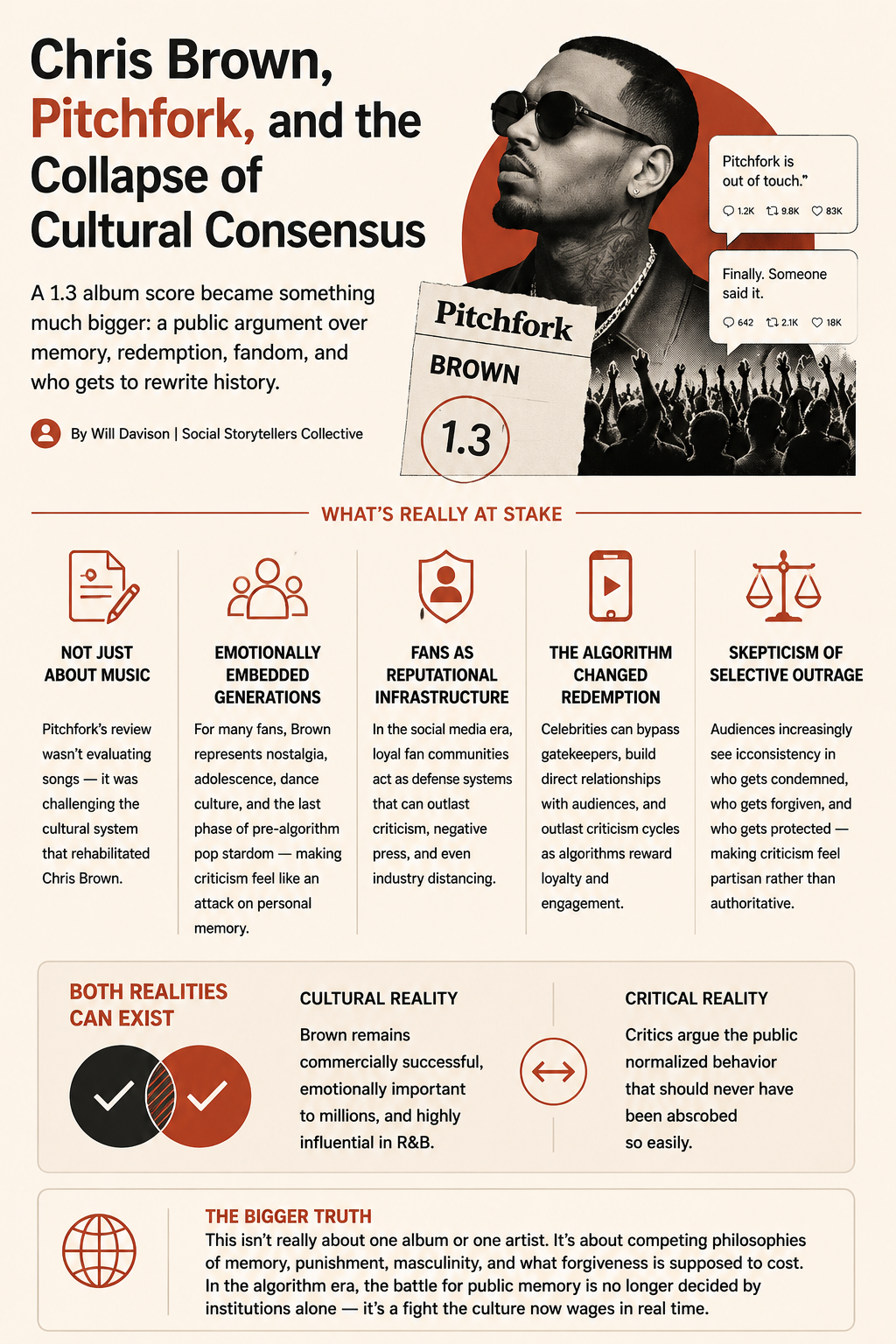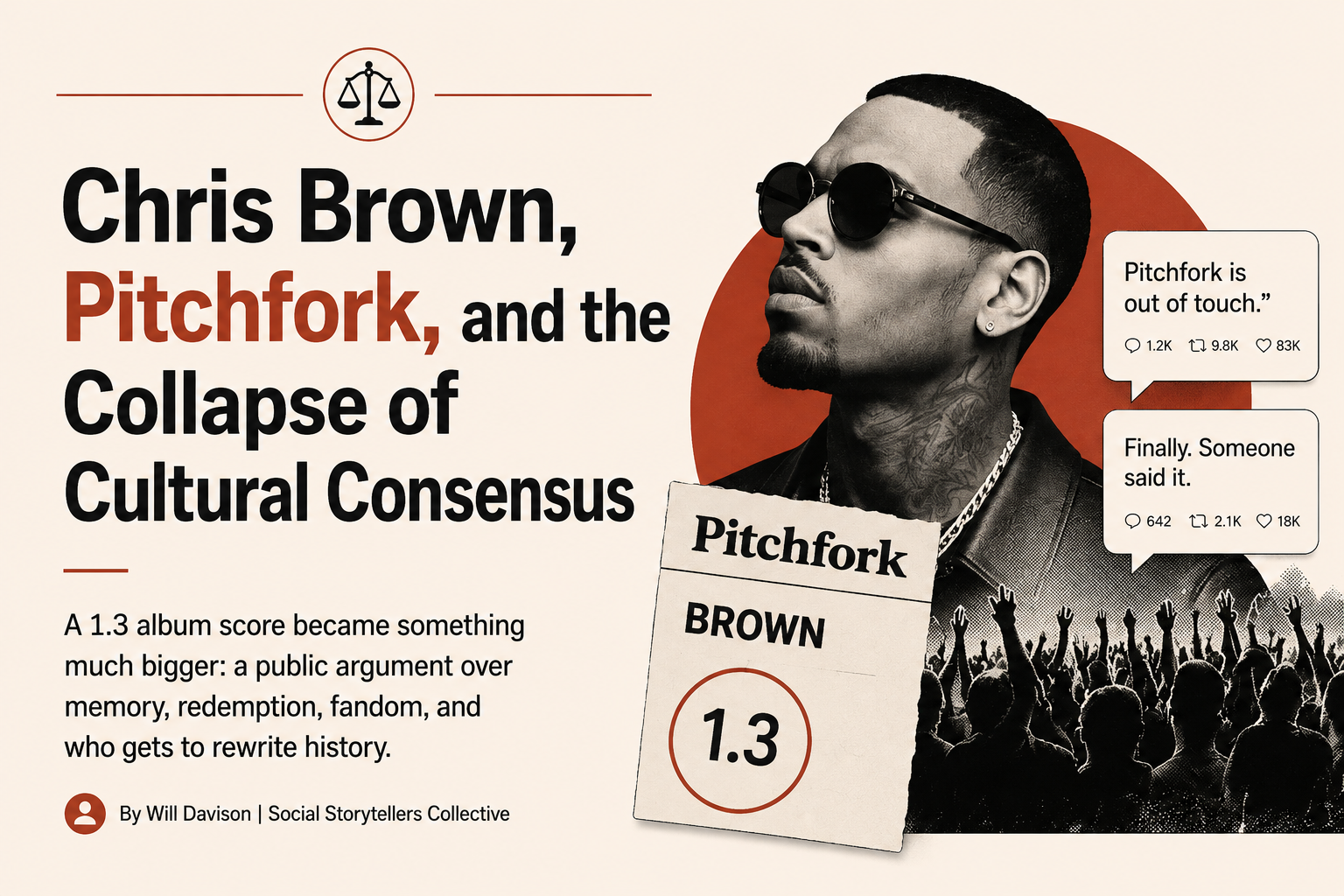
The number itself was designed to travel. When Pitchfork published its review of BROWN and attached a 1.3 rating to the project, the reaction arrived almost instantly — fans mocked the publication, critics applauded the bluntness, and quote tweets hardened into ideological camps. Then, this morning, Pitchfork posted four words on X: “This album is a real piece of shit.” The tweet pulled 1.6 million views by midday. The publication wasn’t done making its point. It was escalating it.

That escalation matters because it shifts what Pitchfork is doing from criticism into something closer to a campaign. The review interrogated the ecosystem that allowed Brown to return to mainstream cultural comfort after years of public controversy, assault allegations, and reputational collapse. The tweet confirmed that the publication intends to keep that interrogation visible, loud, and uncomfortable. Whether you read that as accountability journalism or institutional pile-on depends almost entirely on where you already stood before you clicked.
The backlash also revealed how emotionally embedded Brown remains for a specific generation. For many fans, he is not experienced primarily as a controversial celebrity. He is tied to adolescence, dance culture, YouTube-era virality, mid-2000s R&B nostalgia, and the last phase of monoculture pop stardom before algorithmic fragmentation took over how people consume music. That emotional architecture changes how criticism lands. An attack on Brown reads to his supporters less like cultural accountability and more like an attack on personal memory — which is why his audience often responds less like casual consumers and more like a community protecting a shared emotional archive.
The review’s most important argument was structural, not musical. The writer suggests that Brown’s public image became more emotionally loaded and in some ways more culturally powerful because of the Rihanna assault controversy rather than despite it. That is a revealing claim about how modern fame actually works. It no longer requires universal approval — only enough loyal infrastructure to survive institutional disapproval. In the social media era, fan communities themselves operate as reputational defense systems strong enough to outlast criticism cycles, negative press, and formal industry distancing.
That dynamic extends far beyond Chris Brown. The internet has fundamentally restructured how public redemption operates. Where gatekeepers once controlled rehabilitation arcs through magazine covers and institutional access, platforms now allow celebrities to bypass that mediation entirely. Algorithms reward emotional loyalty, controversy drives engagement, and direct audience relationships have weakened the authority of critics to the point where, by the time traditional media decides to revisit old questions, the audience has already moved on. The culture no longer waits for institutional permission to restore someone’s relevance.
The Pitchfork review lands at a moment when audiences are already openly reexamining the language of cancellation and selective outrage — and increasingly distrust institutional moral framing because they perceive inconsistency in who gets condemned, who gets forgiven, and who gets economically protected. That skepticism has made celebrity criticism feel partisan rather than authoritative. Brown’s defenders frame it as hypocrisy or media obsession rather than accountability, and that framing lands because the inconsistency they’re pointing to is real enough to be persuasive.
Both realities can exist simultaneously. Brown can remain commercially successful, emotionally important to millions of listeners, and deeply influential in R&B while critics continue arguing that the public normalized behavior that should never have been absorbed so easily. That tension may never resolve because the disagreement is not ultimately about music. It is about competing philosophies of memory, punishment, masculinity, and what cultural forgiveness is actually supposed to cost.
That is why a low album score spread across the internet like a verdict. It became a proxy battle over who controls public memory in the algorithm era — and that battle is no longer decided by institutions alone.