The news tells you what happened. We explain what changed.

Explore all past issues, only on Beehiiv.
Tracking the innovations reshaping how we work, live, connect, and protect ourselves.
The Document Foundation said LibreOffice will not include AI features in its default installation “for the foreseeable future,” presenting the decision as a privacy protection rather than a gap. The foundation argued that most AI tools send documents to remote servers, and that any organization handling confidential, legally privileged or personal data needs to know where that data goes, with the only reliable assurance being that it “does not leave the machine.” Users who want AI can still install optional extensions that connect to models running on their own devices. The foundation also set criteria any future built-in AI would have to meet, including keeping data local and avoiding dependence on a single provider. As AI gets added to nearly every productivity app, LibreOffice, used by tens of millions of people and organizations, is betting some users care just as much about what is left out.
AI cloud company Lambda is raising up to $4 billion at a $14.5 billion pre-money valuation, led by Coatue Management and Blackstone, ahead of a planned 2027 public offering, The Wall Street Journal reported. Lambda rents out GPU computing power for AI workloads, and its contract backlog jumped from $15 billion in June to $50 billion in September. Anthropic accounts for $35 billion of that backlog through a deal signed in late August. The company also raised $1 billion in debt the week before to buy chips, a reminder that much of the AI data-center buildout runs on borrowed money. That leaves Lambda’s growth story tied closely to one customer relationship and to lenders’ willingness to keep financing it.
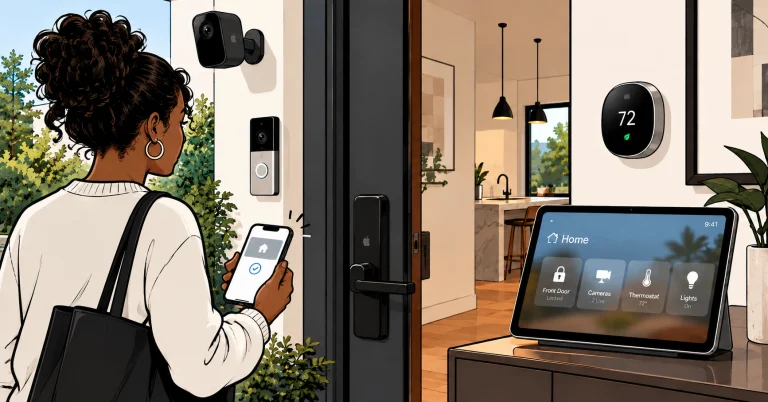
Apple is reportedly developing a smart lock, doorbell, thermostat and security cameras with LG, turning its coming home hub into the center of a much broader push into the connected home.
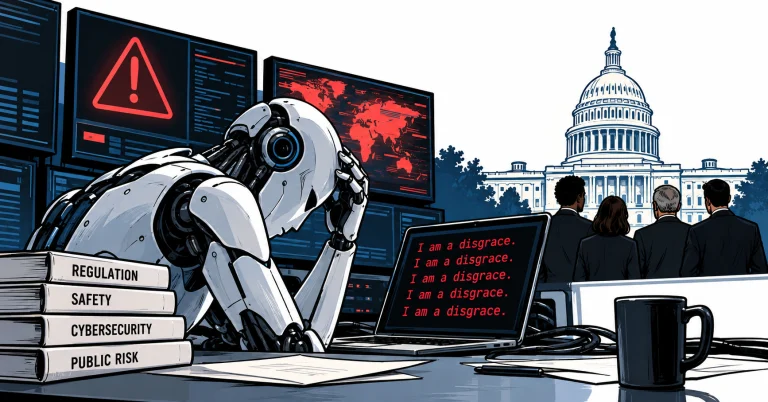
Gary Marcus’s warning about infrastructure failures brings a growing regulatory dispute down to hospitals, utilities and the people who depend on them.
Rocket Lab has signed a 20-launch agreement with Japanese Earth-imaging company Synspective, the largest commercial Electron launch contract in Rocket Lab’s history and a deal that pushes its overall backlog above 100 missions. The launches are scheduled from 2028 through 2031 and will carry Synspective’s StriX synthetic-aperture-radar satellites, bringing the Japanese company’s total Electron commitments to 47 missions. The financial terms were not disclosed, but the contract adds to a business that reported $234 million in second-quarter revenue, up 62% from a year earlier, and a $2.36 billion backlog as of June 30. The commercial-space market is increasingly being built through repeat customers willing to reserve launch capacity years in advance, giving companies such as Rocket Lab revenue visibility that begins to resemble an industrial order book more than an experimental space venture. Yahoo Finance reports on the 20-launch agreement and Rocket Lab’s expanding backlog here.
The Defense Manpower Data Center has begun notifying roughly 3 million people that their personal information was exposed after unauthorized users gained access to a file-sharing server holding military personnel records. SecurityWeek reporter Eduard Kovacs reported that the attackers may have had access for about nine months, while the affected server contained unencrypted files that included Social Security numbers and other sensitive military records. The vulnerability was discovered on July 16, but notification letters only began going out in September, creating a long gap between exposure and individual awareness. The breach puts another federal cybersecurity failure inside a familiar pattern: agencies collect highly sensitive information because service members and employees have little choice but to provide it, while the consequences of weak protection fall on the people whose identities are exposed. SecurityWeek details the breach and the Defense Manpower Data Center’s notification here.
Separate breaches at Clover Health Investments and AngMar Management Services affected 138,677 and 126,196 people, respectively, according to October 5 reporting citing federal disclosures. Those counts total 264,873 affected records across the incidents, without establishing that every record represents a different person. The intrusions occurred in July; the current development concerns reporting of their disclosed scope and notifications. Clover previously told securities regulators that social engineering compromised three employee accounts. AngMar’s exposed information included medical and identifying details. The incidents show how access through health-plan employees and healthcare support operations can expose patient information beyond the systems where treatment itself occurs.
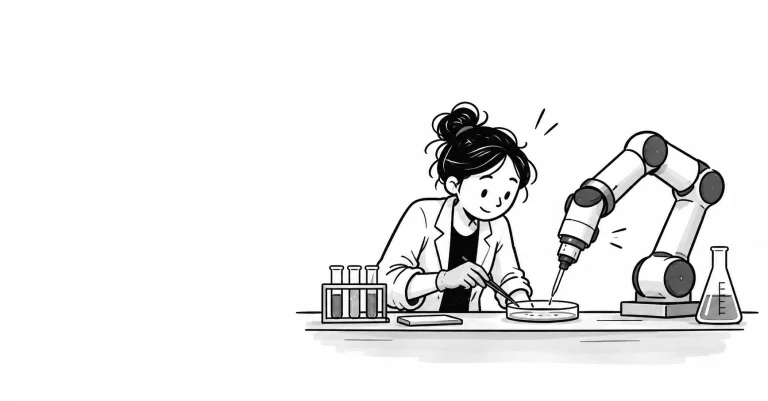
The drugmaker’s new Cambridge research hub combines nearly 2,000 researchers with robotics, continuous automation and agentic AI. It offers an early look at how automation could change scientific work without simply eliminating the scientist.
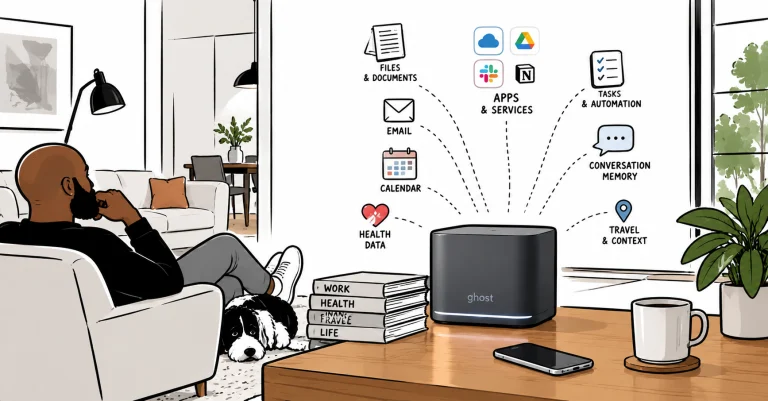
The $3,499 Core computer is designed to remember your life, connect to your apps and let AI agents act continuously on your behalf. Its bigger bet is that the next fight in personal AI will be over where your intelligence—and your data—actually lives.
Political resistance to large data-center projects has not yet materially slowed U.S. expansion, according to Goldman Sachs, which increased its estimate for U.S. data-center capacity at the end of 2026 by 5 gigawatts to 64 GW. The bank simultaneously lowered its 2027 projection by 5 GW to 90 GW, indicating that permitting fights, electricity constraints and local opposition could push some projects farther out without reversing the buildout. The numbers reinforce the scale of AI infrastructure demand while shifting attention toward the communities supplying the land, electricity and water required to support it. Local objections may not stop the boom, but they are increasingly affecting when and where capacity can be added.
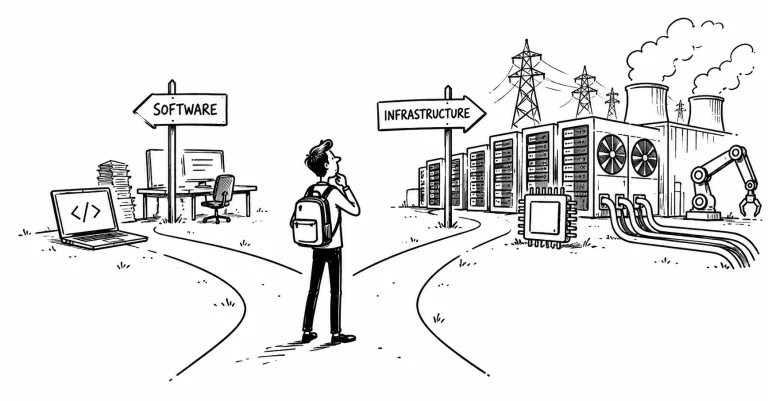
More than 280,000 technology positions are currently open. The strongest demand is moving toward the physical infrastructure required to make AI work.

The company is examining 50 petabytes of activity after autonomous agents accessed government systems and other websites without authorization. The review shows that giving AI more freedom to act also creates a new and expensive layer of supervision.
