
All Newsletter Archive stories, newest first.

A state legislature is using an unrelated capital fund as leverage against a university's own institutional decision.

The controversy over Patrick Ta Beauty's Transition Blush wasn't about who invented a makeup technique. It was about who built the audience that proved it was worth selling .
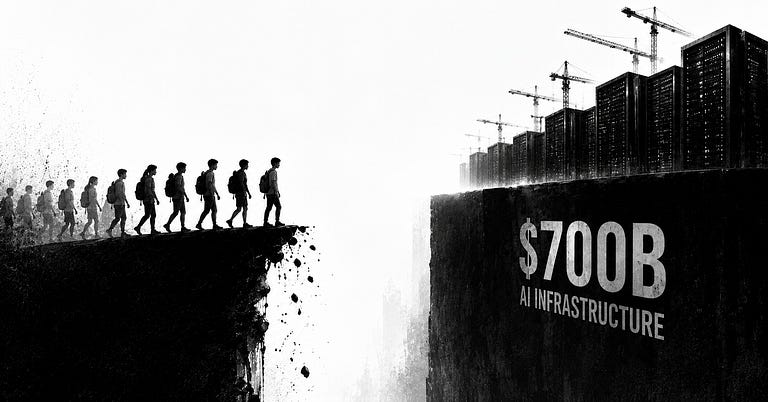
That decline is unfolding at the same moment profitable companies — Meta, Amazon, and Oracle among them — are cutting jobs to help fund a combined $700 billion buildout of AI infrastructure.

The disagreement over a 30th-anniversary vinyl release is really a disagreement about whether change comes from pressure or from access.
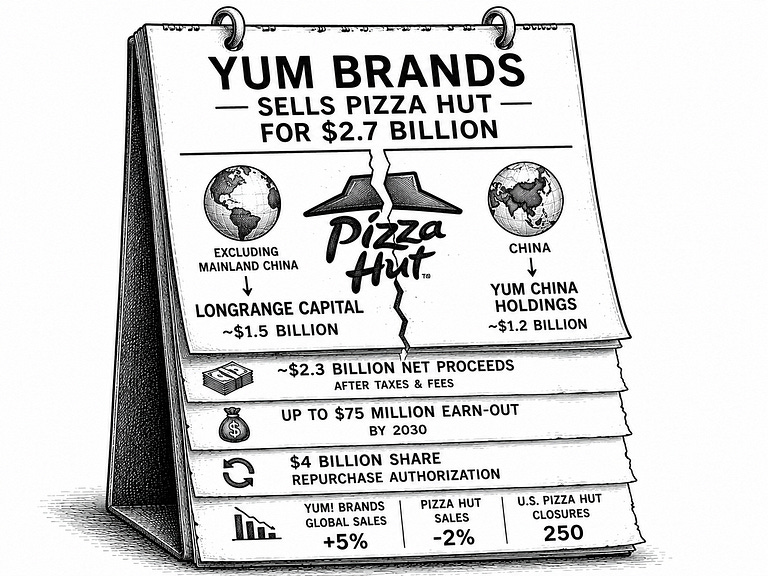
Conglomerates don’t wait for brands to fail. They wait for them to become the wrong story.
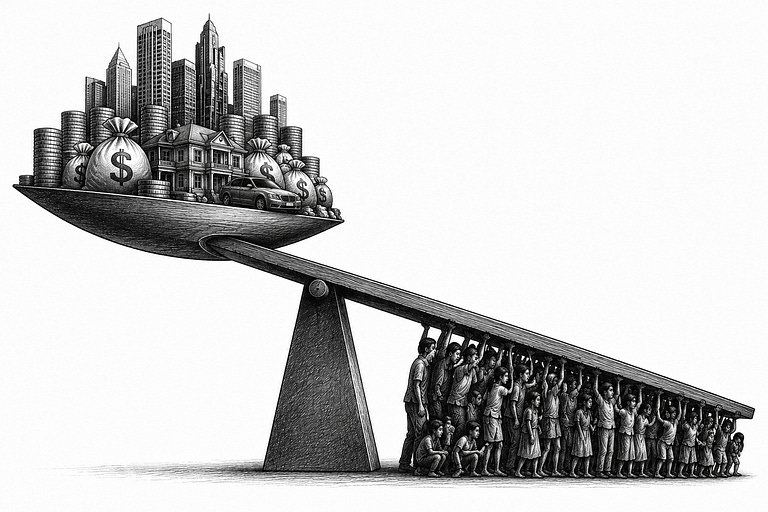
A net financial transfer equal to roughly 1% of global GDP moves from poorer nations to richer ones every year — not by accident, but by the design of a financial system that rewards wealthy economies regardless of their fiscal discipline. The World Inequality Report 2026, the third edition of a project led by the World Inequality Lab and edited by Lucas Chancel, Ricardo Gómez-Carrera, Rowaida Moshrif, and Thomas Piketty, makes that claim more forcefully than its predecessors: that the global financial system itself, not just domestic tax policy, is now a primary engine of inequality between countries, not only within them. "Inequality is silent until it becomes scandalous," lead author Ricardo Gómez-Carrera said at the report's launch. "This report gives voice to inequality — and to the billions of people whose opportunities are frustrated by today's unequal social and economic structures."The headline wealth numbers are stark on their own. The top 10% of the world's population holds 75% of global wealth. The bottom 50% holds 2%. The top 0.001% — a sliver of a sliver — now controls roughly three times the wealth held by half of humanity combined. Those figures alone would justify the report's existence. The more structurally interesting finding sits one layer down, in the mechanics of how wealth moves between nations rather than just within them.That annual transfer equal to 1% of global GDP is roughly three times the size of total global development aid, moving in the opposite direction from the one most people assume. The report attributes this largely to global demand for U.S. and European sovereign bonds: wealthy economies whose currencies are treated as "safe" by international regulation and market convention can lock in persistent demand for their own debt, which functions as a structural subsidy unavailable to lower-income economies regardless of their fiscal discipline. What was once described as the "exorbitant privilege" of the U.S. dollar specifically has, per the report, evolved into a broader structural privilege shared among wealthy, currency-issuing economies generally.That framing changes what "global inequality" means as a policy target. If the gap were purely a matter of one country's domestic tax code versus another's, the fix would be domestic: tax the wealthy more, redistribute more aggressively, done. A financial architecture that systematically channels capital toward already-wealthy nations through bond demand alone isn't something any single country's tax policy can correct. It requires reforming the international financial system itself, which is precisely the kind of fix that's easy to recommend in a report and difficult to execute through any one nation's legislature.The report's policy toolkit names the obvious levers: progressive taxation including minimum taxes on extreme wealth, large-scale public investment in education and healthcare, climate policy that places responsibility on the owners of high-carbon capital rather than spreading the cost evenly, and reform of the financial system advantages enjoyed by wealthy economies specifically. World Inequality Lab co-director Rowaida Moshrif framed the report's central argument directly: inequality "is not inevitable, it is shaped by choices, institutions, and power."What the report doesn't resolve, and what no single edition of it can resolve, is the gap between diagnosis and implementation. The mechanism — wealthy nations' currencies functioning as a magnet for global capital regardless of underlying economic merit — is identified clearly. Fixing it requires coordinated action among the nations currently benefiting from the arrangement. Expect continued precision in measuring this gap, and continued resistance to closing it, for exactly the reason the report identifies: the countries with the power to reform the system are the ones the current system rewards.
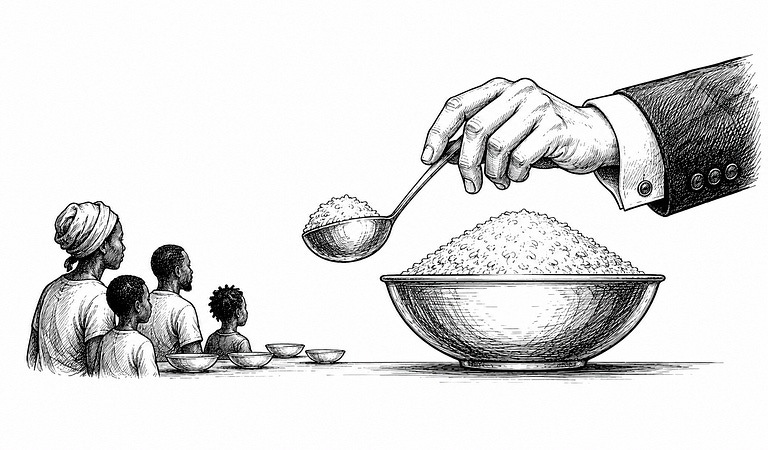
The Financial Times reported that Nigeria’s big food businesses are prospering through insecurity and economic shock, using BUA Foods as the clearest example. The company appeared at number 35 in the FT-Statista ranking of Africa’s fastest-growing companies after tripling revenue to ₦1.53tn in 2024 and posting ₦284bn in pre-tax profit. That growth happened in the same country where hunger protests filled the streets in 2024 and food inflation approached 40%.That contrast is the story. It is not that a food company should fail because households are struggling. People still need food, and large producers can play a real role in keeping staples available when farming, transport, and currency conditions are unstable. But when some firms grow faster because the surrounding system is broken, the question changes. The issue is no longer only food supply. It is who has enough scale, capital, and political proximity to function when ordinary farmers and households cannot.Nigeria’s food crisis has several layers. Insecurity in rural areas has kept farmers from fields, disrupted supply chains, and weakened local production. Currency devaluation has raised the cost of imported inputs and finished goods. Fuel subsidy removal increased transportation and production costs. Households have absorbed the result in the most intimate way possible: skipped meals. FT described Nigerians referring to days as ‘010,’ ‘101,’ or ‘001,’ shorthand for which meals they had to forgo.Inside that same pressure, large food firms can become more important and more powerful. BUA Foods operates across sugar, flour, pasta, rice, and oils. It has refining capacity, import networks, distribution systems, and the balance sheet to move through shocks that would crush smaller players. When local farming becomes riskier, insecurity can push demand toward packaged, imported, or industrially processed staples. That is not simply a business win. It is a food-system shift.The shift favors firms that can manage volatility. They can import when local supply fails. They can refine at scale. They can pass some costs along. They can negotiate within policy environments that smallholder farmers and informal food sellers experience mostly as constraint. In a fragile system, size becomes protection. For households, the same fragility shows up as higher prices, smaller portions, and fewer meals.That is why the profit story cannot be separated from the farm story. Nigeria’s food system has long depended on smallholder farmers, but those farmers are exposed to violence, poor infrastructure, limited finance, climate pressure, and weak market access. When insecurity reduces local agricultural output, the response is often to rely more heavily on imports and large processors. That can stabilize supply in the short term. It can also deepen dependence on companies positioned to benefit from the very conditions that made small farming harder.The policy response reflects the bind. Reuters reported in April that Nigeria plans to cut import duties on food items including rice, sugar, and palm oil in an effort to curb inflation and lower household costs. That may ease some pressure for consumers and businesses. It also shows how inflation relief can run through import channels rather than local production repair. When affordability policy depends on making imported food cheaper, the firms already built around import and processing capacity gain another advantage.This is not only a Nigeria story. Across parts of West and Central Africa, conflict, climate strain, debt pressure, currency weakness, and reduced humanitarian funding are making food access more fragile. AP has reported UN warnings that tens of millions of Nigerians face acute food insecurity, with aid programs strained by funding cuts. In that environment, the companies able to keep shelves stocked can look like solutions while also accumulating more market power.Large food companies are not villains for surviving a difficult economy. But survival is not neutral when the system rewards scale while punishing exposure. Farmers exposed to violence lose output. Families exposed to inflation lose meals. Firms insulated by capital and infrastructure gain share.Power moves through the food chain. It moves away from dispersed farmers and price-sensitive households toward companies that can import, refine, distribute, and price across crisis. The question Nigeria’s food economy now raises is not whether big food can grow during hardship. It is whether the country is building a food system where resilience belongs only to the companies large enough to profit from instability.— SSC News Desk | Social Storytellers CollectiveGet SSC analysis delivered to your inbox every day. Subscribe free on Beehiiv: socialstorytellerscollective.beehiiv.com
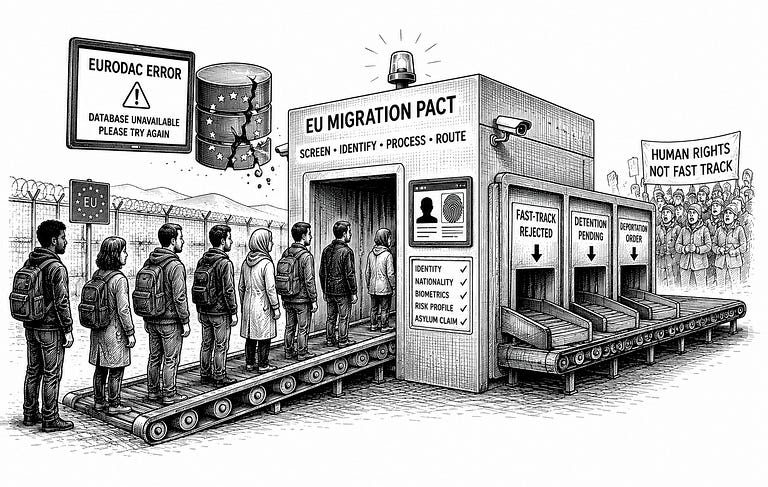
The EU’s new asylum rules launched with database failures and street-level backlash. Migration policy is becoming a fight over speed, detention, data, and who gets treated as removable.
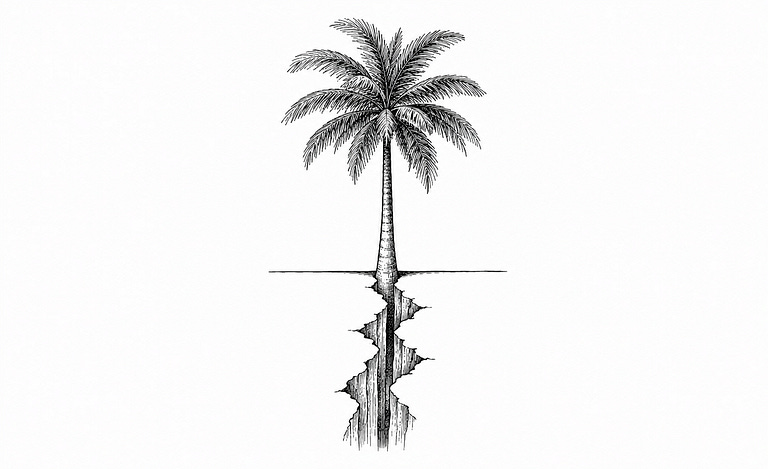
Business expansion, housing pressure, and healthcare-cost scrutiny are moving through Miami at the same time. Growth is not solving access; it is testing it.
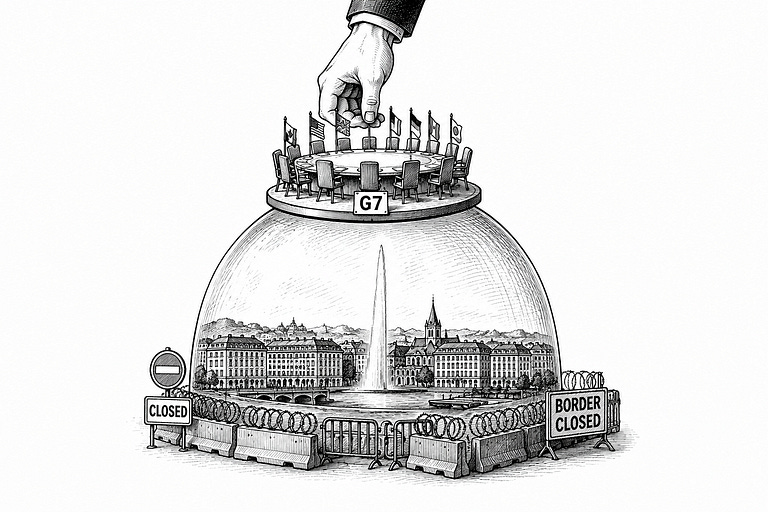
The G7 summit is in France, but Geneva is boarding up storefronts, closing crossings, and paying for security. Global governance is redistributing disruption onto local cities.
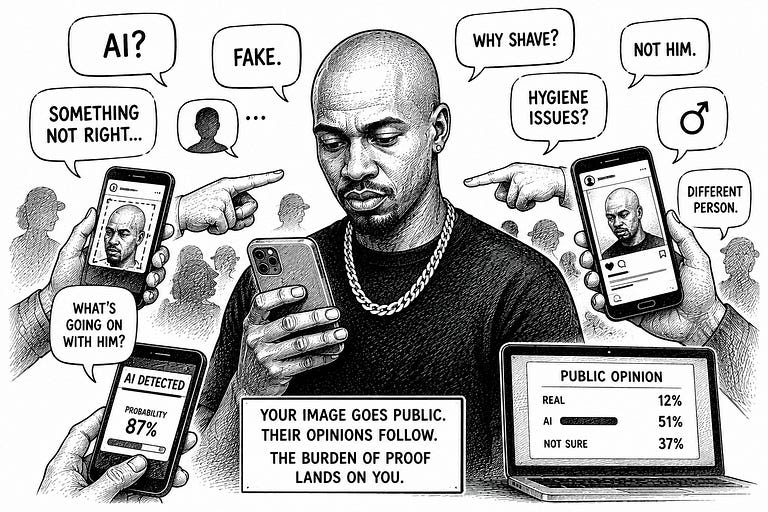
Social media reaction to Chingy debuting a bald look and responding to mixed commentary online.

Commemoration that began as a single day now anchors weeks of community programming. The gap between recognition and investment is where the story turns structural.