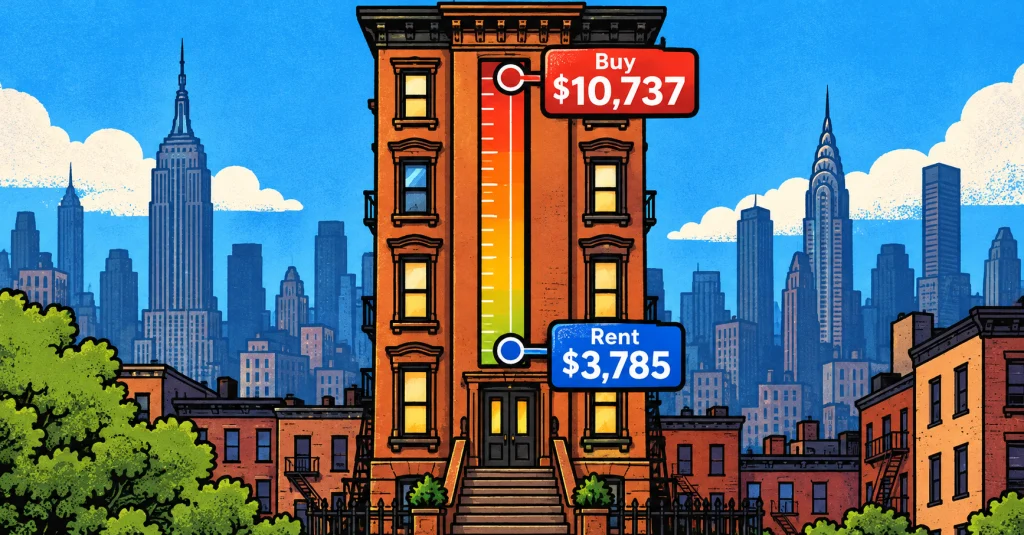
Rents are reaching record highs, but the cost of buying is rising even further beyond what most households can afford. For New Yorkers hoping to build wealth through homeownership, the financial gap is becoming difficult to cross.
New Yorkers trying to decide whether to rent or buy are confronting a financial gap that makes homeownership increasingly difficult to justify. The estimated monthly cost of purchasing a typical home in New York City reached $10,737 in the third quarter of 2026, compared with a median asking rent of $3,785. That’s a difference of $6,952 every month, according to Realtor.com’s October 27 housing report. The ownership estimate includes mortgage payments, property taxes, insurance and applicable fees, assuming a 10% down payment. Meanwhile, rents climbed 4.5% over the past year, reaching their highest level since the company began tracking the market in 2019. New Yorkers are paying more to remain renters while the financial threshold for becoming owners moves further away.
The pressure is particularly severe for people looking for smaller apartments. Asking rents for studios, one-bedroom and two-bedroom homes rose 7.1% over the past year, outpacing wage growth for many workers. Manhattan’s median asking rent reached $5,375, while Brooklyn climbed to $4,197. The typical citywide home carried a listing price of approximately $1.41 million, putting ownership beyond the reach of many households even before accounting for a down payment. Although home prices declined slightly over the past year, mortgage rates remained elevated. At a 7% mortgage rate, Realtor.com estimated that the monthly cost of buying would rise to approximately $11,008. Lower purchase prices offer limited relief when financing remains expensive.
Housing costs also determine who gets an opportunity to accumulate wealth. Homeowners can build equity as they pay down mortgages and potentially benefit from rising property values. Renters generally receive no comparable ownership stake from their monthly payments, even when those payments consume a substantial share of their income. But the usual advice to save for a down payment becomes harder to follow when rent rises faster than earnings. A household spending nearly $4,000 a month on housing may have little left to save, particularly after transportation, food, child care and other expenses. The result is a widening divide between households that already own property and those trying to enter the market.
New York’s affordability problem is increasingly shaping who can establish a permanent financial foothold in the city. High-income buyers and existing homeowners have options unavailable to households dependent on wages and savings. Some renters may decide that buying makes little financial sense, while others may move farther from their jobs or leave the city entirely. Continued rent increases could make both choices more common, particularly among younger workers and families. If rents continue consuming the money households would otherwise save, New York could see homeownership become less a milestone achieved through work and more an advantage passed between generations.