
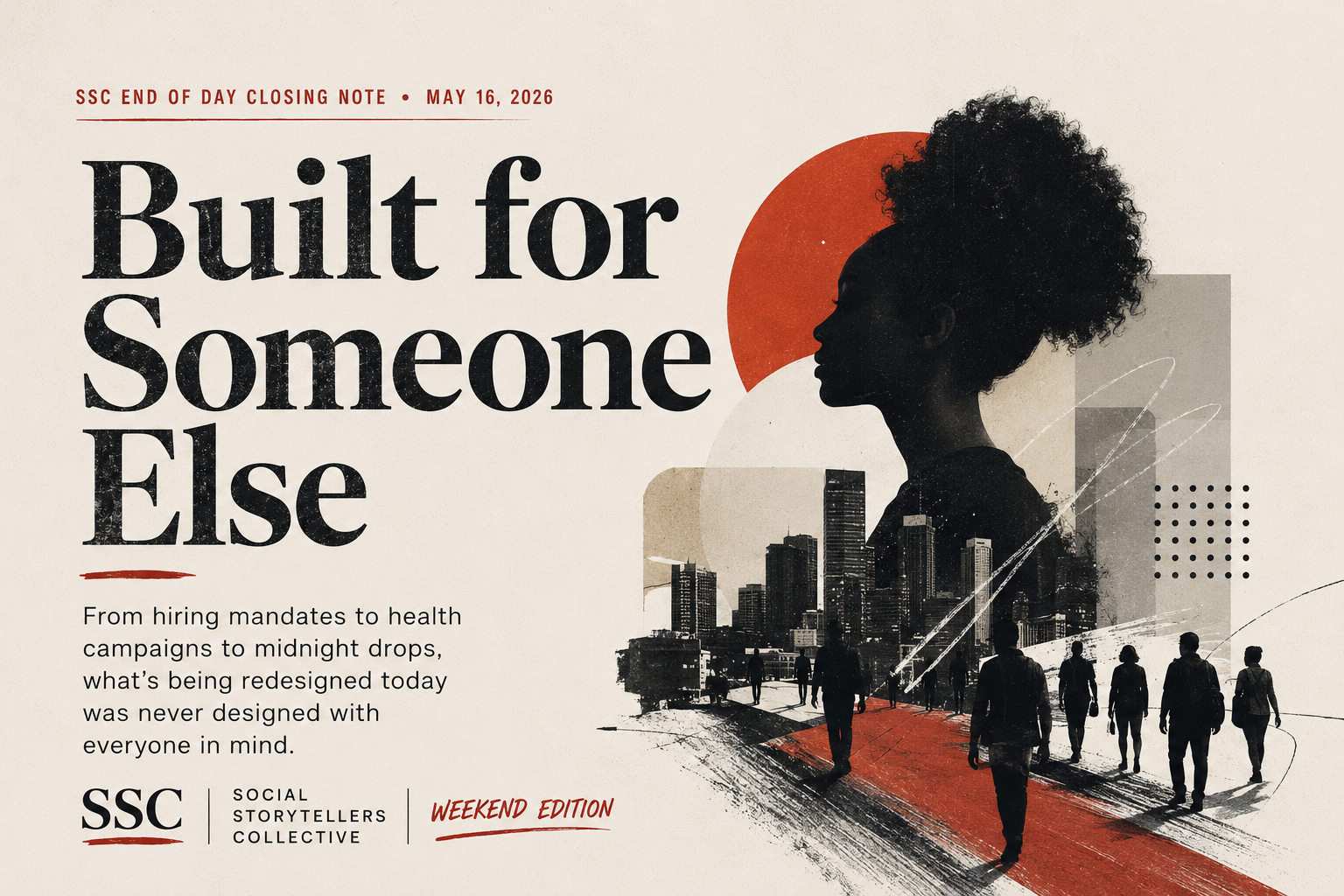
From hiring mandates to health campaigns to midnight drops, what’s being redesigned today was never designed with everyone in mind.
There is a version of today’s news cycle that reads as a collection of unrelated events. A tech company announcing layoffs. A state attorney general issuing a subpoena. A suburb in Texas growing faster than its roads can handle. An album dropping in a culture that may not be ready to receive it. A fashion economy building itself from the ground up in Accra. A pharmaceutical company pausing a health campaign in India. Each story has its own dateline, its own cast, its own technical details. But underneath all of them runs the same current — the rules of access are being rewritten, and the people those rules were designed to protect are absorbing the cost of the revision.
What makes today’s coverage different from routine news is not the volume of disruption. It is the consistency of the mechanism. Whether the story is about labor, law, housing, health, or culture, the pattern holds: institutions reorganize around their own continuity, announce it in language that frames contraction as innovation, and leave the people positioned to absorb the most concentrated impact without a coordinated response. The layoff becomes a restructuring. The dismantling of a hiring mandate becomes a civil rights intervention. The pricing of workers out of cities becomes a boomtown story. The framing is almost always optimistic. The distribution of consequences rarely is.
Saturday’s note is about what gets called progress — and what it asks of the people who were never consulted about the pace.
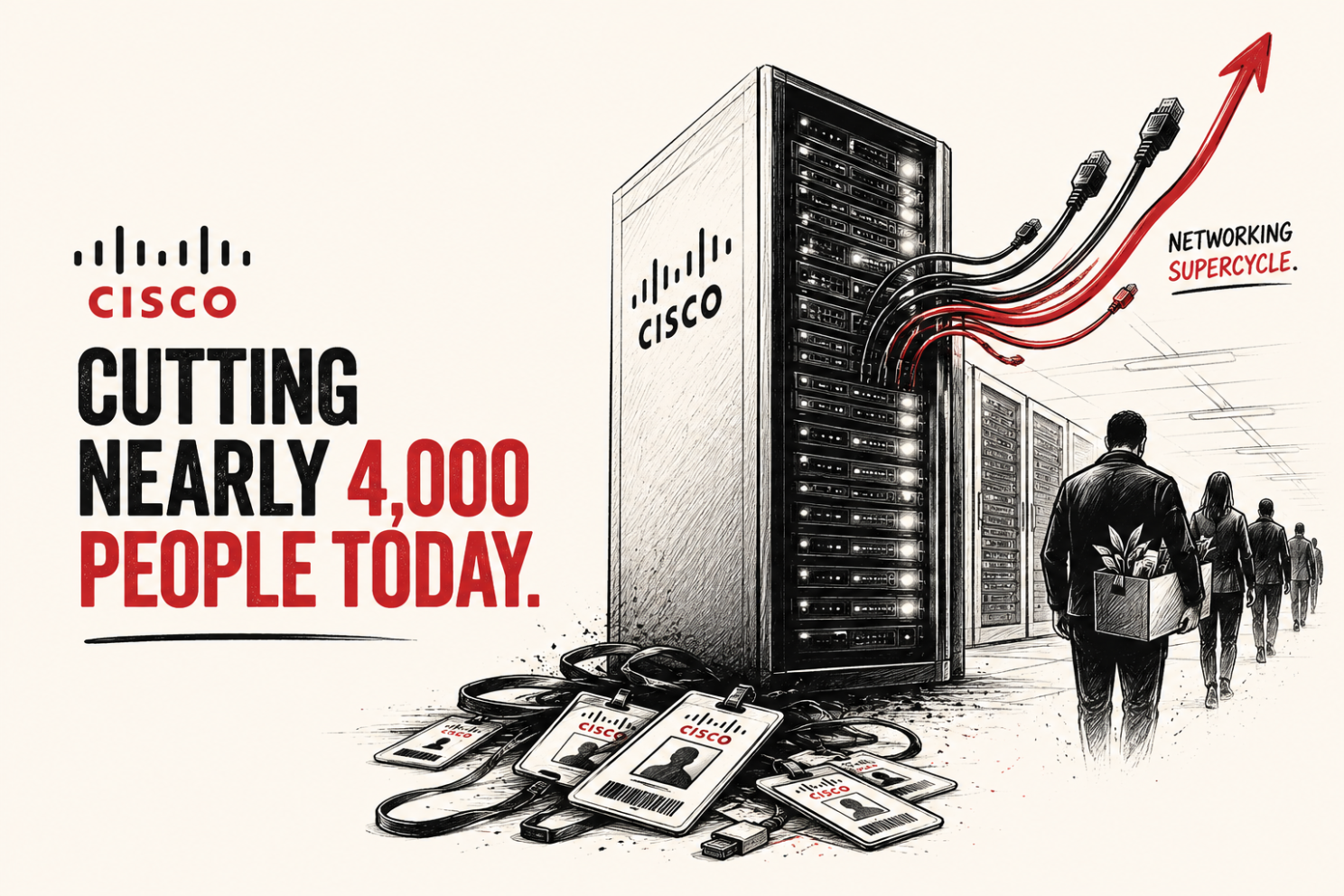
Cisco reported its best quarter in years today. $15.84 billion in quarterly revenue. Projections for next quarter reach $16.9 billion. Data center orders are expected to hit $9 billion this fiscal year — nearly double what the company projected just months ago. CEO Chuck Robbins called it a “networking supercycle.” The stock surged toward its best single day in over a decade. And on the same morning the earnings release went out, 4,000 people received notices. The restructuring will cost Cisco up to $1 billion — $450 million hitting this quarter alone. The company says it is redirecting investment toward silicon, optics, security, and AI. What Cisco Announces Layoffs on the Same Day It Posts Its Best Quarter in Years makes visible is not a Cisco story specifically. It is a template. Oracle cut 30,000 people on record revenue. LinkedIn cut 875 on record revenue. The tech sector has now shed more than 100,000 jobs this year — roughly 880 every single day. The message from Big Tech in 2026 is consistent: the numbers have never been better, and that is exactly why we can afford to do this.
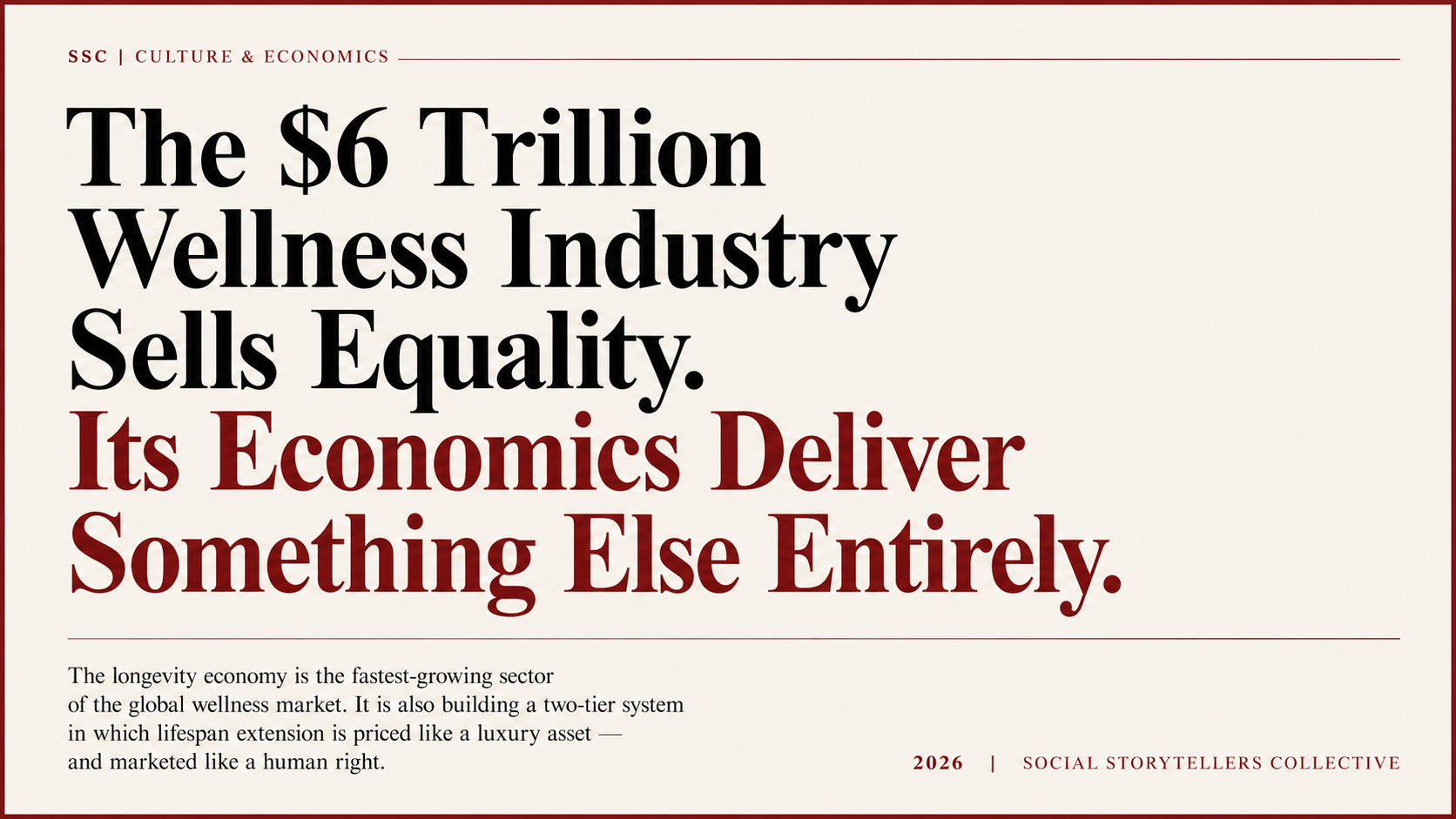
The global wellness economy just crossed $6 trillion — and the fastest-growing segment of it, the longevity sector, is projected to reach $610 billion by year’s end. In The $6 Trillion Wellness Industry Sells Equality. Its Economics Deliver Something Else Entirely, we examine the gap between what the industry markets and what it actually delivers. Biological age testing, precision diagnostics, CGM-guided coaching, peptide protocols, and longevity residences are building the most sophisticated tiered-access health system the world has ever seen — one organized not around diagnosis and treatment, but around optimization and prevention, priced accordingly. The marketing language is democratic: treat your health like hygiene, your body, your data, your choices. The economic architecture is not. The US precision diagnostics market alone is projected to grow from $6.9 billion to $21.5 billion by 2030. The people positioned to access that growth are already the healthiest people in the room. This is not a story about whether longevity science works. It is a story about who it works for — and what the rest of the market gets sold in the meantime.
The question of who gets access — to health, to opportunity, to the room where decisions get made — runs through every story in today’s note, including this one.
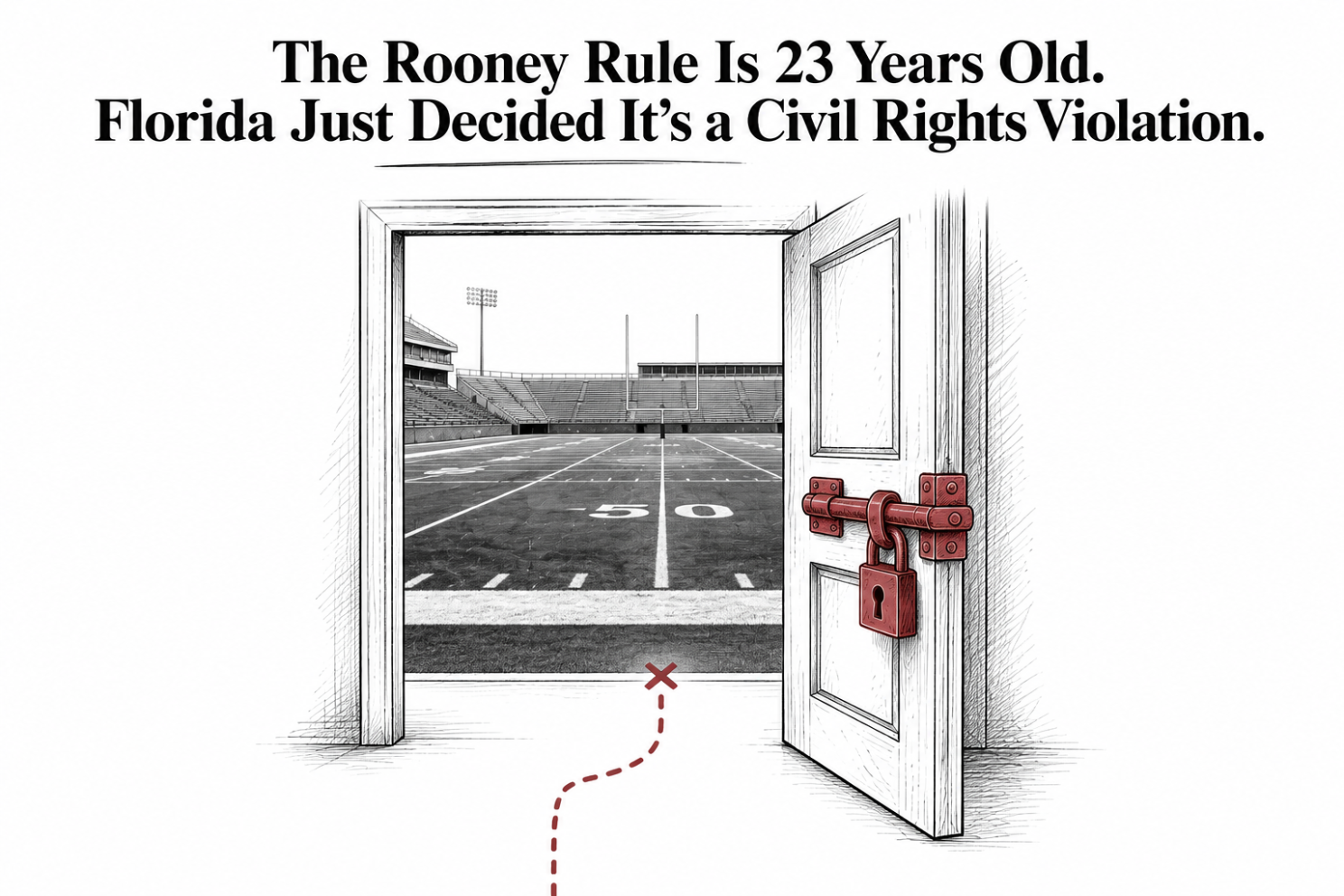
The Rooney Rule was not a radical policy. It did not guarantee Black coaches jobs. It did not set hiring quotas. It required NFL teams to interview at least two minority candidates before filling head coaching, general manager, and coordinator positions. That is the policy Florida Attorney General James Uthmeier subpoenaed the NFL over today — arguing it amounts to what he called “blatant race and sex discrimination.” The league softened its website language in response. Uthmeier issued the subpoena anyway and called the revision a capitulation. What The Rooney Rule Is 23 Years Old. Florida Just Decided It’s a Civil Rights Violation. traces is what the subpoena actually reaches — not just the Rooney Rule but the Offensive Assistant Mandate, the Accelerator Program, the Mackie Development Program, and Resolution JC-2A, a comprehensive audit of every structural mechanism the league has built over two decades to address a documented access problem. Ten head coaching vacancies were filled in the most recent cycle. None went to Black candidates. The NFL now has three Black head coaches out of 32. The AG’s legal argument treats the remedy as the violation while leaving the original condition — systematic exclusion from consideration — legally invisible.
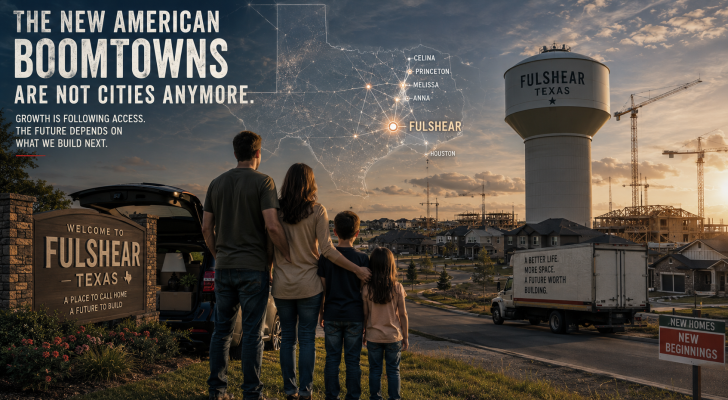
The fastest-growing city in America right now added more than 11,000 residents in a single year and expanded by approximately 276% since 2020. It is not New York. It is not Los Angeles. It is Fulshear, Texas — a Houston-area suburb that most people could not have placed on a map five years ago. North Texas communities like Celina, Princeton, Melissa, and Anna sit alongside it near the top of the national growth rankings. The center of American population expansion has moved to the outer edges of metropolitan regions, where land is cheaper and local governments are struggling to absorb the pace of migration fast enough to keep systems functional. Inside Houston itself, population growth slowed dramatically — the city added only about 11,500 residents after adding more than 40,000 the year prior. The people did not stop coming to the region. They stopped choosing the urban core. What The New American Boomtowns Are Not Cities Anymore argues is that this shift is not about preference. It is about mathematics. Mortgage rates remain elevated, median home prices in major urban centers continue to pressure middle-income earners, and hybrid work has weakened the requirement that workers stay geographically tethered to downtown. Americans are not abandoning cities because they dislike urban life. They are recalculating where stability still feels mathematically possible.
Former Spirit Airlines employees are suing the airline they built — and they still haven’t been paid. A class-action lawsuit filed in U.S. Bankruptcy Court, Southern District of New York alleges that when Spirit shut down on May 2, its 17,000 workers were given roughly one hour’s notice before the terminals went dark. The federal WARN Act requires 60 days written notice. Spirit gave one. Workers were promised pay through May 2. Many have not received it. What they have received is this: while their final checks remain outstanding, Spirit’s lawyers filed a motion in bankruptcy court seeking $10.7 million in retention bonuses for executives and managers overseeing the wind-down — with a separate undisclosed bonus package for the CEO and two senior officers. The legal term is WARN Act violation. The plain term is: the people at the top got taken care of. The people on the floor are still waiting.

In Accra, streetwear has moved far beyond imitation. Across neighborhoods including Osu, East Legon, and Jamestown, young creatives are building fashion ecosystems through local tailoring networks, sneaker resale markets, pop-up events, photography collectives, and music-driven style communities that operate independently from traditional luxury pipelines. Ghana imported more than $214 million worth of secondhand clothing in 2023 according to UN trade data. Young designers and stylists are increasingly repurposing those garments into original pieces — transforming global fashion surplus into localized creative capital. What makes the shift significant in Accra’s Streetwear Economy Is Building Outside Traditional Fashion Gatekeepers is not that Accra has developed a recognizable aesthetic. It is that the city is building cultural infrastructure without waiting for Western institutions to formally recognize it first. Ghana’s median age is approximately 21 years old — one of the youngest populations in the world — and that demographic is increasingly shaping culture through mobile-first participation rather than institutional affiliation. The mainstream industry often notices these scenes only after international celebrities or luxury houses absorb their aesthetics. By that stage, the infrastructure has usually been developing for years locally.
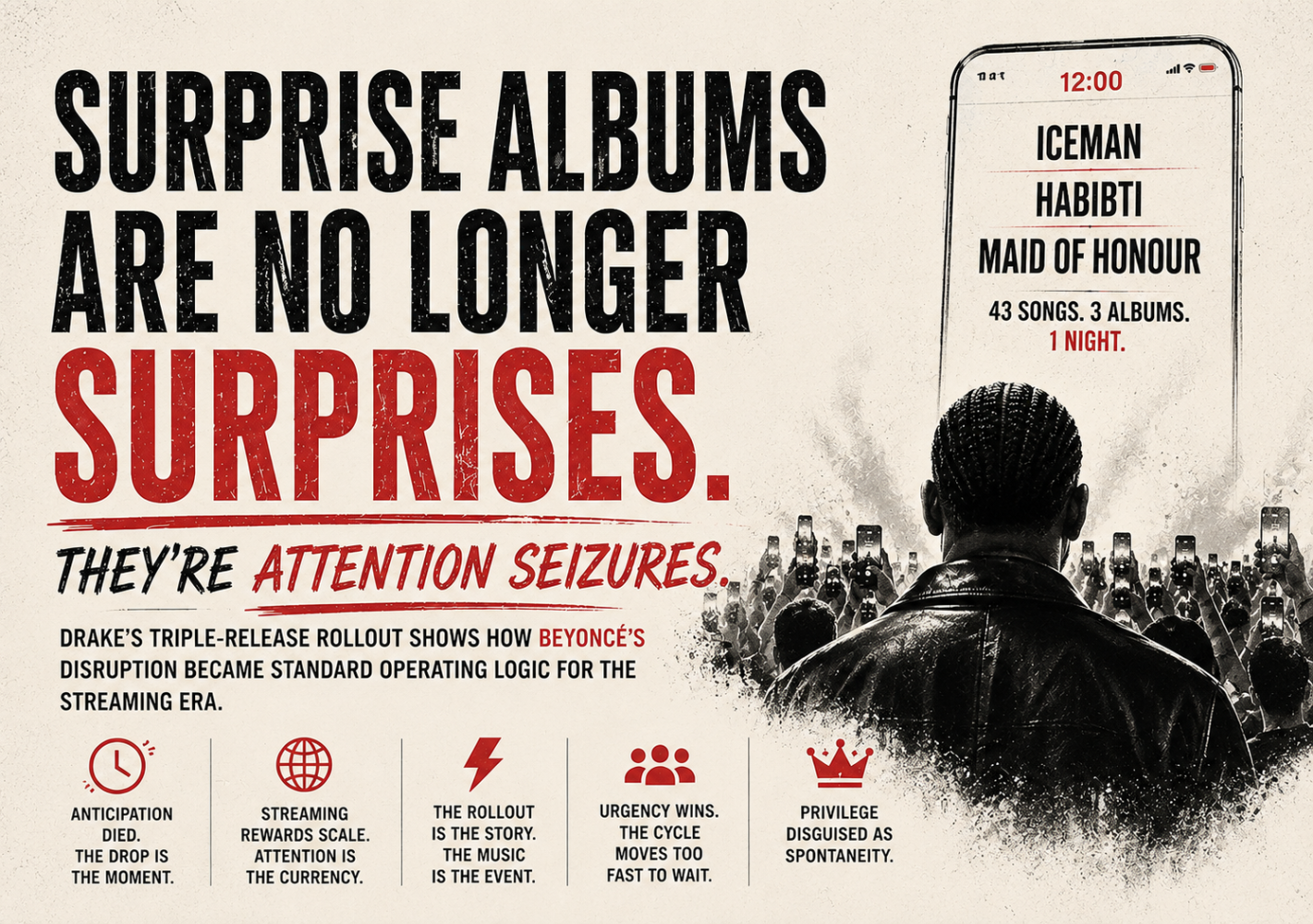
Drake entered Friday night with one confirmed release. By midnight, audiences had received three. Iceman had been anticipated. Habibti and Maid of Honour arrived without warning — 43 songs across three projects in a single drop window — landing directly on top of Giveon’s deluxe release for BELOVED: ACT II and turning a normal Friday streaming cycle into an attention war measured in timelines, reaction videos, and algorithmic saturation. For several hours, one artist effectively consumed the release ecosystem around him. Surprise Albums Are No Longer Surprises. They’re Attention Seizures. makes the case that this is no longer unusual — surprise releases have evolved from novelty into infrastructure. Beyoncé permanently altered modern release logic in 2013 when she dropped her self-titled album without announcement, moving more than 800,000 digital copies in its first three days. Spotify now serves more than 675 million monthly active users globally, and TikTok accelerates discovery so aggressively that long promotional windows can feel outdated before albums even arrive. Surprise drops solve that problem by collapsing announcement and consumption into the same moment. Drake’s triple drop leaned into this logic hard — 43 tracks create replay value, discourse fragmentation, fan ranking culture, and playlist penetration simultaneously. But the artists best positioned to execute this are already operating with enormous advantages. Surprise drops get framed as artistic spontaneity. More accurately, they function as a privilege mechanism available primarily to artists with enough market power to command instant mobilization at scale. What Beyoncé pioneered and Drake has now expanded isn’t simply a release strategy. It is a recognition that in the platform era, controlling when people pay attention has become almost as valuable as the music they eventually hear.

Not everyone in the room was watching Drake. Giveon released the deluxe edition of BELOVED: ACT II into that same midnight window — and the internet had opinions. “We only listening to Drake today.” “You should’ve pushed your album to next week or somethin.” The comments were playful, but they were revealing. Because Giveon is not a small artist hoping to catch a break. He is a Grammy-nominated R&B singer with one of the most distinctive voices of his generation, a loyal fanbase, and a project stacked with features from Kehlani, Leon Thomas, Teddy Swims, and Sasha Keable. What The Timeline Wasn’t Ready for Giveon captures is a live demonstration of how concentrated music culture has become online — platforms no longer let releases exist side by side, they force everything into a hierarchy. Who owns the day. Who should have waited. And yet underneath all the Drake noise, something else was happening: people were showing up for slow music. Intentional music. Records built around vocals, atmosphere, and emotional restraint — music that asks you to sit inside a feeling rather than clip a moment. That tension between what platforms reward and what listeners actually crave is one of the defining stories in music culture right now. Giveon didn’t drop at the wrong time. The internet just forgot, for a moment, that more than one thing can be worth your attention.
The Daily Visual Signal A visual interpretation of the deeper systems, tensions, and structural shifts shaping the current moment — designed to translate complex societal change into a single image.
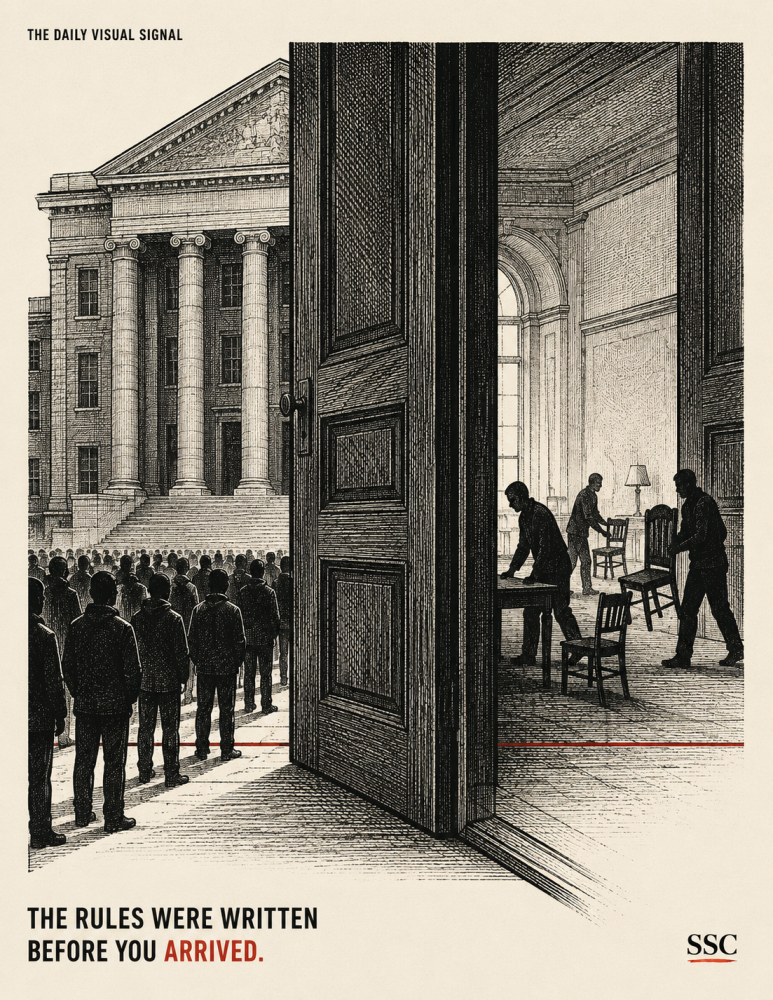
The Rules Were Written Before You Arrived. A large institutional building — courthouse, league headquarters, corporate campus — stands at the center of the frame. The doors are open, but the threshold is marked with a line. On one side: a crowd of people who have been waiting. On the other: a room being rearranged in real time. The people rearranging it are not hostile. They are simply reorganizing around a logic that was never designed with the crowd outside in mind. The doors remain open. The line remains. Born into the rules as they exist. Arriving to find them already revised.
Featured Story: Eli Lilly’s India Problem Is About More Than Advertising

Eli Lilly paused its obesity awareness campaign in India today after regulators raised concerns that the initiative could indirectly promote prescription medications without formally advertising them. The campaign never explicitly named Mounjaro, Lilly’s blockbuster GLP-1 treatment. Indian regulators questioned whether the educational messaging functioned as market conditioning ahead of broader obesity treatment expansion. Eli Lilly’s India Problem Is About More Than Advertising makes the case that the dispute is not really about a paused campaign. India’s obesity treatment sector is projected to approach ₹80 billion by 2030. The country’s demographic scale, rapidly expanding middle class, and digital infrastructure create conditions where wellness messaging can spread across large populations at a speed that traditional advertising channels could never match. What pharmaceutical companies have understood — and what Lilly’s conflict with Indian regulators makes visible — is that modern health markets are shaped long before prescriptions are written. Public awareness campaigns, social media, wellness influencers, and digital health platforms collectively influence how populations interpret their bodies, their risks, and their treatment options. By the time a consumer asks a physician about a medication, the cultural groundwork may already be established. The commercial value of shaping that perception can rival the value of direct advertising itself. The real question raised by the India dispute is not whether awareness campaigns influence demand. It is how much influence corporations should have in defining the language populations use to understand their own bodies in the first place.
Saturday’s stories do not share a geography or an industry. They share a structure. In each one, something is being redesigned — hiring access, economic geography, cultural authority, health language — and the redesign is being presented in terms that make it sound inevitable or even beneficial. The Cisco announcement is framed as investment redirection. The Florida subpoena is framed as civil rights enforcement. The suburban growth is framed as a boomtown story. The pharmaceutical campaign is framed as health education. Strip each frame and what remains is a set of decisions about who the system is being reorganized to serve — and who will absorb the friction of that reorganization.
What Accra’s streetwear economy and Drake’s cultural trial have in common is that they are both operating inside systems that were not built with them in mind and finding ways to move anyway. That is not optimism. That is adaptation — the kind that becomes necessary when the institutions responsible for access reorganize faster than the communities depending on them can respond.
We will be back tomorrow with more.
— SSC
All of today’s coverage lives at socialstorytellers.substack.com. The full archive, beat navigation, and every linked piece are best experienced on a computer. If you have been reading and have not yet subscribed, we would be glad to have you with us.