
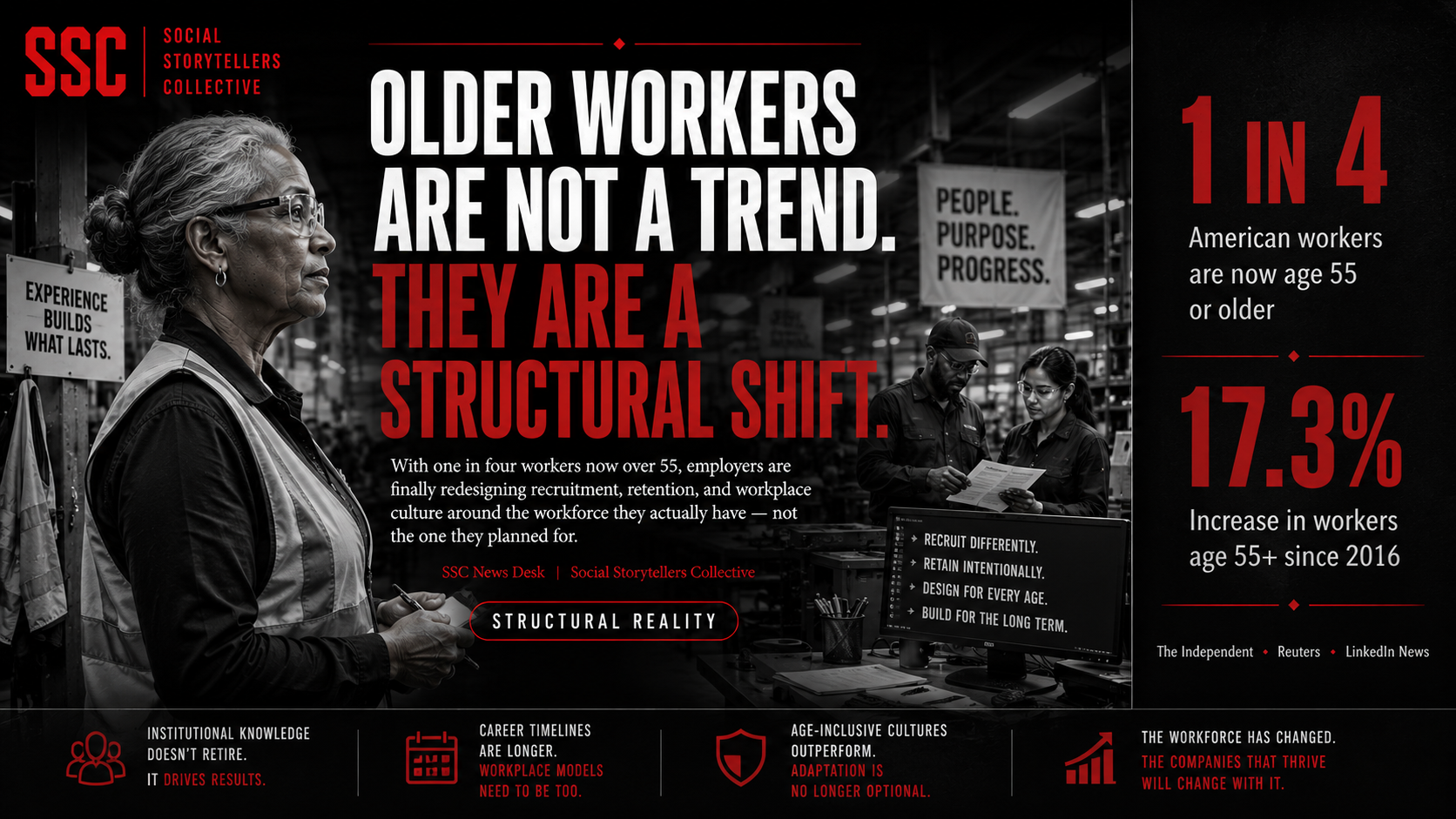
Roughly one in four American workers is now 55 or older, a figure that has grown 17.3% since 2016, according to reporting by The Independent and Reuters. The labor market tightening of the past several years forced the conversation that demographic projections had been signaling for a decade: the workforce is older, it is staying longer, and the infrastructure built around a 35-year-old employee — career ladders, health benefit structures, physical workspace design, retirement timelines — does not fit the reality of who is actually showing up to work. Companies including Deloitte and BMW have begun shifting recruitment and retention strategies in response, moving toward age-neutral job language, enhanced ergonomics, flexible scheduling, and formal mentorship structures that capture institutional knowledge before it walks out the door.
What the adaptation playbook has not fully addressed is the equity dimension. Older workers are not a monolithic group. A 57-year-old white-collar professional with portable skills and savings can negotiate flexibility. A 57-year-old in a physical labor role, or one whose industry was restructured out from under them, is navigating a labor market that still has significant age bias baked into hiring algorithms and compensation benchmarking. The employers making headline adjustments are largely large corporations with the margin to do so. The workers who most need the accommodation — those in the bottom half of the income distribution, in industries with high physical demand or rapid technological change — are the least likely to work for a company with a formal aging workforce strategy. The shift is real. The coverage of it is incomplete.