
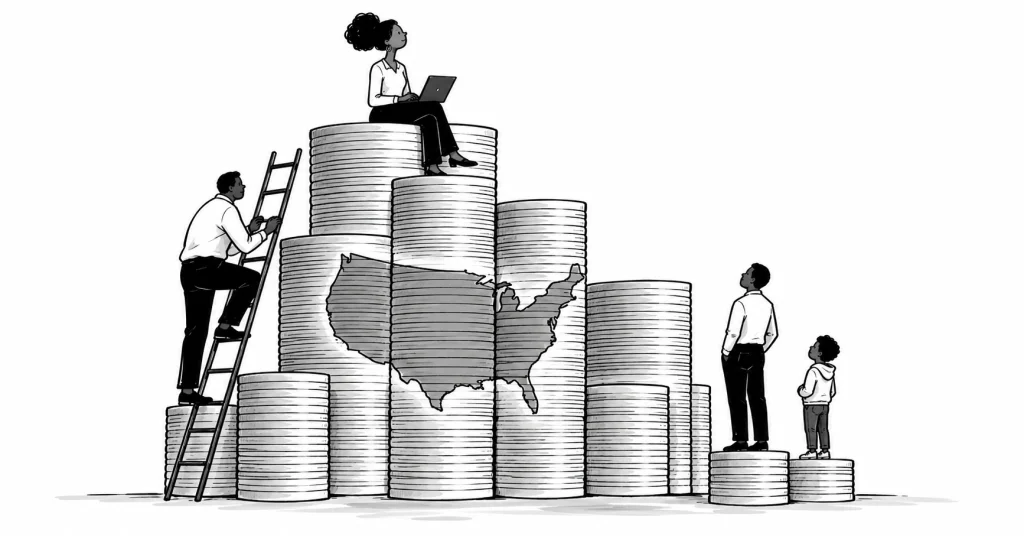
A viral post puts Black Americans among the world’s largest economies. The scale is real, and the bigger opportunity is turning that economic power into ownership that reaches more families.
By the Social Storytellers Collective News Desk
Black Americans held an estimated $2.8 trillion in household wealth in 2022, according to a calculation that has been circulating widely since the Instagram account Ask a Black Man framed Black America as one of the largest economies on the planet. The figure applies a roughly 2% share to the nation’s approximately $139 trillion in household wealth. The post ranks Black Americans eighth in the world if measured as their own nation and calls them the wealthiest Black population anywhere. The exact ranking depends on the yardstick, since GDP tracks what an economy produces in a year while household wealth tracks what families have built over time. But the larger point holds. Black America’s collective economic footprint is measured in trillions, and it was built from generations of work, homeownership, entrepreneurship and saving, often in the face of policies designed to keep it from happening. The question the post invites is not whether that power exists. It is why so much of it has yet to reach the kitchen tables of the families who generate it.
A Big Balance Sheet, Unevenly Shared
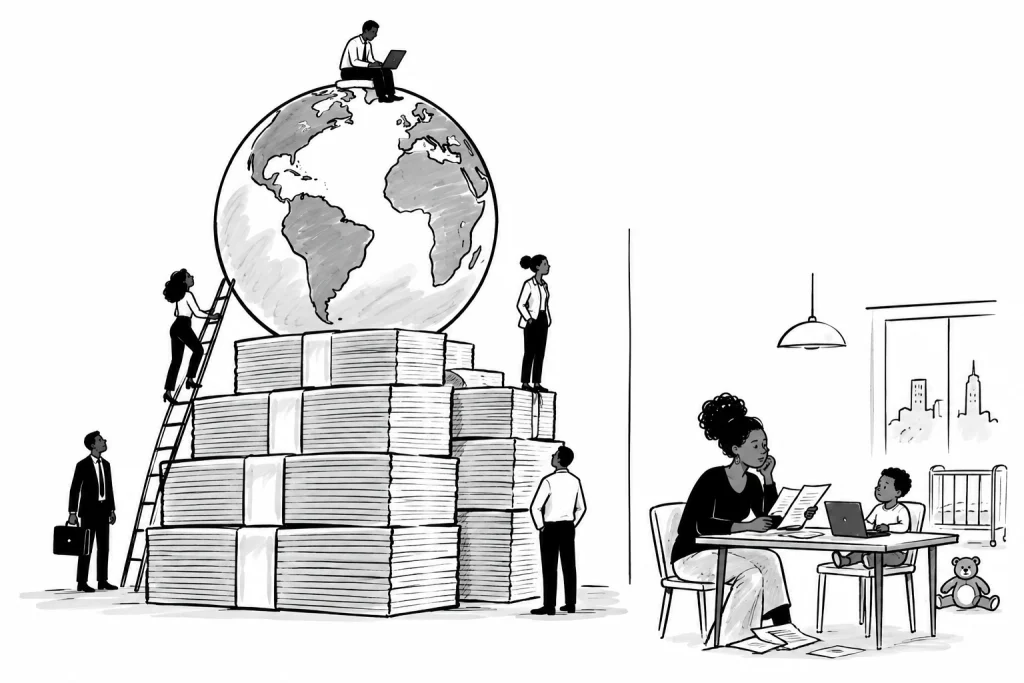
Even at that scale, Black households hold a far smaller share of the nation’s wealth than their share of the population, a gap documented in the Federal Reserve’s own data and in research from the Federal Reserve Bank of New York. The Federal Reserve’s 2022 Survey of Consumer Finances shows what that looks like for a typical household. The median Black family had a net worth of about $44,900, compared with about $285,000 for the median White family. Black families made real gains between 2019 and 2022, growing their wealth faster in percentage terms, but because the starting points were so far apart, the dollar gap still widened by about $50,000. Collective strength and household strain can exist at the same time, and in Black America they do.
Participation Isn’t the Same as Ownership
Black Americans drive the economy as workers, consumers, entrepreneurs, homeowners and investors. The challenge is that participation does not automatically become ownership of the assets that compound over time. Spending keeps businesses running, but the equity in those businesses usually belongs to someone else. Wages pay the bills, but they rarely grow the way property, stock holdings or a stake in a fast-growing company can. The Federal Reserve’s research shows that rising home values were the main driver of Black families’ wealth growth between 2019 and 2022, while stocks contributed far less. A home can anchor a family, but it is hard to borrow against in a pinch and harder to pass down without planning, which leaves wealth concentrated in a single asset that doesn’t always move when a family needs it to.
Where the Next Gains Come From
That makes the next chapter less about how much Black America spends and more about what it owns. Black entrepreneurs need capital that lets them scale without giving away control of what they built. Households need ways to buy, keep and diversify appreciating assets, from homes to retirement accounts to business equity. Younger generations need to inherit a financial head start instead of beginning from zero. None of these goals shows up in a consumer-spending total, and all of them determine whether collective wealth becomes family security. The viral post is right to celebrate the scale of Black economic power. The next measure of progress is how many more families get to feel it in their own lives, with the ownership, cushion and freedom of choice that wealth is supposed to deliver.
Sources: Federal Reserve Board, “Greater Wealth, Greater Uncertainty: Changes in Racial Inequality in the Survey of Consumer Finances,” Oct. 18, 2023; Federal Reserve Bank of New York, “Racial and Ethnic Inequalities in Household Wealth Persist,” June 28, 2024; Ask a Black Man, Instagram.