
Films like “Moses the Black,” featuring Omar Epps alongside artists like Wiz Khalifa and Quavo, signal a noticeable shift in the thematic direction of Black storytelling. For years, narratives centered on survival, hustle, and systemic constraint dominated much of the genre. While those stories remain relevant, there is a growing emphasis on transformation, accountability, and spiritual reckoning. This shift reflects changes not only in storytelling preferences but also in how audiences are thinking about success and fulfillment.
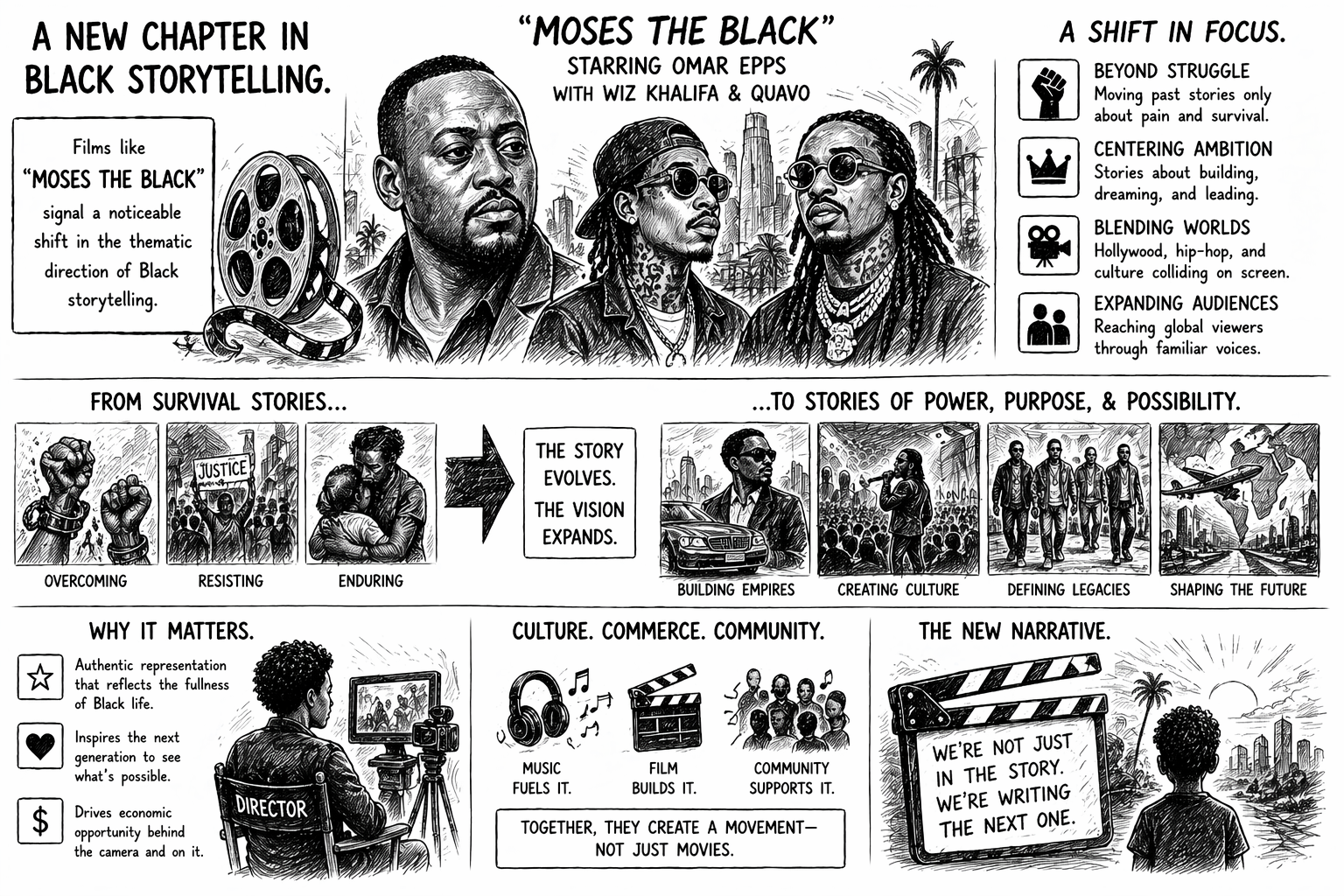
Redemption narratives introduce a different kind of complexity. Instead of focusing solely on external barriers, they explore internal change, asking what it means to evolve within systems that may still be restrictive. This approach allows for a more nuanced portrayal of characters, moving beyond archetypes to examine the motivations, contradictions, and possibilities that shape individual journeys. It also opens space for themes of faith, morality, and personal responsibility, which have not always been central in mainstream portrayals.
The emergence of these narratives can be linked to broader cultural conversations about mental health, wellness, and purpose. As discussions around these topics become more visible, they influence the kinds of stories that resonate with audiences. Films that engage with transformation tap into a desire for narratives that go beyond material success, addressing questions about identity, meaning, and long-term fulfillment. This aligns with a wider shift in how success is defined, moving away from purely economic measures toward more holistic considerations.
There is also a strategic dimension to this evolution. Expanding the range of stories allows filmmakers to reach new audiences and explore different genres, from drama to faith-based cinema. This diversification can create additional opportunities within the industry, both in terms of funding and distribution. At the same time, it challenges existing perceptions of what Black film is or should be, pushing against limitations that have historically constrained the scope of storytelling.
However, the rise of redemption narratives does not eliminate the need for stories that address systemic issues. Instead, it adds another layer to the conversation, recognizing that individual transformation and structural change are interconnected. Characters can evolve within systems, but those systems still shape the conditions under which that evolution occurs. Balancing these perspectives is part of the ongoing development of the genre.
This shift ultimately reflects a maturation in Black entertainment, where the focus is expanding to include a broader spectrum of human experience. Redemption narratives do not replace stories of struggle. They build on them, offering a more comprehensive view of what it means to navigate, resist, and transform within complex social and economic landscapes.