
Part of Culture in Motion / The Critic’s Desk — an ongoing series examining who defines culture, how it moves, and what it reveals about the moment.
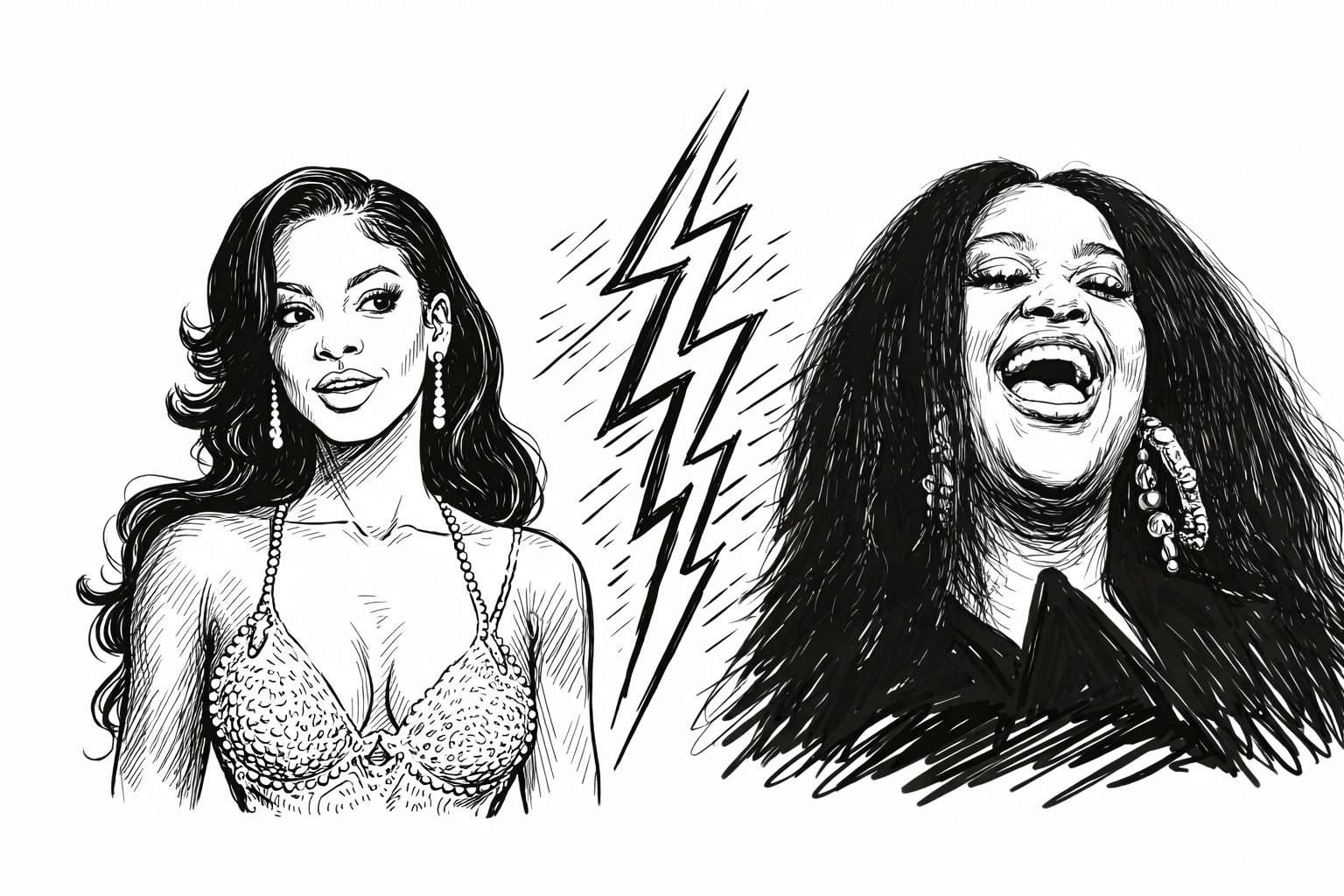
Ari Lennox and Jill Scott didn’t miss the moment so much as they made the kind of music this moment struggles to recognize. Both artists delivered projects that are fully realized, vocally grounded, emotionally intentional, and structurally complete — albums designed to be experienced from beginning to end. And yet when the response arrived, it didn’t match the quality. Early tracking reports suggest Ari Lennox’s latest project opened with under 10,000 units — a modest debut by industry standards, though official figures have not been widely confirmed. Worth noting: her single “Pressha” hit number 1 on Billboard Adult R&B Airplay — a signal that the music is connecting, even if the album metrics don’t fully capture it. Jill Scott, meanwhile, isn’t operating within that same release cycle at all — a reminder that first-week sales are no longer a universal measure of impact, especially in R&B. What these releases reveal is not underperformance. It is the growing disconnect between what this kind of music is designed to do and what the current system is structured to reward.
Both artists executed visible, traditional promotional runs. Ari Lennox sat down with The Breakfast Club and Hot 97, using platforms that historically translated conversation into reach. Jill Scott returned through legacy visibility — NPR, The Jennifer Hudson Show — spaces designed for depth and musical framing, releasing her first full-length project in eleven years. On paper, that is a complete press run. But the infrastructure those strategies were built for has shifted. These platforms still carry cultural weight, but they no longer guarantee discovery. Audience behavior has moved elsewhere. Visibility is no longer centralized. It is distributed.
That shift becomes clearer when placed next to how albums are being rolled out now. The modern rollout does not rely on a single moment of announcement or a concentrated press push. It unfolds across networks — streamers, short-form platforms, and personality-driven ecosystems that operate outside traditional media. Discovery happens inside conversations that already exist. This is where the Cardi B rollout becomes instructive — a strategy so deliberately engineered around distributed attention that it has become a case study in communications programs, including at Howard University. The rollout around Cardi B has not depended on conventional press. It has moved through visibility that feels embedded in everyday digital behavior — direct engagement, real-time commentary, physical activation, and alignment with creators who already hold audience attention. The album doesn’t arrive as a singular event. It is built as an ongoing presence that accumulates before release. Attention is the center of the rollout. Not the album.
This is where the gap with R&B becomes structural. The music Ari Lennox and Jill Scott are making is not designed for fragmentation. It is built on continuity, emotional pacing, and sustained listening. It asks for presence. The current system rewards interruption. Streaming reinforces that divide — music is consumed in pieces, tracks and clips that can be looped and shared, with the algorithm prioritizing retention at the level of the individual song rather than the album. Cohesion becomes harder to surface. Depth becomes harder to measure. Radio no longer resolves that gap. It follows momentum rather than creating it.
SSC examined this exact shift in What Happened to R&B Music? — the argument that a genre once defined by vocal power and emotional storytelling has been gradually reshaped by digital production and a platform economy that rewards mood over mastery. The artists who built R&B came up in an environment where the voice carried the full weight of the record. Instrumentation existed to support the emotion, not substitute for it. Ari Lennox and Jill Scott are operating from that same standard — and what the streaming era has revealed is not that the standard is wrong, but that the system was never rebuilt to accommodate it.
There is also an uneven distribution of support embedded within the system itself. Playlist placement, promotional investment, and algorithmic amplification do not operate evenly. Artists working within this version of R&B often rely more heavily on organic growth, which develops more slowly and registers less dramatically in first-week metrics. At the same time, audience behavior carries its own contradiction. There is a clear demand for “real R&B” — for vocals, for emotional substance. But engagement patterns do not always align with that demand. The music people say they value and the music they consistently engage with are not always the same. One reflects intention. The other reflects habit. That gap shows up in the numbers, but the numbers are only capturing a narrow window of impact.
What Ari Lennox and Jill Scott delivered are projects designed for longevity. They are meant to be revisited, to settle into rotation, to grow with the listener rather than peak immediately. The Cardi album rollout model demonstrates how attention now operates — distributed, continuous, embedded in digital ecosystems. The R&B model represented by Ari Lennox and Jill Scott demonstrates something else entirely — music as a sustained experience rather than a sequence of moments. Both are valid. But only one is fully aligned with the current system.
Why This Matters
The disconnect between critical quality and commercial performance in R&B reflects a broader transformation in how music is introduced, consumed, and measured. As the industry continues to prioritize attention over cohesion, artists who build complete bodies of work will increasingly appear to underperform within traditional metrics. The question is no longer just how good the music is. It is whether the system has the capacity to recognize forms of success that unfold over time rather than all at once. And for an audience that still knows every word to Who Is Jill Scott? twenty-five years later, that kind of success is not invisible. It just doesn’t show up in week one.