
The question deja.zhane posed on TikTok was direct enough to stop a scroll: are Black American beauty content creators being considered “not Black enough” for the very industry their culture helped build?
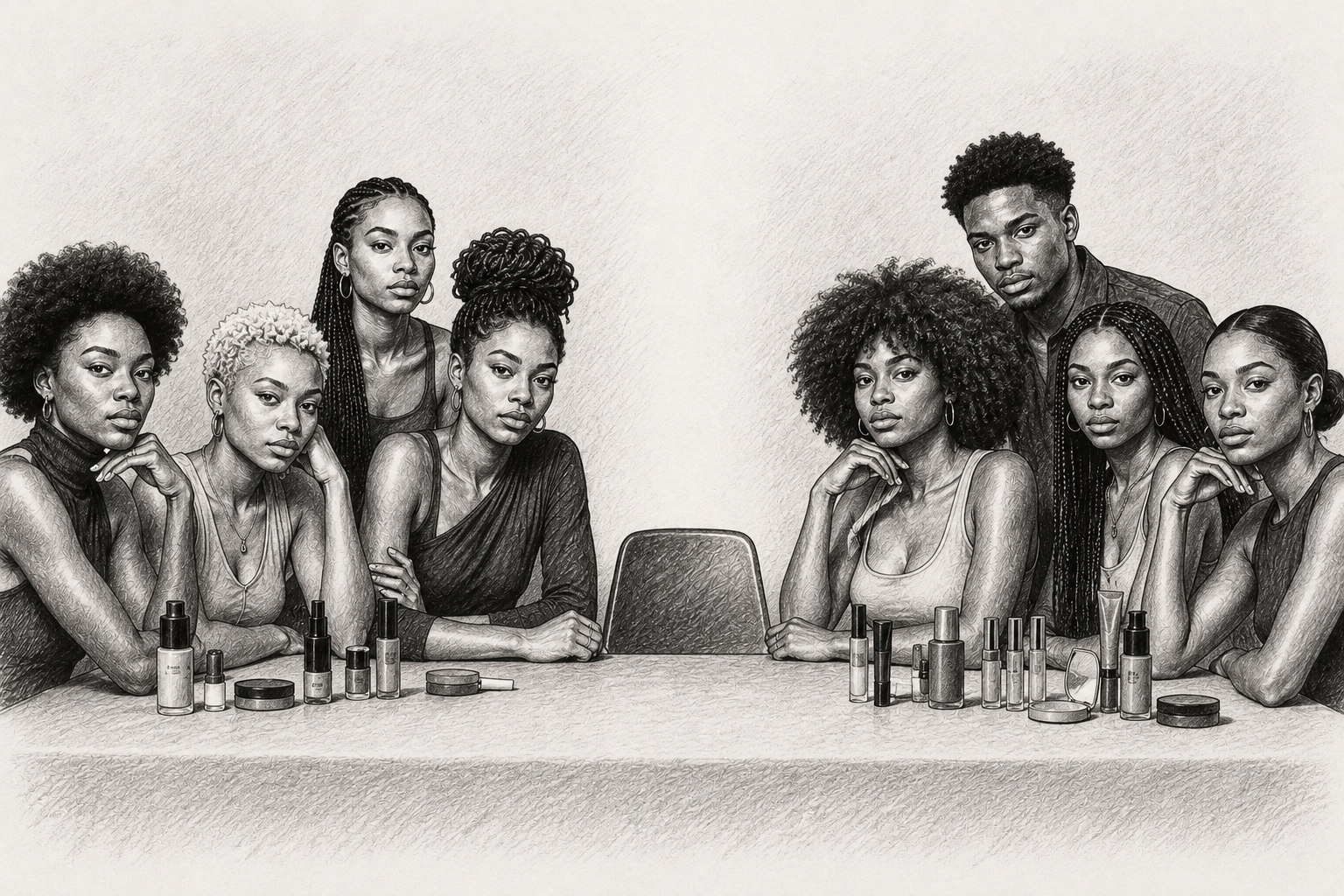
The Dallas-based creator — who has built a following of 331,800 on TikTok around makeup, beauty, and what she specifically calls “Black American beauty” — was not speaking in abstractions. She was describing something she and other creators in her space had been observing for years and increasingly experiencing firsthand: that when beauty brands go looking for Black representation, the creators they select, the faces they feature, and the partnerships they offer frequently favor Black creators from the diaspora — African, Caribbean, Afro-Latina — over Black American creators whose ancestors built much of the cultural infrastructure the beauty industry now profits from.
The video generated 14,800 likes and nearly 5,000 comments. Then came the think pieces. Then the response videos. Then the backlash to the backlash.
Her argument did not emerge in isolation. It is part of a quieter but growing cultural movement among Black Americans who have begun explicitly self-identifying in ways previous generations rarely felt necessary.
For most of American history, “Black” was understood — at least inside the United States — to mean Black American. The descendants of enslaved people. The community whose culture, labor, political struggle, and aesthetic sensibility shaped so much of what the country became. That assumed legibility is shifting. As immigration has diversified the Black population in America, and as global Black culture has become more visible and more commercially valuable, the category of “Black” has expanded in ways that some Black Americans feel have made them paradoxically less visible — not more.
The response, for a growing number of creators, activists, and everyday people online, has been explicit self-identification. Not just “Black” but “Black American.” Not just a racial category but a specific cultural and ancestral one — one that carries the particular history of slavery, Jim Crow, the Great Migration, the civil rights movement, and the ongoing fight for political and economic equity that is distinct from the experiences of Black people who arrived in America more recently or whose families’ relationship to this country’s specific racial architecture is different.
Deja.zhane is part of that movement. Her use of “Black American beauty” as a specific frame — rather than simply “Black beauty” — is intentional. It is the beauty space’s version of the same self-identification impulse: a deliberate effort to name a specific community whose contributions are being absorbed into a broader category in ways that make those contributions harder to see, harder to credit, and harder to compensate.
The irony is precise. Black Americans have spent generations fighting to be seen simply as American — to have their full humanity recognized inside a country that built its wealth on their labor. Now some are fighting to be seen as specifically Black American — to have their particular cultural identity recognized inside spaces that are happy to profit from Black aesthetics while treating Blackness as interchangeable regardless of origin. That is not a contradiction. It is the same argument arriving at a different moment in history, through a different door.
The argument deja.zhane is making is not that diaspora creators don’t deserve visibility. It is that visibility in the beauty industry has become a finite resource — brand deals, campaign casting, product development partnerships, PR gifting, and platform amplification — and that resource is not being distributed equally even within Black spaces. Black American creators, she argues, are being systematically overlooked in favor of creators whose Blackness reads as more globally marketable, more exotic, more palatable to an industry that has always been more comfortable with Black aesthetics than with Black Americans specifically.
That distinction is worth sitting with. The beauty industry has spent the last decade loudly expanding its definition of “inclusive.” More foundation shades. More diverse campaign faces. More Black-owned brand partnerships. But inclusion, as deja.zhane’s argument makes clear, is not a monolith. You can have a beauty campaign that features multiple Black women and still systematically exclude a specific subset of Black women — the ones descended from enslaved people in America, the ones whose cultural contributions gave the industry its vocabulary for cool, edge, and trend-setting, the ones whose buying power the industry has relied on for decades while treating them as consumers rather than creators.
The numbers tell part of the story. Black Americans spend $9.4 billion annually on beauty products — 2.4 times moreper capita than non-Black consumers on personal care and beauty. Black women are 14% of the US female population but represent a disproportionate share of beauty purchasing across skincare, haircare, cosmetics, and fragrance. The market was built on this spending. The creative infrastructure — the aesthetics, the trends, the cultural currency that makes beauty content travel — was built significantly by Black American women. The brand partnerships, campaign placements, and creator economy dollars flowing back into that community have not matched the investment that community has made.
The response to deja.zhane’s video revealed the complexity underneath the surface-level argument. Many Black American creators showed up in support — sharing their own experiences of being passed over, watching diaspora creators receive brand deals and campaign placements while their pitches went unanswered, feeling the specific sting of being told they were not the right “fit” without being given a reason that made sense given their audience size and engagement metrics.
But the backlash was also real. Critics — including some within the Black diaspora community — pushed back hard. Some argued that the framing created a false competition between Black communities that only benefits the industry keeping all of them underpaid. Others pointed out that diaspora creators face their own visibility barriers and representation gaps, and that targeting them as the beneficiaries of Black American exclusion misidentifies where the power and the decision-making actually sit. “The enemy is the brand, not the creator,” became a recurring counterargument. Several users also pointed to colorism as the more accurate lens — arguing that lighter-skinned Black creators of any background receive preferential treatment over darker-skinned creators regardless of national origin.
Deja.zhane responded to the backlash directly — in multiple videos, including one where she addressed being “gaslit” and “bullied” across accounts by people she felt were misrepresenting her argument. She maintained that her point was not about diaspora versus Black American but about the specific, documentable pattern of Black American beauty creators being rendered invisible inside an industry that profits from Black American culture.
That persistence matters. Because the structural argument underneath the discourse is real regardless of where you land on the specifics of deja.zhane’s framing.
The beauty industry’s relationship with Black creators mirrors patterns visible across the creator economy more broadly. As SSC reported in The Culture Is Theirs. The Economy Isn’t., Black entrepreneurs represent 17% of TikTok’s global creators and consistently generate higher media value than non-Black counterparts in fashion, lifestyle, and beauty — the three categories driving the most advertiser spending. Black audiences consume beauty content at rates that dwarf general market benchmarks. And yet the financial return flowing back to Black creators — through brand partnerships, sponsored content, product collaborations, and platform amplification — remains structurally misaligned with the value they generate.
The question deja.zhane raised — specifically about which Black creators benefit from the industry’s attention and which ones don’t — adds a layer of granularity to that argument that the broader creator economy conversation has largely avoided. It is not enough to say that Black creators are undervalued. It matters which Black creators, by whom, and through what decision-making logic inside the brands and agencies doing the selecting.
The delineating movement happening across Black American online spaces is the cultural infrastructure behind that question. When Black Americans begin explicitly naming themselves — “Black American beauty,” “foundational Black American,” “ADOS” — they are doing what every other group inside the American diversity conversation has always been permitted to do: asserting the specificity of their experience in a space that has flattened it. The beauty industry did not create that impulse. But it is one of the clearest places where the consequences of ignoring it are becoming visible.
The conversation is not going away. It has already moved from TikTok to YouTube to think pieces to podcast episodes and back again — the full cycle of a discourse that has touched something real. The terminology will continue to shift. The underlying argument — about visibility, economic access, and who gets to be the face of a culture they helped create — will not.
The beauty industry is not the only place this pattern is visible. SSC reported earlier this week on how Druski’s viral skit — a slavery-era parody about Black British actors “taking all the roles” in Hollywood — sparked a sprawling debate about the same dynamic playing out in film and television. When Hollywood wants to tell Black American stories with prestige, it increasingly reaches outside the United States for the talent to tell them. When beauty brands want Black representation that travels globally, they increasingly reach outside the United States for the faces to represent them. The industries are different. The architecture is the same: Black American cultural production is the foundation. Black American creators are increasingly optional.
Deja.zhane is still posting. The comments are still coming. And the beauty industry has not yet answered the question she asked.