
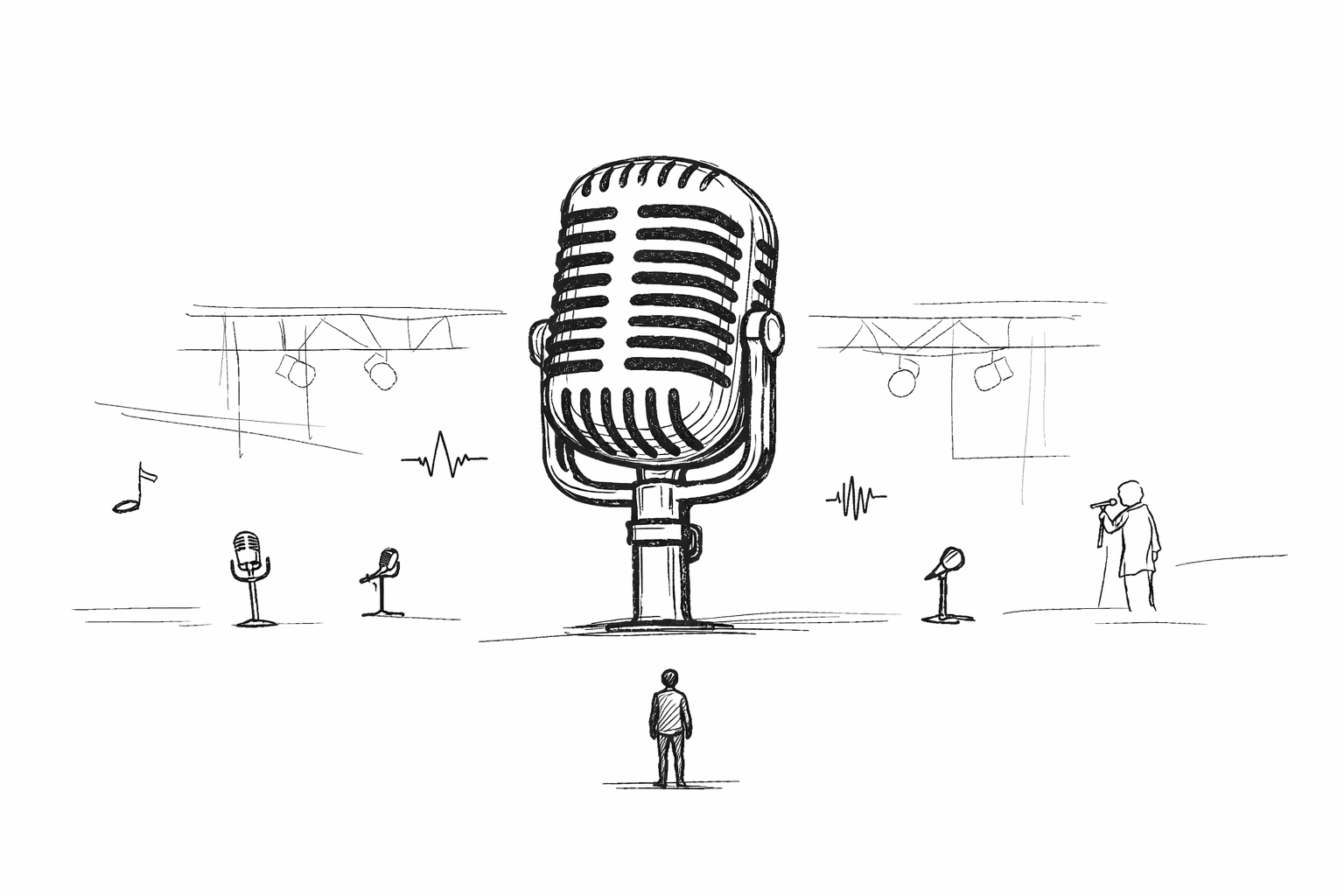
The question used to be simpler: who’s next?
For a long stretch of R&B history, the answer always came. The genre moved in a kind of relay — Luther Vandross to Whitney Houston, James Ingram to Anita Baker, Babyface to D’Angelo — each generation handing something forward, raising the floor while the ceiling kept climbing. Vocal excellence was not just celebrated. It was assumed. It was the baseline from which everything else was measured.
That relay has broken down. Not because the talent is gone — it hasn’t — but because the system that shaped it has changed in ways that may be irreversible.
The old infrastructure had a logic. Church developed the voice before it was ever pointed at a microphone. Live performance circuits demanded consistency — the ability to deliver the same thing, or better, every night, in any room, with or without ideal conditions. Rigorous studio expectations meant that what made it onto a record had already survived serious scrutiny. That pipeline did not produce legends by accident. It produced them through sustained pressure applied over time.
Most of that pipeline has either weakened or changed form. The Recording Industry Association of America reports that streaming now accounts for more than 80 percent of recorded music revenue — a system that rewards output and accessibility over depth and development. Visibility often arrives before refinement. Songs can succeed without demanding the vocal precision that once separated a career from a moment. Technology has expanded what is possible in production, which means the voice no longer has to carry a record alone. It can be layered, tuned, and in some cases reconstructed — a shift that does not eliminate talent but fundamentally changes what is required of it. As AI-generated performers begin to enter the industry, the definition of what constitutes a “voice” in R&B continues to stretch in directions the old standards were never designed to address.
The artists who still carry that lineage do so visibly. D’Angelo set a modern reference point for musicianship and restraint that other artists continue to navigate around. Chaka Khan, Toni Braxton, and Beyoncé demonstrate what disciplined vocal development looks like when it compounds over decades. At 86, Lenny Williams can still walk onstage and deliver with the command that serious training, sustained over a lifetime, produces. These artists stand out — and the fact that they stand out is itself the tell. Excellence has not disappeared. It has become isolated, distinctive in a way it never used to be, because it is no longer part of a broader field moving in the same direction.
When Alex Isley emerges with a style rooted in clarity, control, and restraint, she feels like a throughline to something older. That is both a compliment and a diagnosis — an acknowledgment that the qualities she embodies are no longer the entry point. They are the exception.
R&B is not diminished. It is genuinely broader now — more styles, more identities, more ways of making something meaningful. But breadth and depth are not the same thing. And the question that lingers beneath all of this is not who the next legend will be. It is whether the conditions that forge one — the pressure, the time, the infrastructure, the expectation of excellence as the baseline — still exist in any form.
The honest answer, right now, is that they are harder to find than they used to be.