
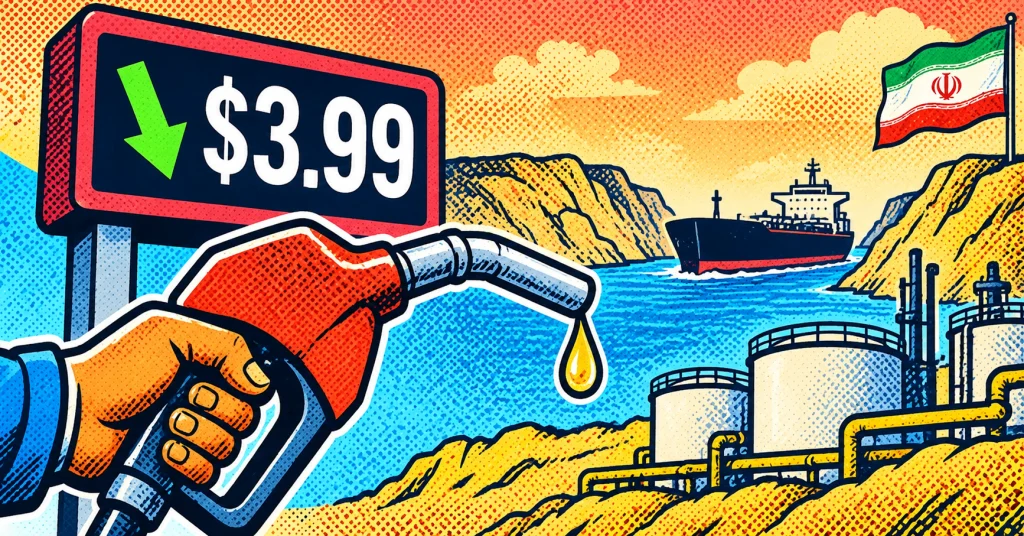
Prices at the pump are finally falling. The bigger story is what the Iran war revealed about how fragile the world’s energy system is, and who pays when it breaks.
For the first time since August, U.S. gasoline has dropped below $4 a gallon, according to GasBuddy data cited by Reuters columnist Ron Bousso. Diesel has slipped below $6 a gallon to a two-month low. After months of sticker shock, drivers heading into the holidays are getting some relief.
The relief has a source. In its November Oil Market Report, the International Energy Agency said global oil supply has outpaced demand for the first time since the war began, as Gulf exports recovered. North Sea crude fell 32%, from a high of $136 a barrel in early October to about $93.
The largest supply shock on record
Lower prices do not erase the scale of what happened. In its World Energy Outlook released Nov. 19, the IEA said disruptions to shipping through the Strait of Hormuz removed 2.8 billion barrels of oil and 60 billion cubic meters of natural gas from Gulf supplies, the largest energy supply shock on record. The strait normally carries about a fifth of the world’s oil and liquefied natural gas.
The world absorbed that loss by drawing down its reserves. The IEA counts a cumulative 462 million barrels drained from observed global stocks since the war began, which leaves less of a cushion for the next disruption. Demand also took a hit, and in September the agency projected a 2026 decline of 2.5 million barrels a day, the second-worst drop in 60 years after the pandemic.
Diesel is the problem that has not gone away
Crude prices tell only part of the story. Diesel powers trucks, trains, farm equipment and ships, and in Europe it remains near $180 a barrel, about 77% above pre-war levels, according to the IEA. When diesel stays expensive, the cost shows up later in groceries, shipping fees and anything that travels by truck.
That delay matters for households. The price at the pump can fall in weeks, while freight contracts, utility rates and grocery prices adjust over months. Families who felt the spike at the gas station may keep paying for it at the checkout line well into next year.
A corridor nobody trusts
The recovery is also fragile. Gulf crude exports reached more than 80% of pre-war levels in October, but IEA Executive Director Fatih Birol told CNBC that confidence in Hormuz as a safe energy corridor has been “crushed”. Renewed U.S.-Iran strikes slowed oil flows through the strait to about 9.5 million barrels a day in the 10 days through Nov. 19, down from 12.2 million in October.
The risk is not abstract. This week Iran said tankers struck mines in the strait, as SSC noted in Wednesday’s Five Things That Matter. The war has also rerouted travel across the region, from shipping lanes to flights into Jeddah.
What it means
The IEA’s outlook says oil and gas could become more abundant and cheaper once the disruptions ease, but the timing is uncertain, and Birol sees no credible path back to the pre-war normal in Hormuz. Countries are already rethinking where their fuel comes from, how much they store and how quickly they move away from oil entirely.
Why it matters: Cheaper gas this Thanksgiving is real relief, but it is not the end of the story. The war exposed how much of the world’s energy runs through one narrow strait, and the next shock will hit a system with smaller reserves and less trust than it had a year ago.