
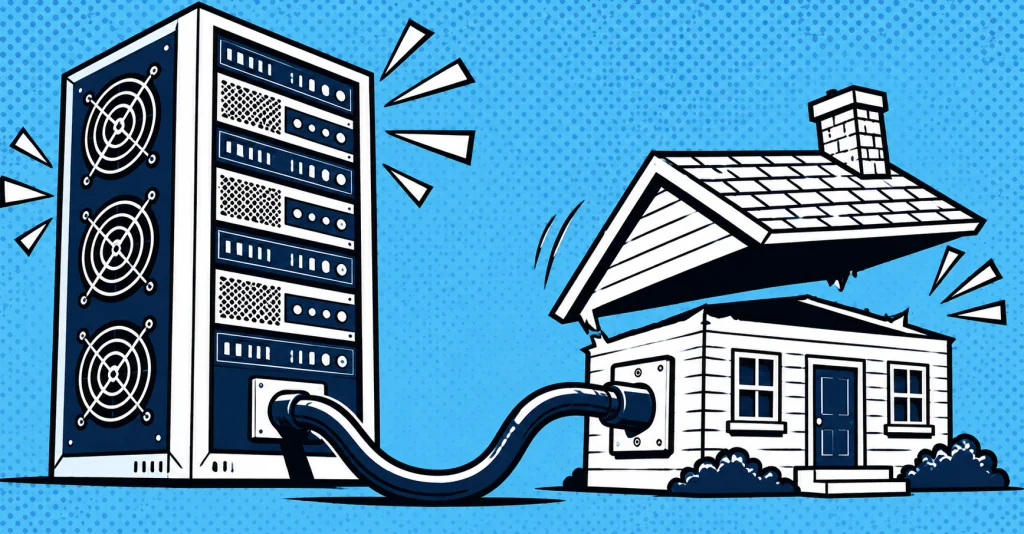
AI is driving a building boom, and residents want to know whether they’ll pay for the power, water and infrastructure behind it.
A billion-dollar data center can reshape a community while employing very few of its residents. It draws huge amounts of electricity, needs new substations and transmission lines, and competes for local water. Data centers used about 415terawatt-hours of electricity worldwide in 2024, and the International Energy Agency projects that will more than double to 945 terawatt-hours by 2030. As AI pushes that demand higher, more communities are deciding that a promise of investment isn’t enough to win their approval.
Why it matters: Utilities can recover the cost of new infrastructure through everyone’s rates. Unless regulators separate those costs, households and small businesses can end up paying for upgrades built mainly for one large customer.
- Higher bills aren’t automatic. Data centers can raise or lower rates depending on how costs are allocated, according to a Regulatory Assistance Project analysis. Utility consultant E3 found no evidence that data centers have historically been subsidized by other customers, but it warned that keeping it that way depends on regularly updating how costs are divided.
- Some states are making data centers pay their own way. Oregon approved a separate rate class that raises rates for large users like data centers by about 29%, while residential rates dip slightly, Environment + Energy Leader reported.
- Water is the next fight. Data centers could account for 3% to 9% of Texas’ water use by 2040, counting both cooling and the water used to generate their electricity, University of Texas at Austin researchers estimate.
- Residents are saying no. College Station’s City Council unanimously rejected a $30 million, roughly 200-acre land sale to Priority Power Management last year after hundreds of residents raised concerns about water, noise and energy use, KBTX reported.
- The jobs math is thin. Construction jobs end when the building is finished, and an automated server facility needs far fewer permanent workers than a manufacturing plant that costs the same, which makes local tax breaks harder to justify.
Texas is the test case. At Gov. Greg Abbott’s direction, ERCOT is requiring every data center developer seeking 25megawatts or more to disclose its tax breaks, water use, cooling technology and neighborhood impacts. ERCOT and state utility regulators plan to publish a report by Dec. 10. Abbott has also directed the state’s environmental agency to pause data center permits while the audit runs, law firm Willkie Farr & Gallagher noted. For now, the decision-making has moved from developers and the local officials courting them to the state agencies running the audit.
What’s next: Expect Texas lawmakers to make the 2027 session about tying the state’s data center sales-tax exemption to reporting on electricity, water and jobs. Elsewhere, expect more states to copy Oregon and put data centers in their own rate class. Before a town approves the next billion-dollar project, residents should be able to see how much power and water it will use, what incentives it gets and who pays if the costs run over.