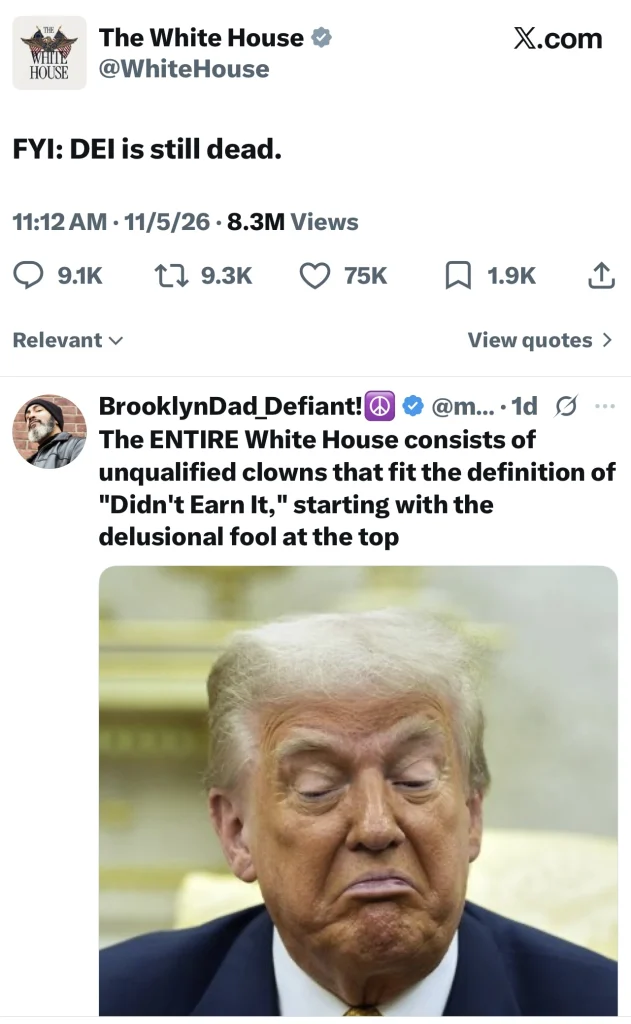
The administration can end diversity programs by executive order, but it can’t overturn who voters send to statehouses and the Senate. That’s where the DEI fight goes next.
Two days after Democrats won control of both the House and the Senate, the White House used its official X account Thursday evening to post a four-word message: “FYI: DEI is still dead.” The post went up while one of the most diverse groups of winners in American history was still celebrating. A few hours later the account posted again, warning that Democrats would try and fail to reverse Donald Trump’s agenda over his final two years. The results behind those posts were lopsided. Democrats flipped seven Senate seats, including in Texas, Kansas, Iowa and Ohio, and retook a House that Republicans had held since 2023, Fortune reported.
Who Voters Sent to Washington and the Statehouses
Keisha Lance Bottoms won the Georgia governor’s race and became the first Black woman elected governor of any state. Abdul El-Sayed defeated former Rep. Mike Rogers in Michigan to become the first Muslim elected to the U.S. Senate, PoliAlert’s Dee Dee Henderson reported. Gina Hinojosa unseated Greg Abbott to become Texas’ first Latina governor. Peggy Flanagan, a citizen of the White Earth Nation, became the first Native American woman elected to the Senate, and Chris Pappas became the first openly gay man elected to the chamber. The firsts weren’t limited to one party. Republican Byron Donalds will be Florida’s first Black governor, so the shift in who holds office happened on both sides of the aisle.
Programs Versus Ballots
The White House is fighting the version of DEI it can control. Trump’s January 2025 executive order shut down DEI programs across federal agencies. On Oct. 28, the administration’s “Merit, Restored” page claimed 17 executive actions and $7.3 billion in DEI spending cut or canceled, though many of those orders are being challenged in court. All of those tools sit inside the executive branch: hiring offices, grant conditions and contractor rules. None of Tuesday’s winners got their seats through any of them. They won primaries and general elections, where the only gatekeeper is who turns out to vote. The administration has argued that diversity programs produce representation that merit wouldn’t. This week voters produced that representation directly, with no program involved. Power over what American leadership looks like shifted from executive orders to the ballot box, and the White House can’t cancel an election result.
Where the Fight Goes Next
Democrats will control appropriations and committee oversight in January, which means hearings on the $7.3 billion in cuts and spending riders aimed at restoring canceled programs. Trump has promised to veto the Democratic agenda, the Associated Press reported. Democrats hold at least 54 Senate seats, well short of the 67 needed to override a veto, so federal DEI policy will probably stay mostly frozen through 2028. The more important change is in the states. Governors appoint university boards, run state hiring and set agency priorities, which is where most Americans actually encounter diversity policy. Expect Bottoms, Hinojosa and the rest of this class of governors to make state policy the main battleground in 2027. Expect the White House to keep posting, too. Each new post will show that Washington has decided not to move while the country’s political map already has.