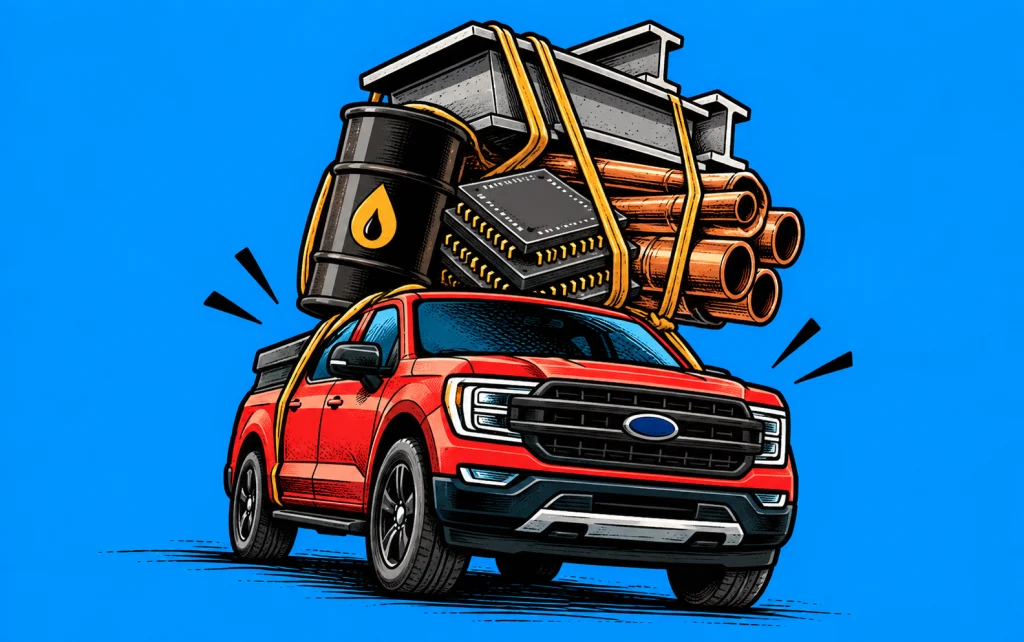
Ford expects nearly $2.5 billion in higher commodity costs this year. The company is still making billions in profit, but the pressure could eventually reach dealership lots.
Buying a new car is already a significant financial commitment. Now Ford is warning that making those vehicles is getting more expensive, and there’s only so much of that pressure an automaker can absorb before customers start feeling it.
Ford raised its estimate for annual commodity-cost increases to nearly $2.5 billion, up from approximately $2 billion. Higher steel, copper, semiconductor and fuel expenses are driving the increase, with the Middle East conflict adding pressure to transportation and energy costs.
Here’s what makes this interesting: Ford isn’t exactly struggling. The automaker reported $2.7 billion in third-quarter adjusted operating profit, beating Wall Street expectations. It also raised the lower end of its full-year profit forecast to $10.5 billion.
So if profits are holding up, why should car buyers be concerned?
Where the Extra Costs Go
Automakers have several ways to manage rising expenses. They can negotiate with suppliers, improve manufacturing efficiency, reduce spending or accept smaller profit margins. Raising vehicle prices is another option, although competition and consumer demand limit how far companies can go.
Ford already expects U.S. industry vehicle prices to rise approximately 1% this year. That doesn’t mean every Ford will cost 1% more, but it suggests manufacturers still have some room to pass along expenses.
The challenge becomes more complicated when financing enters the picture. A higher sticker price can increase the amount financed and total interest paid, particularly for buyers stretching payments over six or seven years.
Ford is also facing production challenges involving its popular F-150 trucks, while U.S. vehicle sales declined 8.6% through the third quarter. That creates an uncomfortable balancing act: protecting profits without pushing already cautious buyers away.
The Bigger Picture
Ford’s earnings show that automakers can remain profitable while production costs climb. But profitability doesn’t guarantee affordability. If manufacturers increasingly protect their margins through higher prices, customers could end up financing more of the industry’s rising expenses.
Sources: Reuters, October 28, 2026 | Ford Third-Quarter Earnings Call