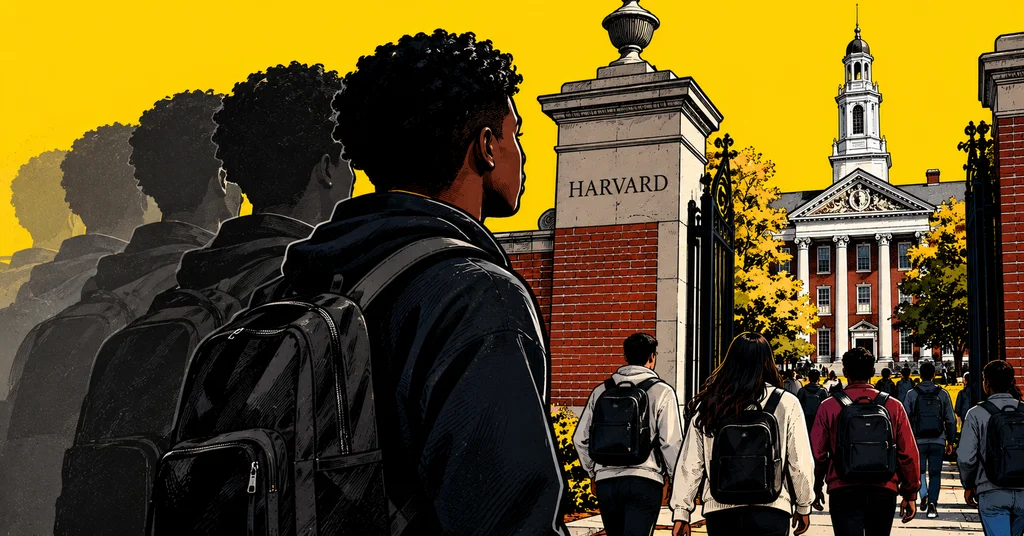
The latest figures show another drop in Black representation following the Supreme Court’s affirmative action ruling, even as applications to Harvard continue to rise.
Black enrollment at Harvard University has declined for the third consecutive incoming class, continuing a trend that has emerged since the Supreme Court eliminated race-conscious college admissions in 2023. Black students account for 9.3% of the Class of 2030, down from 11.5% in the Class of 2029 and 14% in the Class of 2028, according to The Harvard Crimson. Before the ruling took effect, Black students represented a reported 18% of the Class of 2027. That earlier figure requires caution, however, because Harvard changed its reporting methodology beginning with the Class of 2028. Its current percentages are calculated among U.S. citizens and permanent residents who disclosed their race or ethnicity, rather than the entire entering class. The three most recent classes nevertheless show a consistent decline under the newer reporting method.
The numbers are especially consequential because Harvard remains one of the country’s most influential pathways into elite professional networks, graduate programs and leadership positions. The Supreme Court’s June 2023 ruling prohibited universities from using race as a factor in admissions decisions, fundamentally changing how institutions could pursue racial diversity. Universities can still consider applicants’ individual experiences, including how race may have shaped their lives, but they cannot award admissions advantages simply because of racial identity. Harvard’s latest figures do not establish whether the decline resulted from changes in application patterns, admissions decisions or students choosing other institutions. They do show that Black representation has continued to fall while the university operates under the new legal framework.
Harvard’s incoming class also demonstrates why racial and economic access cannot be treated as interchangeable measures. The university received 55,104 applications and enrolled 1,648 students, with applications increasing 15% from the previous year. Among incoming students, 17% are first-generation college students, an estimated 21% qualify for federal Pell Grants, and 39% receive financial aid covering full tuition. Those figures reflect significant financial assistance, but they do not establish that the university is maintaining racial representation. A student can receive generous financial aid only after gaining admission, and affordability programs cannot independently resolve differences in educational preparation, recruitment or selection.
The continuing decline places Harvard and other selective universities in a difficult position. They must comply with the Supreme Court’s ruling while determining whether their recruitment efforts, financial aid programs and admissions practices are reaching students from historically underrepresented communities. The implications extend beyond one university because institutions like Harvard help shape access to influential professional and social networks. The latest enrollment figures cannot establish that the court’s ruling alone caused the decline, but they provide another measure of what has happened since race-conscious admissions ended. Harvard is attracting more applicants while enrolling a smaller proportion of Black students, raising concerns about who gains access to the opportunities its education provides.