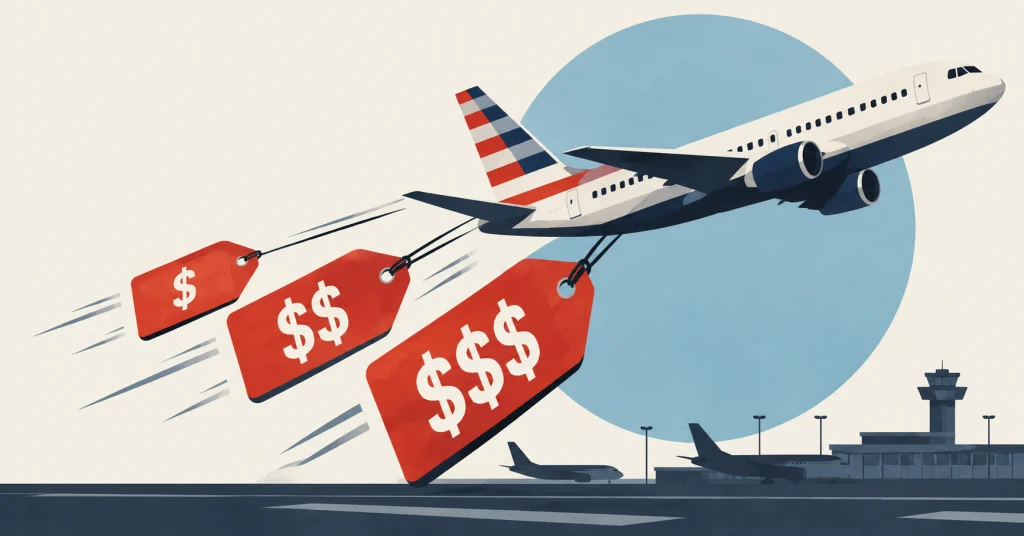
American Airlines says cheaper fuel may not mean cheaper flights. The industry is finding out how much travelers are willing to pay.
Anyone waiting for airfare to fall once the Iran war’s hit to fuel prices eases may be waiting a long time. American Airlines says ticket prices are unlikely to return to their earlier levels, even if oil gets cheaper. In an October 22 Financial Times report by Christian Davies and Peter Campbell, American’s chief financial officer, Devon May, said lower fuel costs would probably leave fares roughly where they are today. The airline took on an additional $1.9 billion in fuel expenses during the third quarter and now forecasts a loss for the year, despite a 19% increase in quarterly revenue. The war pushed jet fuel prices sharply higher and gave airlines a reason to raise fares. Now some executives see a chance to keep those prices in place even as their costs come down.
Travelers are already feeling it. Airline fares rose 22.4% over the year ending in September, according to the Bureau of Labor Statistics, and the holidays are taking the hardest hit. As we reported last week, holiday flights are the priciest they’ve been in a decade, with the average Thanksgiving round trip around $402, up 31% from last year, according to Hopper. American’s comments suggest those prices may not be a temporary spike.
Airlines have spent years arguing that ticket prices failed to keep pace with inflation. The fuel crisis gave them a chance to test how much more passengers would pay. Delta Air Lines raised fares by about 20% without a noticeable drop in sales, while United Airlines recovered much of its added fuel expense through higher ticket prices. At American, premium travel revenue rose 23% and corporate revenue rose 28%. Those numbers reveal an important divide. Wealthier travelers and business customers have kept spending, giving airlines the confidence to charge more even as cost-conscious passengers work with tighter budgets.
Competition also shapes what travelers pay. The largest U.S. carriers hold considerable influence over domestic air travel, while financially pressured discount airlines have less room to undercut them. Aviation economist Dan Akins told the Financial Times that the major carriers are taking advantage of what the market will tolerate. Airlines can hold higher fares as long as enough customers keep booking, particularly on routes with few alternatives. United did report a modest drop in leisure seat occupancy, a sign that some passengers are pulling back. But if the extra revenue from pricier tickets outweighs the money lost on fewer bookings, airlines have little financial reason to change course.
The pattern reaches well beyond the airport. When costs rise, prices follow. When costs fall, the savings don’t always make it back to customers. Businesses across the economy reported raising their prices at the fastest pace since August 2022 in S&P Global’s latest survey, as we covered in our quick read on business activity. It’s part of why the economy can be growing while it doesn’t feel that way for the households absorbing the bill. As Will Davison put it in his column on holiday prices, when the cost of doing business goes up, customers are usually the ones expected to make up the difference.
The result could be a lasting increase in the cost of travel, long after the original fuel shock fades. Families planning vacations, students flying home and people traveling for weddings or emergencies may face prices increasingly set by what higher-income passengers can afford. Airlines are also pouring money into premium cabins and amenities, directing more attention to customers willing to spend extra. If carriers keep earning more from higher fares while selling fewer economy seats, affordable air travel could become a smaller priority in an industry that once competed hard on price