QUICK READ | MONEY
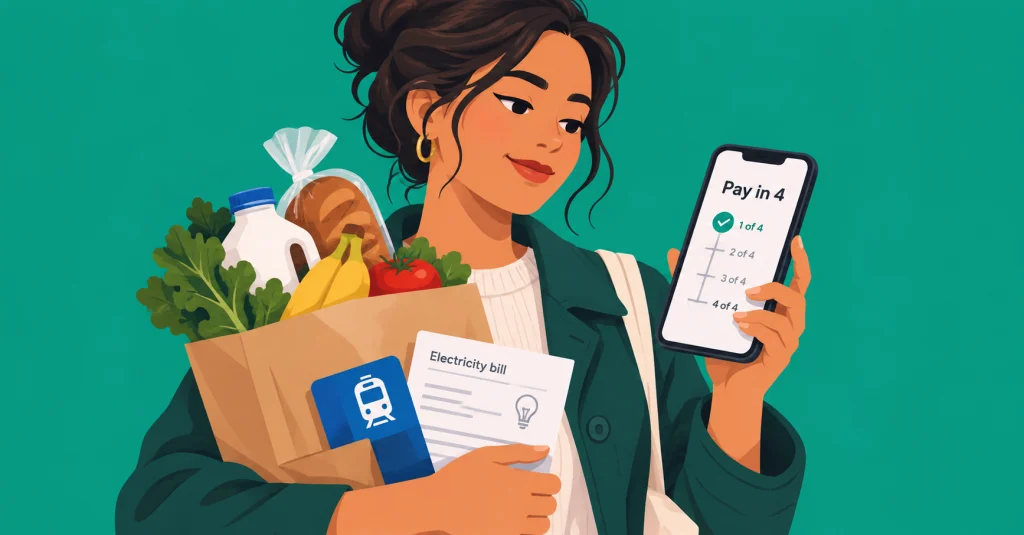
Americans used buy now, pay later services to finance nearly $157 billion in purchases in 2025, according to Federal Reserve research published in June. About half of that total came through familiar pay-in-four plans, which generally divide a purchase into four installments over roughly six weeks. Pay-in-four volume has climbed nearly 80% since 2023. But the more revealing change is what some consumers are financing: groceries, transportation, household bills and even rent. The Associated Press reported this month that consumers are increasingly turning to BNPL for everyday expenses rather than simply discretionary purchases.
That changes the role BNPL plays in household finances. When someone splits a discretionary purchase into four payments, the product mostly changes when the money leaves their account. When groceries or rent require installment financing, the product is helping bridge a gap between income and basic expenses. Federal Reserve researchers found that the BNPL market has also expanded well beyond simple pay-in-four products: short- and longer-term installment loans now account for roughly half of total issuance.
The convenience can make the debt easy to underestimate. A $25 payment here and a $40 payment there may feel manageable individually, but several overlapping plans can create multiple withdrawal dates across different providers. AP’s reporting also highlights a growing concern among consumer advocates: borrowers can stack several BNPL obligations before recognizing how much of the next paycheck is already committed. Terms vary by provider, and some products can carry late fees, interest or other consequences when payments are missed.
Credit reporting is also becoming more complicated. Some BNPL providers now furnish account information to major credit bureaus, although policies vary by company and product. That makes it increasingly important for consumers to know not only what they owe, but whether missed payments could eventually become part of their broader credit record.
For consumers, the practical test is becoming less about whether BNPL is inherently good or bad and more about what the financing is solving. Splitting a planned purchase while the money is already available is different from repeatedly financing groceries because a checking account cannot absorb them. If several plans are running simultaneously, track the total outstanding balance—not merely the size of the next installment—and check each provider’s repayment terms. BNPL can smooth a temporary cash-flow problem. When it routinely becomes the way basic expenses reach the next paycheck, it is signaling something larger about the household budget.