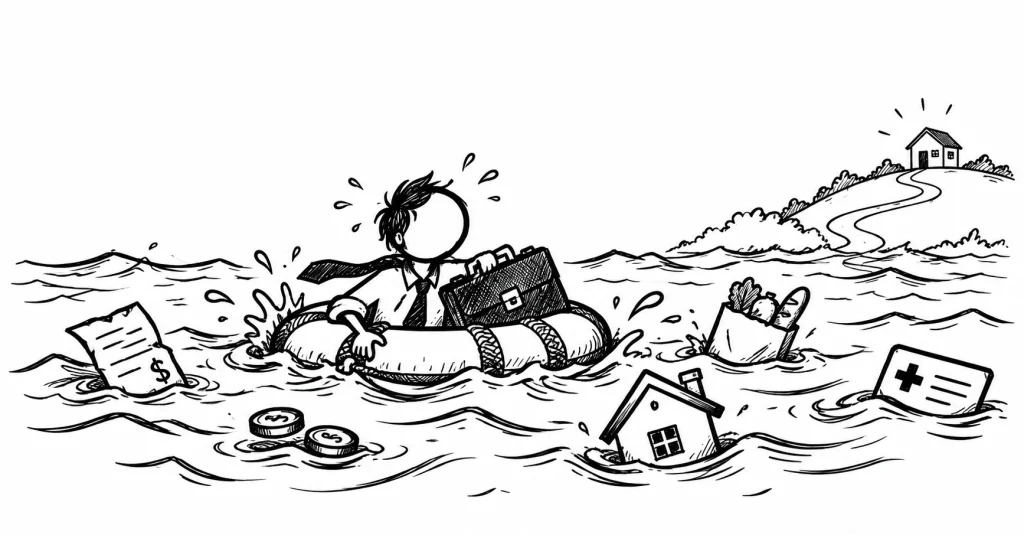
What concerns me is how easily we’ve accepted staying afloat as a substitute for getting ahead. Pay the bills. Keep the car running. Hold on to the job. Delay the appointment. Put something toward the balance. Repeat next month.
I’ve been doing some of this myself. Over the past few months, I’ve been looking hard at the overhead I’d grown used to. I gave up my $280-a-month gym membership and cut my massages from every two weeks to once a month, so I can save more deliberately. I’m not doing it because I have to. I’m doing it because this economy is sending a clear signal: the more of a nest egg you’ve secured, the better positioned you are for whatever comes next.
But I’m aware of what that choice says. A $280 gym membership and regular massages are the kind of costs a person can cut without missing a bill. Being able to trim for the sake of saving means there was room to trim in the first place. For a lot of people, there isn’t. Their budgets already ended at the essentials, and no amount of discipline makes rent smaller or a paycheck longer.
For them, each of those decisions makes sense on its own. Together, they produce a life organized around preventing the next problem, with little space left to build anything. That person doesn’t need another lecture about canceling subscriptions while nobody examines the cost of housing or the paycheck meant to cover it. Financial responsibility deserves respect. So does an honest accounting of what responsibility can accomplish when essentials leave almost nothing behind.
The Federal Reserve’s survey of household finances in 2025 found that 19% of adults were just getting by and 8% were finding it difficult to get by. That’s more than one in four adults, and those are last year’s figures, so many people entered this period already under pressure.
The pressure is also reaching people who look fine. Consumer confidence fell fastest in September among households earning $125,000 to $150,000. A national average can’t tell us whether a household has savings, dependable hours, family support or debt absorbing its income. If commentary doesn’t make those differences visible, we end up describing the country through the people with enough cushion to absorb a setback, while everyone else is told to be patient.
Resilience Has a Cost
I believe in adapting. Learn the tool. Improve the skill. Make the connection. Consider the opportunity you once dismissed. SSC publishes that kind of advice every Monday in Your Next Move, and I stand behind it.
But our advice has become remarkably comfortable assigning more work to the person already carrying the pressure. A job feels uncertain, so build a side business. Income falls short, so monetize a talent. An industry changes, so retrain at night. Every one of those requires time, energy and sometimes money before it pays anything back.
Entrepreneurship isn’t an automatic escape hatch, either. Turning a skill into a business can create opportunity. It also brings expenses, unpredictable income and customers who take their time paying.
The pressure is uneven, and I can’t write about it honestly without saying so. September’s jobs report put Black unemployment at 7.0%, compared with 3.6% for white workers. That doesn’t explain every person’s circumstances, but it should end any argument that opportunity is equally available to everyone willing to pursue it.
The same report counted 4.5 million people working part time for economic reasons: people who want full-time work but can’t get it or had their hours cut. For them, the problem is access to enough paid work in the first place. Advice about attitude can’t supply missing hours.
A Higher Bar
A healthy economy should meet a more demanding test:
- Can a worker cover ordinary expenses and still save?
- Can someone change jobs without a prolonged financial emergency?
- Can a parent afford care and stay employed?
- Can a small business get paid soon enough to meet its own obligations?
Those questions connect economic performance to everyday freedom, and they point to concrete responsibilities. Oregon already requires large retail, restaurant and hotel employers to post schedules two weeks in advance. New York’s Freelance Isn’t Free Act requires clients to pay independent workers within 30 days. Those are working models, not wish lists. Policymakers can likewise treat affordable housing and care as conditions for participating in the economy, not perks.
Individuals still have decisions to make. So do employers and public institutions, and their choices deserve the same scrutiny we apply to a household budget.
I want people to keep moving, even when the outlook is discouraging. But moving forward should carry a real possibility of progress, not just more skill at managing scarcity. Staying afloat takes effort, and that effort deserves recognition. It should also leave us dissatisfied with an economy in which survival becomes the ceiling of ambition.