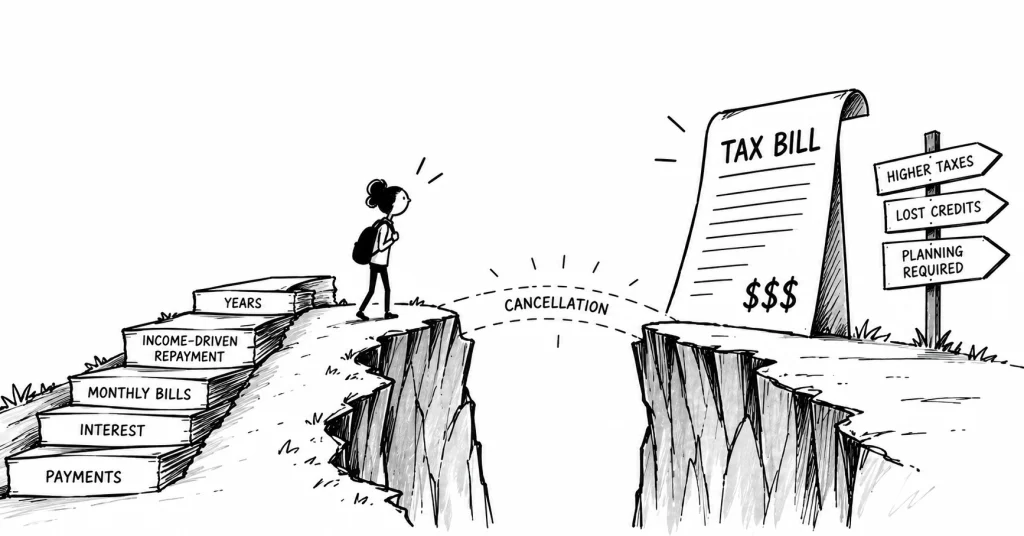
The expiration of a broad federal tax exemption changes what income-driven repayment cancellation can mean for household finances.
By the Social Storytellers Collective News Desk
Between 2 million and 3 million borrowers could face federal tax consequences from income-driven repayment cancellation over the next decade, according to an October 7 analysis from Protect Borrowers. Its modeled scenarios show additional taxes and lost credits ranging from roughly $6,000 to nearly $12,000. The advocacy organization’s announcement identifies a change already in effect: the broad student-loan cancellation tax exemption expired after December 31, 2025. These are projections, rather than tax bills already assessed against every borrower. They explain how reaching the end of a repayment obligation can create a new financial demand when the canceled balance is treated as taxable income.
SSC Premium · Free with signup
Keep reading. It’s free.
This is a Premium story from Social Storytellers Collective. Enter your email to unlock the rest right now, and get the End of Day Closing Note six nights a week. Already a subscriber? Use the same email and you’ll go straight back to the story.
Free. Unsubscribe anytime. Premium readers also hear first when The Deep View membership opens.