
Part of Relationships & Human Connections — an ongoing series examining how we love, connect, and show up for one another in a complicated world.
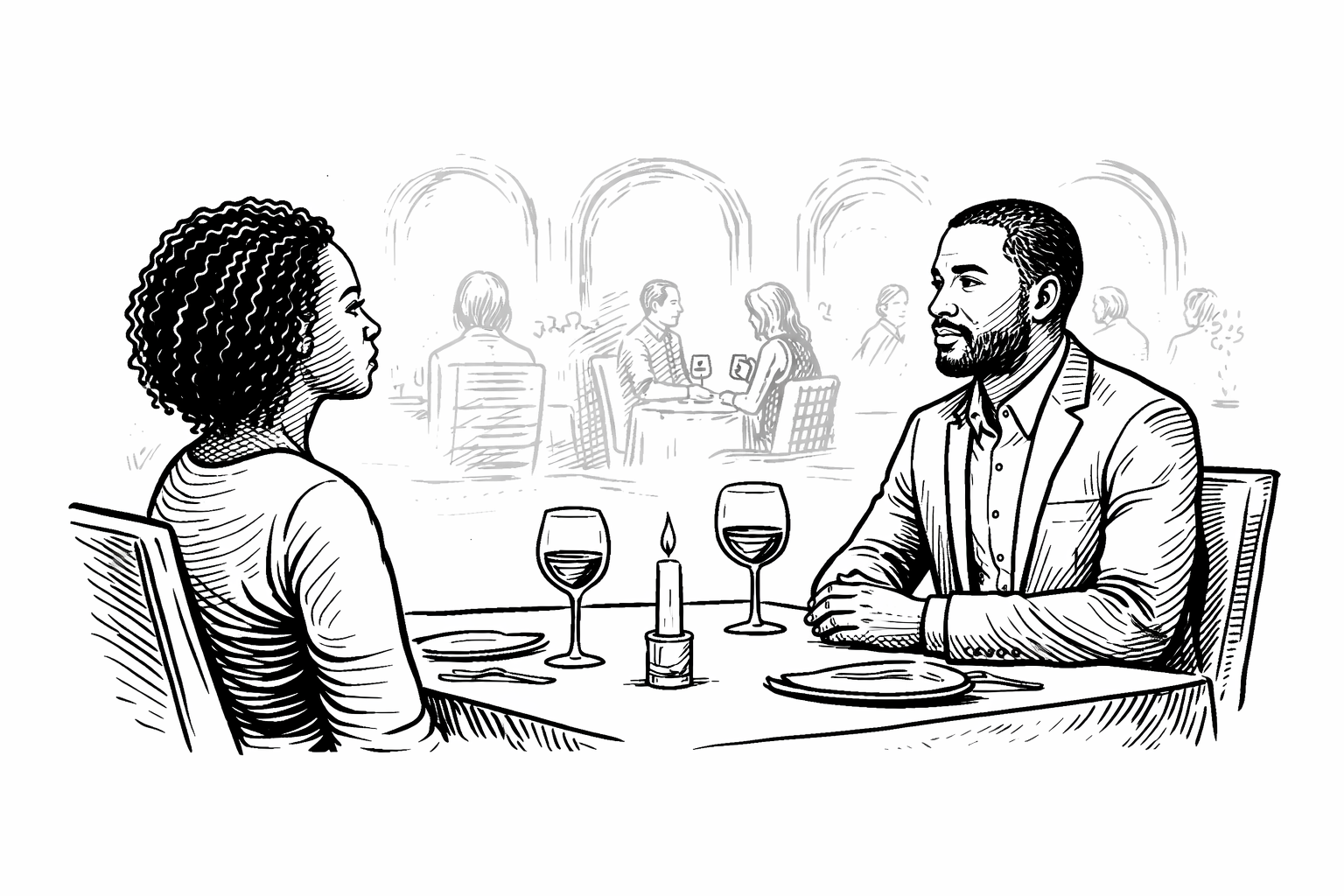
He checked every box. I mean every single one. Advanced degree, established career, close with his family, no situationships lurking in his recent history — at least none he volunteered. He was thoughtful over text, consistent with communication, and when he finally asked me to dinner, he picked a real restaurant. Not a “let’s grab drinks” situation. A reservation. A plan. On paper, this man was the answer to a prayer I had been praying for a long time. And then I sat across from him at dinner and felt absolutely nothing.
Not disappointment exactly. More like the specific deflation that comes when something you have been building in your imagination finally arrives in three dimensions and doesn’t quite fit the space you made for it. The conversation was fine. He was pleasant, attentive, objectively handsome. But there was no pull. No electricity. No moment where I leaned in without deciding to. We talked for two hours and I was checking the time by hour one. I went on a second date anyway — because the checklist said I should.
That decision — choosing the resume over the feeling — is one of the quieter forms of self-betrayal available to Black women navigating dating with intention. The pressure to be practical is real and it comes from multiple directions at once. It comes from a dating landscape that has already told us, through data and lived experience, that our options are narrower than they should be. It comes from a cultural conversation that conflates high standards with unrealistic expectations. It comes from the well-meaning people in our lives who remind us, gently and sometimes not so gently, that nobody is perfect and something is better than nothing and at least he’s consistent. Consistency is a floor, not a ceiling. And we have somehow allowed it to become the whole building.
What nobody talks about enough is the cost of overriding your instincts repeatedly in the name of practicality. Every time you go on a second date you don’t want to go on, every time you extend a situationship because the man looks good on paper even though he makes you feel invisible in the room — you are teaching yourself that your intuition cannot be trusted. That the feeling doesn’t count. That what you sense in the first hour of sitting across from someone is less reliable than his LinkedIn profile. Over time, that lesson accumulates, and it becomes harder to hear yourself clearly when someone who actually moves you finally shows up.
Chemistry is not everything — a feeling alone is not a foundation. But the absence of any feeling, that flat going-through-the-motions experience of being with someone who is technically right but somehow not, is data too. It deserves the same respect we give to the checklist. As I shared in Dating With Intention in a World of Abundance, intention requires discernment, and discernment means trusting what you actually perceive — not just what you can verify on a background check. The man who was everything on paper and nothing in the room is not a villain in this story. He was probably a genuinely good person who deserved to be with someone who was actually excited to be there. What I owe him — and myself — is honesty about the difference between what looks right and what feels true. Staying out of obligation to a checklist isn’t fairness. It’s just a slower way of wasting both people’s time.
Black women are already doing more than our share of the emotional labor in dating — screening, filtering, managing expectations, and trying to stay open in a landscape that has not always been open to us. The last thing we need to add to that weight is the pressure to override our own instincts in the name of being reasonable. Reasonable is not the same as right. A man who checks every box but leaves you cold is not a compromise worth making — he is a signal worth listening to. The checklist is a tool, not a destination. Chemistry is not frivolous. And knowing the difference between what looks good on paper and what actually feels like home is not asking too much. It is the whole point.