
Part of The Access Shift — an ongoing series examining how access is being quietly reshaped across American life. New stories every Wednesday at 12:00pm CDT.
One of my favorite ways to stay connected with people is over coffee. Not because it’s convenient — though it is — but because of what it allows. A coffee catch-up can be thirty minutes or three hours. It doesn’t require a reservation, a dress code, or a bill that makes someone quietly recalculate their week. It crosses every economic demographic. And in a city like Houston, where the coffee shop culture has genuinely come into its own, the atmosphere can make it feel like an event without anyone having to treat it like one. When I extend an invitation, I always assume the financial responsibility. Not as a gesture — as a default. Because connection shouldn’t have a cover charge, and the people I want in my life shouldn’t have to weigh whether they can afford to see me.
I’ve been in the middle of a conversation and watched someone check their phone four times in ten minutes. At some point you stop competing and start wondering why you came. What I’ve come to understand is that presence is not just about physically showing up. It is about having enough — enough bandwidth, enough ease, enough freedom from financial anxiety — to actually be in the room when you arrive. And that is becoming harder for more people than most of us want to admit.
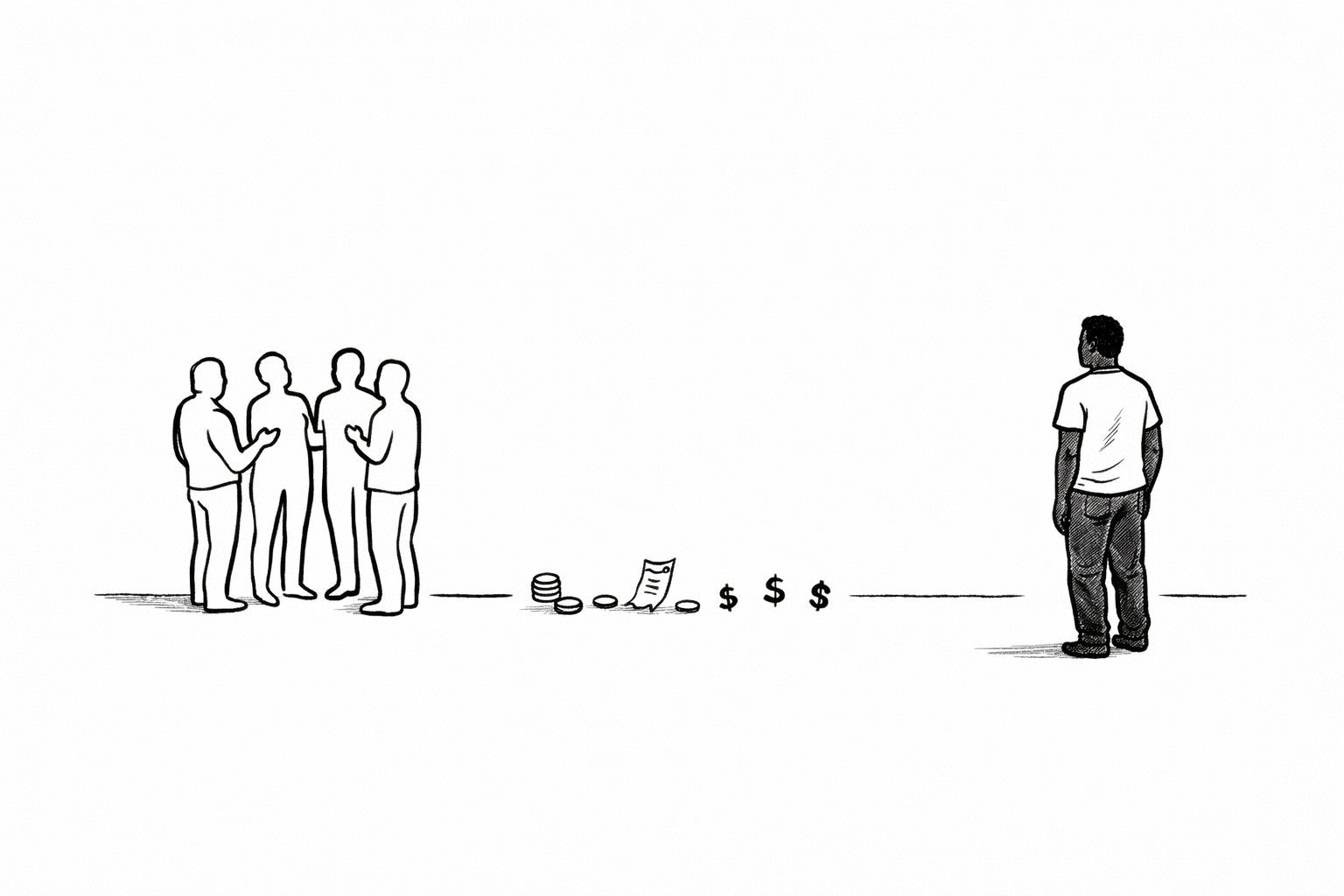
A recent Fortune report documented what many people have been quietly living: Americans, particularly those under 30, are declining social invitations at growing rates because they simply cannot afford to attend. A Harvard Kennedy School poll found 42% of Americans under age 30 say they are barely getting by financially. A University of Southern California study found financial strain is directly linked to higher rates of anxiety and loneliness — and that those effects compound over time. The silence around these decisions is part of what makes them so damaging. People are not explaining why they’re withdrawing. They say they’re busy, or tired, or just not up for it. And friendships erode without either person fully understanding what happened.
For Black communities, that erosion carries a particular weight that the mainstream loneliness conversation rarely names. In our culture, showing up is the love language. Not the text, not the like, not the comment — the physical presence. The drive across town. The seat at the table. The standing in the kitchen while someone cooks. The cookout, the church, the family reunion, the impromptu gathering — these spaces have always done more than bring people together. They are the places where resources are pooled, where information travels, where people are held when institutions fail them. When financial pressure makes participation in those spaces harder, the loss is not just a missed event. It is a disruption to infrastructure that has no direct replacement.
What makes this moment distinct is not that financial hardship is new — it isn’t. It is that the combination of rising costs, stagnant wages, and an increasingly expensive social landscape is creating a pressure that is both financial and emotional: the pressure to choose between survival and participation. And unlike previous generations who faced hardship within dense networks of mutual support, many people today are navigating that pressure in relative isolation — in cities they moved to alone, in networks that are wide but not deep. As The Friend Group Audit Nobody Asked For examined, many of the friendships lost in recent years weren’t ended by conflict — they were ended by the quiet removal of the circumstances that sustained them. And as Digitally Connected, Socially Distanced explored, digital connection has filled some of the gap in visibility while the gap in proximity keeps widening.
The solution doesn’t have to be complicated. It can be as simple as a coffee shop, a standing invitation, and the willingness to make showing up easy for the people you care about. Not everyone can extend that kind of generosity — and that itself is part of the problem. But for those of us who can, the question is worth sitting with: are we creating conditions where the people in our lives feel welcome to show up as they are, with what they have? Or are we — without meaning to — building a social life with an unspoken admission price?
Connection doesn’t require a dinner reservation. It requires presence. And presence, right now, is something a lot of people are struggling to afford in more ways than one.
The Access Shift
The gradual redefinition of who systems are designed to serve.
Across sectors—from public infrastructure to healthcare to everyday spaces—access is no longer assumed. As costs rise and systems face increasing pressure, services once built for broad reach are becoming more selective, more conditional, and less universal. The Access Shift explores how these changes are unfolding in real time—and what they reveal about who is included, who is left out, and how the structure of everyday life is quietly being reshaped.