
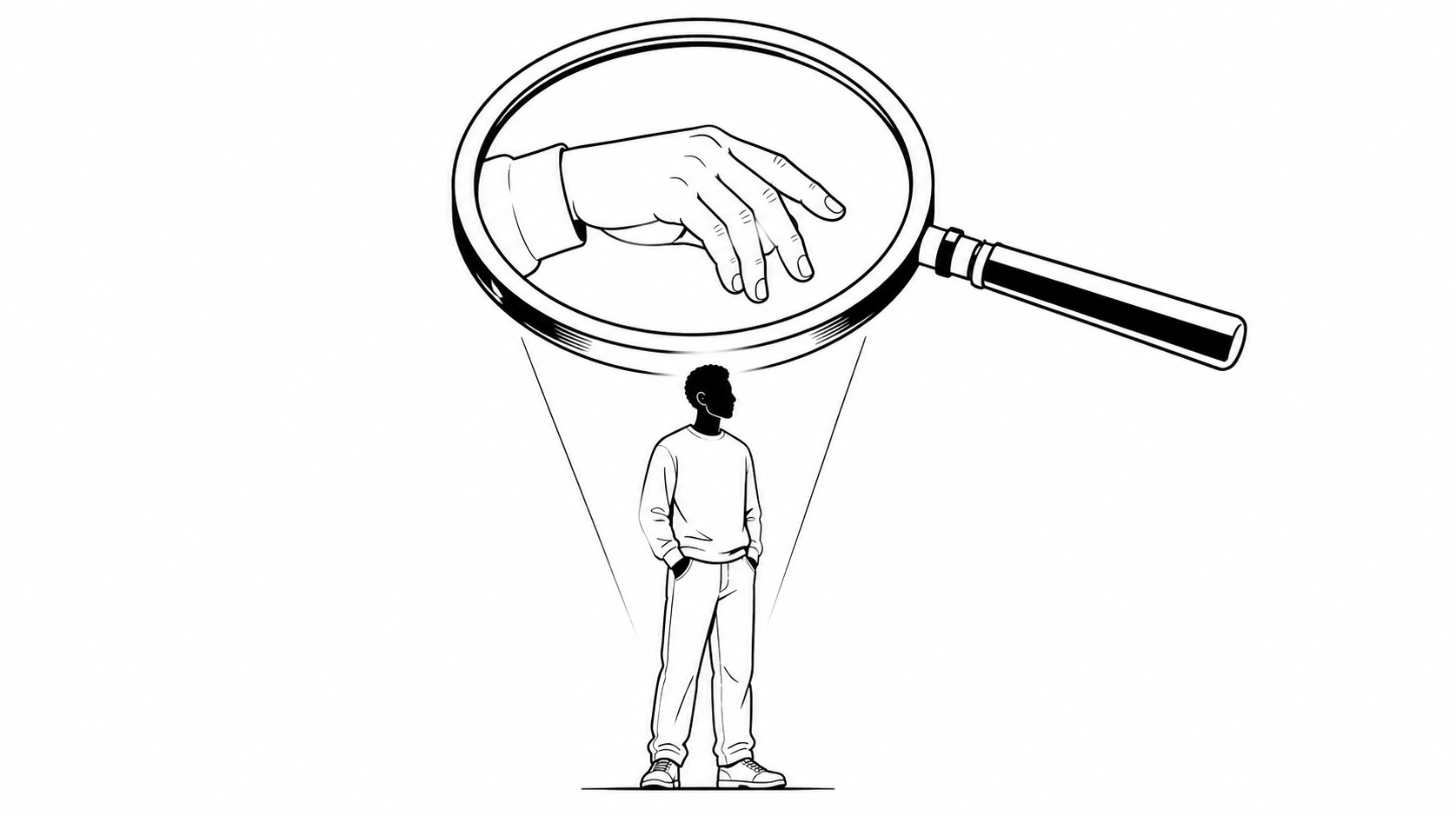
A glance. That is what started it. During a recent episode of Love Island, a Black male contestant looked at another man’s hands. The moment lasted seconds. By the time social media was done with it, the clip had become the latest referendum on Black masculinity — who gets to express it, who gets to police it, and why the answer to both questions so rarely includes the man at the center of the conversation.
The thread that followed, anchored by X user @3XJawn, accumulated tens of thousands of impressions within hours. No statement had been made. No relationship had been disclosed. No evidence had emerged beyond a clip, a glance, and the assumptions layered on top of both. The original post named the dynamic directly: “Y’all look for the gay in EVERYTHING… and I swear y’all only do this to black men.” A follow-up post made the comparison explicit: white men who are openly affectionate, physically expressive, or playfully flirtatious with other men rarely face the same scrutiny. That post generated 42,000 impressions. The observation is not new. The reach suggests it landed because it named something people already knew but rarely see stated plainly.
The surveillance of Black masculinity did not begin on social media. It has a longer architecture — one built in large part by the American entertainment industry. For decades, Hollywood and mainstream media assigned Black men a narrow range of acceptable presentations: the athlete, the thug, the threat, the comedian. Each archetype carried its own masculinity requirement. The thug had to be hard. The athlete had to be dominant. Softness, vulnerability, emotional expressiveness, or any gesture that deviated from those scripts was either erased from the frame or coded as weakness — and weakness, in that framework, was only one step removed from femininity, and femininity only one step from speculation about sexuality. The industry did not invent anti-Black bias. But it industrialized a particular version of Black manhood and distributed it globally. The people watching that Love Island clip and reaching for a conclusion were, in part, watching through a lens that Hollywood spent decades grinding.
The gatekeeping question is inseparable from the power question. Who decides what Black masculinity looks like? Historically, the answer has not been Black men. It has been casting directors, studio executives, sports league marketers, and media critics — most of them operating from outside the community — who determined which presentations were legible, bankable, and safe. The athlete who performs dominance is celebrated. The one who paints his nails becomes a controversy. As I reported in The Nails Are Not the Story. The Reaction Is., the criticism of Caleb Williams for appearing on the Madden NFL 27 cover with painted nails was never really about nail polish. It was about authority — specifically, who holds the authority to define what public Black manhood is allowed to look like. The Love Island thread is the same argument operating in a different arena. The gatekeeping is not always coming from outside the community. Some of the most aggressive surveillance of Black male expression comes from within it.
The thread exposed the competing anxieties that make this conversation harder to resolve than it appears. Some participants argued that the surveillance itself is the problem — that reading sexuality into a glance reinforces the idea that any deviation from a narrow masculine script requires investigation. Others pushed back with a different kind of specificity: concerns about secrecy, about DL culture, about the health and emotional consequences of non-disclosure in Black relationships. Those concerns are real and documented. They also arrived, in this instance, attached to a man who had done nothing beyond look at someone’s hands. The accumulated grievance of an entire cultural pattern was landing on one individual who had not invited the conversation. That is what surveillance does — it does not wait for evidence. It generates its own.
The data underneath the debate adds a layer the thread itself did not fully surface. Research from the Williams Institute at UCLA School of Law shows that Black women identify as LGBTQ+ at higher rates than Black men, with studies recording 23 to 25 percent of young Black women ages 18 to 34 identifying within the LGBT community. Approximately 61 percent of Black LGBT adults are women. The gender asymmetry in who is surveilled and who is not does not track with where the data actually points. Black men are being watched most closely in a community where Black women are coming out at measurably higher rates. The surveillance is not following the evidence. It is following the expectation — an expectation shaped by decades of media that told everyone watching what Black masculinity was supposed to look like and what deviated from it.
The Pride Month timing is not incidental. This thread went viral during the first week of June — a month that has become both a celebration of queer identity and, increasingly, a flashpoint for debates about who belongs inside that celebration and on what terms. The Love Island moment arrived at a cultural moment already primed for exactly this kind of argument. A glance became a clip. A clip became a thread. A thread became a referendum. And the man at the center of it has not said a word.
That silence is the point. Caleb Williams painted his nails and became a symbol. The Love Island contestant looked at someone’s hands and became a debate. Neither of them authored the conversation about themselves. That is what the gatekeeping of Black masculinity produces — men who become symbols before they have a chance to become people. The media built the frame. Social media accelerated it. And the audience, trained for decades on a narrow version of what Black manhood is allowed to be, keeps reaching for the same conclusion every time someone steps outside it.
Representation has never been only about who gets seen. It is about who gets to be seen on their own terms. Black men are still waiting for that second part.