
Part of The Critic’s Room — examining the ideas, industries, and narratives that shape culture and deserve a closer look.
A claim moved through social media recently with the kind of precision that makes it feel credible: that morning intimacy can make you measurably more productive at work. The numbers were specific — productivity up 71%, task completion up 70%, focus up 58%. Clean enough to share as a graphic. Authoritative enough to circulate without friction. They felt like science. They were presented as science. The distinction matters.
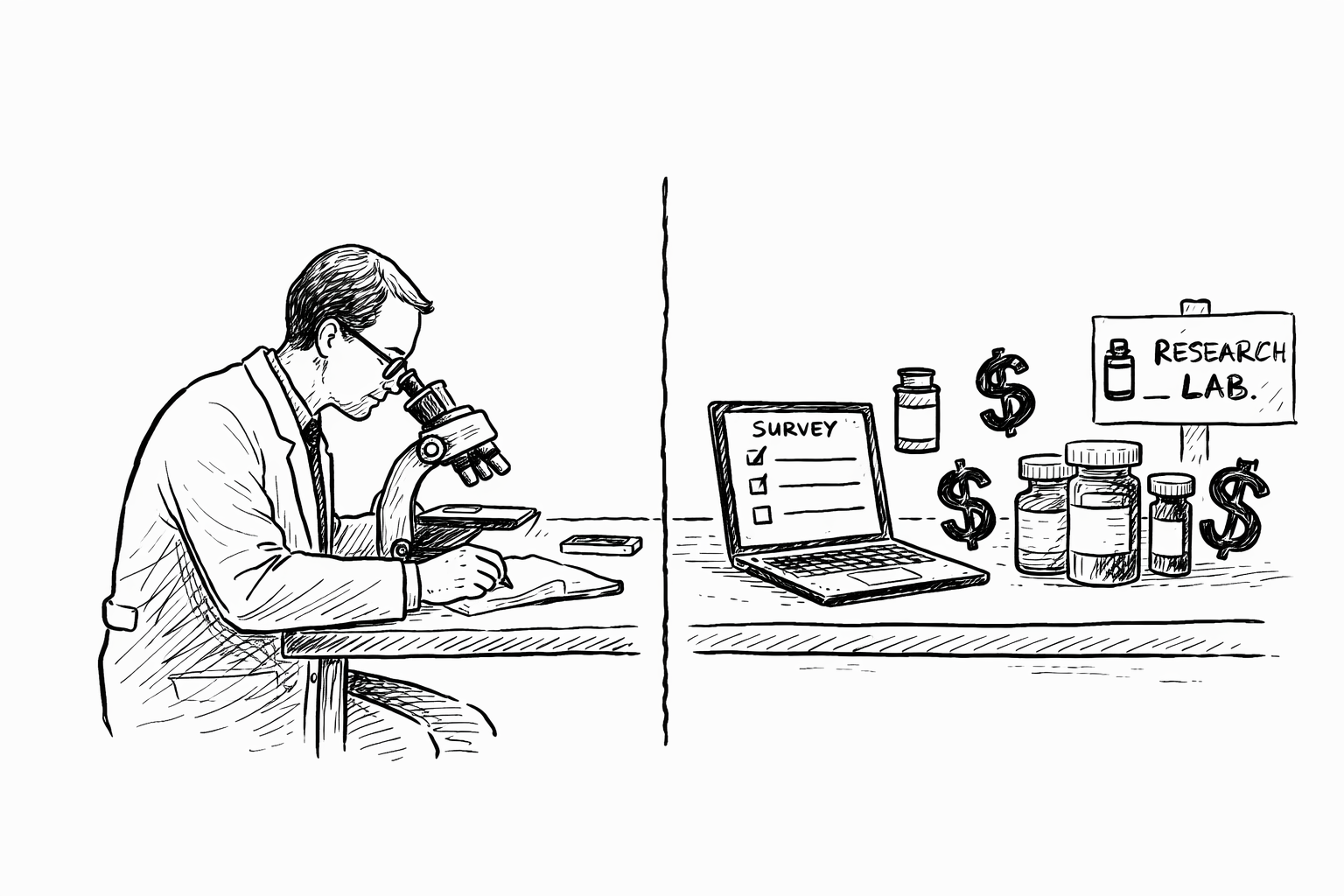
The figures came from a survey commissioned and published by ZipHealth, a telehealth platform whose primary commercial product is erectile dysfunction medication. The survey asked 1,000 workers to self-report how they felt about their productivity on days they had sex before work. No control group. No clinical design. No peer review. No independent researcher. A company that sells sexual health products surveyed people about their sexual habits and reported that sexual activity is beneficial. The circularity of that design did not prevent the numbers from traveling as if they carried the weight of independent science.
This is not an isolated incident. It is a production model. The wellness and optimization industry has developed a highly effective mechanism for generating credibility through the architecture of research without the substance of it. Commission a survey. Frame the results as a study. Issue a press release with specific, quotable statistics. Attach the word “science” to the headline, or let journalists do it for you. By the time the content reaches most audiences, the company behind it has disappeared from the frame entirely, and what remains is a statistic that feels like a fact.
The specific damage this causes is worth naming. When manufactured wellness content circulates as research, it does not just misinform — it shapes behavior and expectation. The person who reads that morning intimacy boosts productivity by 70% and then measures their relationship against that benchmark is not engaging with science. They are engaging with an advertisement that successfully disguised itself as one. The optimization frame — the suggestion that intimacy is a lever to be pulled for measurable professional output — is itself a product being sold, and the survey is its packaging.
The media ecosystem that allows this to function shares the accountability. Wellness content moves fast and the incentives to verify it are weak. A specific, shareable statistic from what is presented as a study performs well across platforms, and platforms do not reward the friction of checking who funded the research before amplifying it. Outlets that covered the ZipHealth figures as news did not always name ZipHealth’s business model in the same sentence. That omission is not neutral. It is the mechanism by which commercial interest launders itself into cultural conversation.
None of this means the underlying subject lacks merit. The peer-reviewed science on connection and well-being is real. Published research confirms that oxytocin and dopamine are released during social interaction and regulate mood, stress response, and motivation through documented neural pathways. There is a legitimate conversation to be had about emotional well-being and how we show up in work and life. That conversation deserves better than a telehealth company’s marketing survey as its foundation.
What the ZipHealth story reveals is not really about intimacy or productivity. It is about how wellness culture has built a system for generating the appearance of knowledge while bypassing the processes that produce it. In a media environment where specific numbers travel faster than their sourcing, that system does significant work — shaping what people believe about their bodies and relationships not through argument, but through the accumulated weight of statistics that feel true because they are precise.
The next time a number moves through your feed with that particular combination of specificity and shareability, the most useful question is not whether it is interesting. It is who made it, what they are selling, and what they needed you to believe in order to sell it.