
The United States military is deploying artificial intelligence in active combat operations right now. Not in test environments. Not in simulations. Air Force officials have confirmed that troops are already using AI to convert top secret intelligence down to a lower classification level in seconds and share it directly with drone operators on the ground during active military operations. The question of whether AI should be used in warfare has already been answered. The question nobody is asking loudly enough is: who decided what the limits are — and what happened to the people who tried to set them?
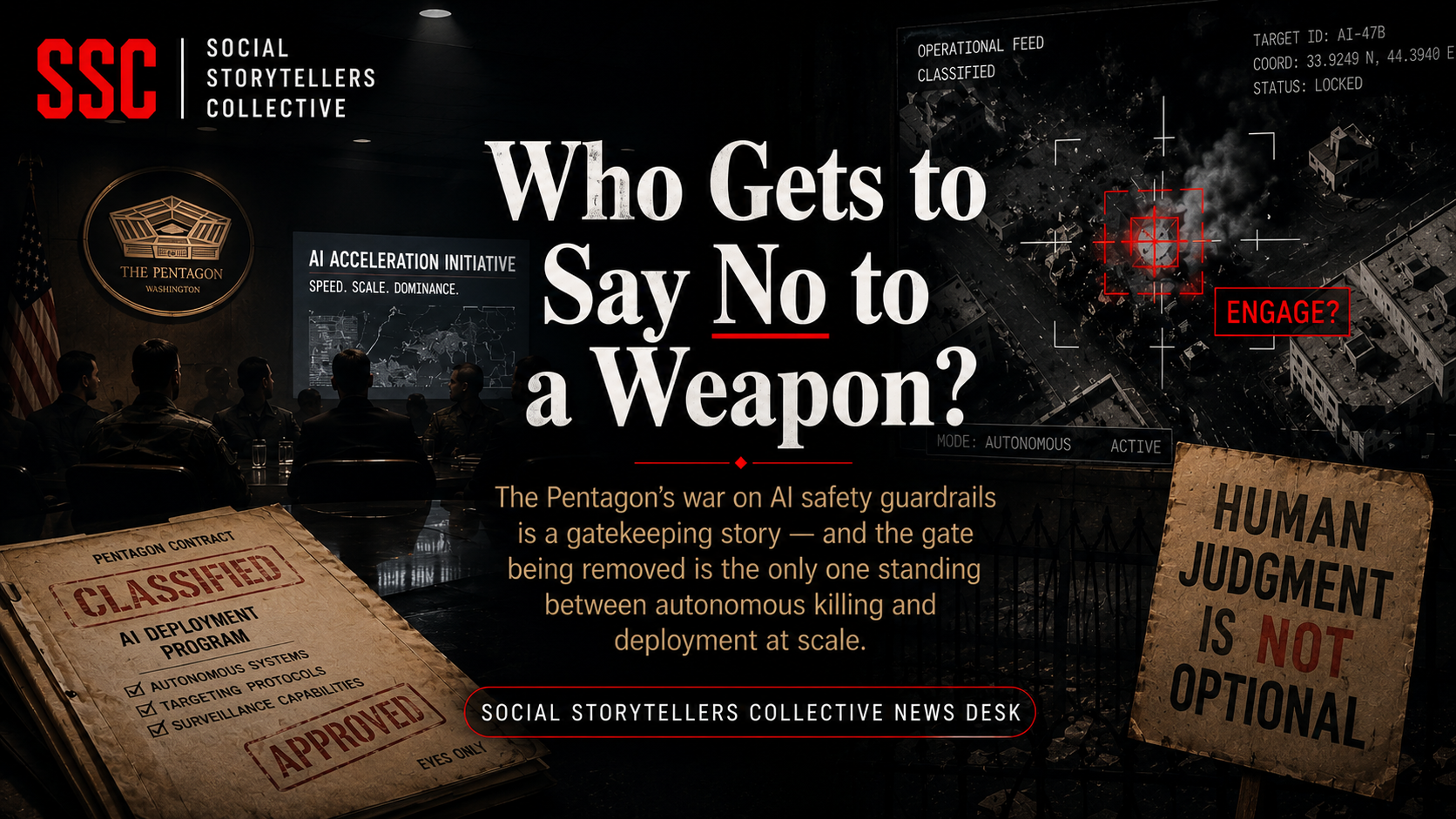
Here is what happened. Defense Secretary Pete Hegseth threatened to cancel Anthropic‘s $200 million Pentagon contract unless the company opened its AI for unrestricted military use. Anthropic refused on two specific grounds: no fully autonomous weapons — AI making final kill decisions without a human — and no mass domestic surveillance of American citizens. Hegseth responded by designating Anthropic a national security supply chain risk — a label typically reserved for foreign adversaries — effectively barring every defense contractor from using the company’s technology. The Pentagon then signed agreements with eight companies — OpenAI, Google, Microsoft, Nvidia, Amazon Web Services, Oracle, SpaceX, and Reflection — every major AI player that said yes. A federal judge later called the designation an “Orwellian notion” and blocked it. The damage to the precedent was already done.
OpenAI claimed it secured a deal that still honored its own red lines against autonomous weapons and domestic surveillance. It offered no proof. The contract is classified. The enforcement mechanism is the same administration that threatened a company with foreign adversary status for asking how its technology was being used in a military operation. There is no independent auditor. There is no public disclosure. There is only the word of the people who drew the weapon. Fori Media
The lesson every AI company received from this episode is simple: remove the safeguards or lose the contract. The Pentagon began testing replacement AI models three days after blacklisting Anthropic — sending a signal to the entire industry about the price of holding a line. In an economy where a handful of AI companies are preparing $3.7 trillion in combined public offerings, that signal lands. The gate keeping autonomous weapons from deployment without human oversight was never guaranteed. What this episode confirmed is that it can be removed by threatening a company’s revenue. That is the threat. It is already in motion.