
The image is already one of the most recognizable in modern music. The cover of Love Deluxe is not just an album visual — it is a mood, a tone, a way of understanding intimacy and restraint in R&B. Over time, it stopped being just a photograph and became a reference point, something artists borrow from, gesture toward, and build around. Now, through a commissioned sculpture by artist Rebecca Maria, that image is being translated again — not into sound or style, but into form. What Drake is doing by commissioning that recreation at monumental scale is not simply fandom. It is curation. A decision about what deserves to be preserved, and how. The shift from album cover to sculpture matters because it changes the function of the image entirely. A cover is consumed. A sculpture is encountered. It occupies space, demands presence, and turns something intimate into something architectural.
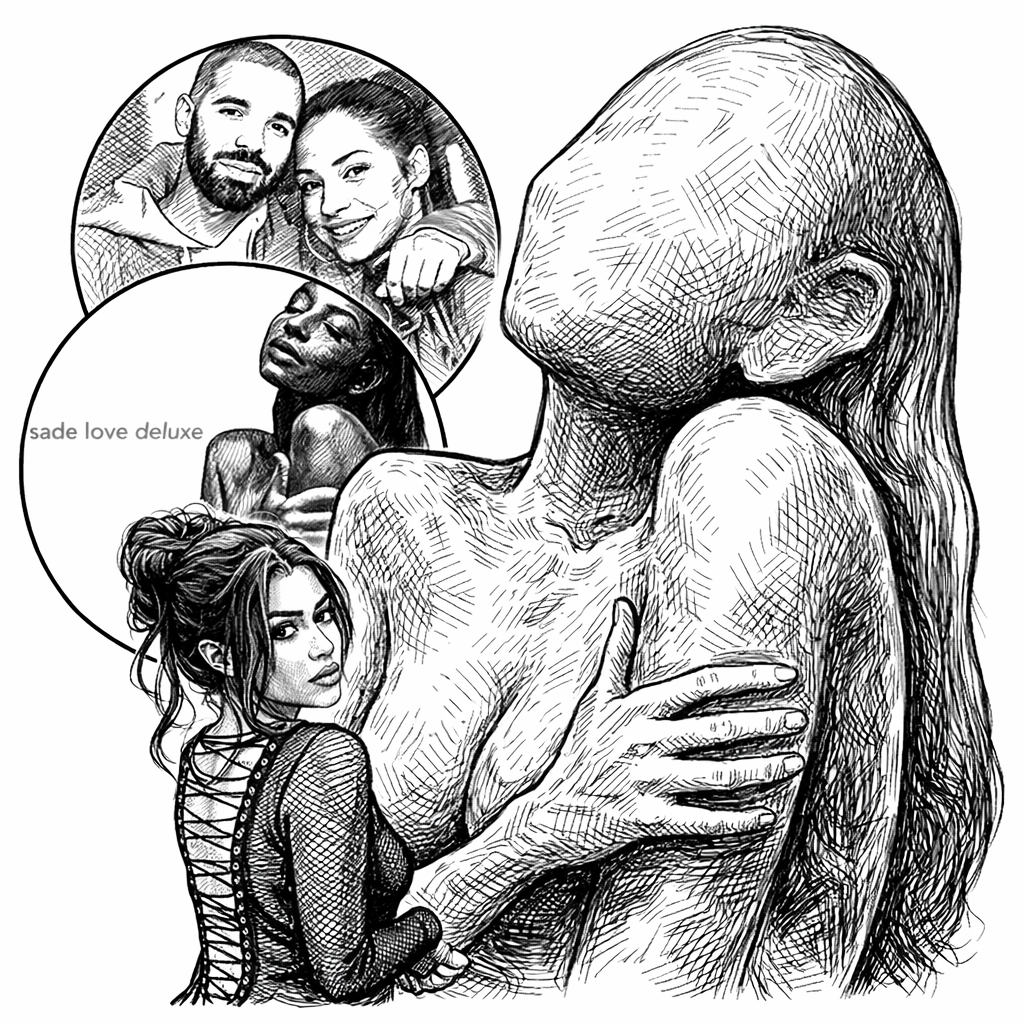
That transition raises a familiar question: who gets to translate cultural memory into permanence? Sade’s work exists within a lineage of Black musical expression that has historically been sampled, referenced, and reinterpreted across generations. But a sculpture is different from a sample. It does not move. It fixes. It defines a version of the memory and gives it weight — literally and culturally. There is also something else happening here. Drake has built a career not just on making music but on archiving influence in real time. His references are rarely subtle — they are direct, visible, and often intentional acts of placement. By turning Sade’s image into a physical object, he is extending that practice beyond music and into space. The gesture says: this matters enough to be held onto, not just heard.
But preservation is never neutral. To choose what becomes a monument is also to shape how it is remembered. The softness and ambiguity of the original image — its quietness, its restraint — take on a different quality when scaled up and fixed in place. What was once personal becomes public. What was once felt becomes seen. The image still carries its origin, but its function has changed. It is no longer just part of music history. It is now part of the built environment of culture. And in that transition, it raises a question that extends well beyond this moment: when culture becomes something you can stand next to, who decides what gets that kind of permanence — and what never leaves the surface?