
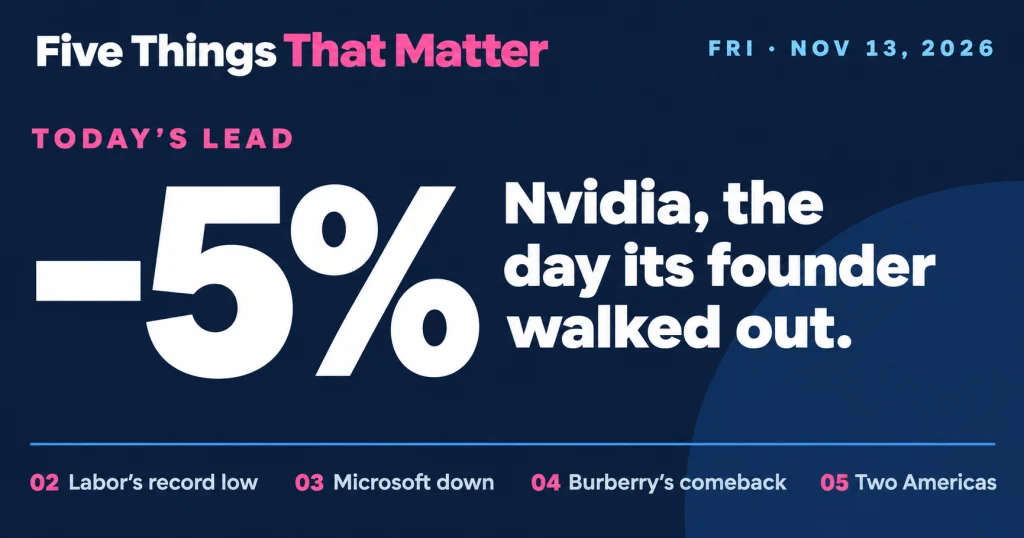
Nvidia loses its founder, workers’ share of the economy hits a record low, and luxury figures out who’s still buying.
Thursday was one of those days where every story landed on the same question: when the money moves, who’s left holding it? A $4 trillion company found out what happens when its whole plan rests on one man. A Fed governor put a number on how little of the economy is reaching paychecks. Microsoft showed how fragile the modern office is, and two very different shoppers explained the holiday season before it even starts. Here’s what matters, and why.
1. Nvidia Bet Everything on One Man. Now He’s Gone.
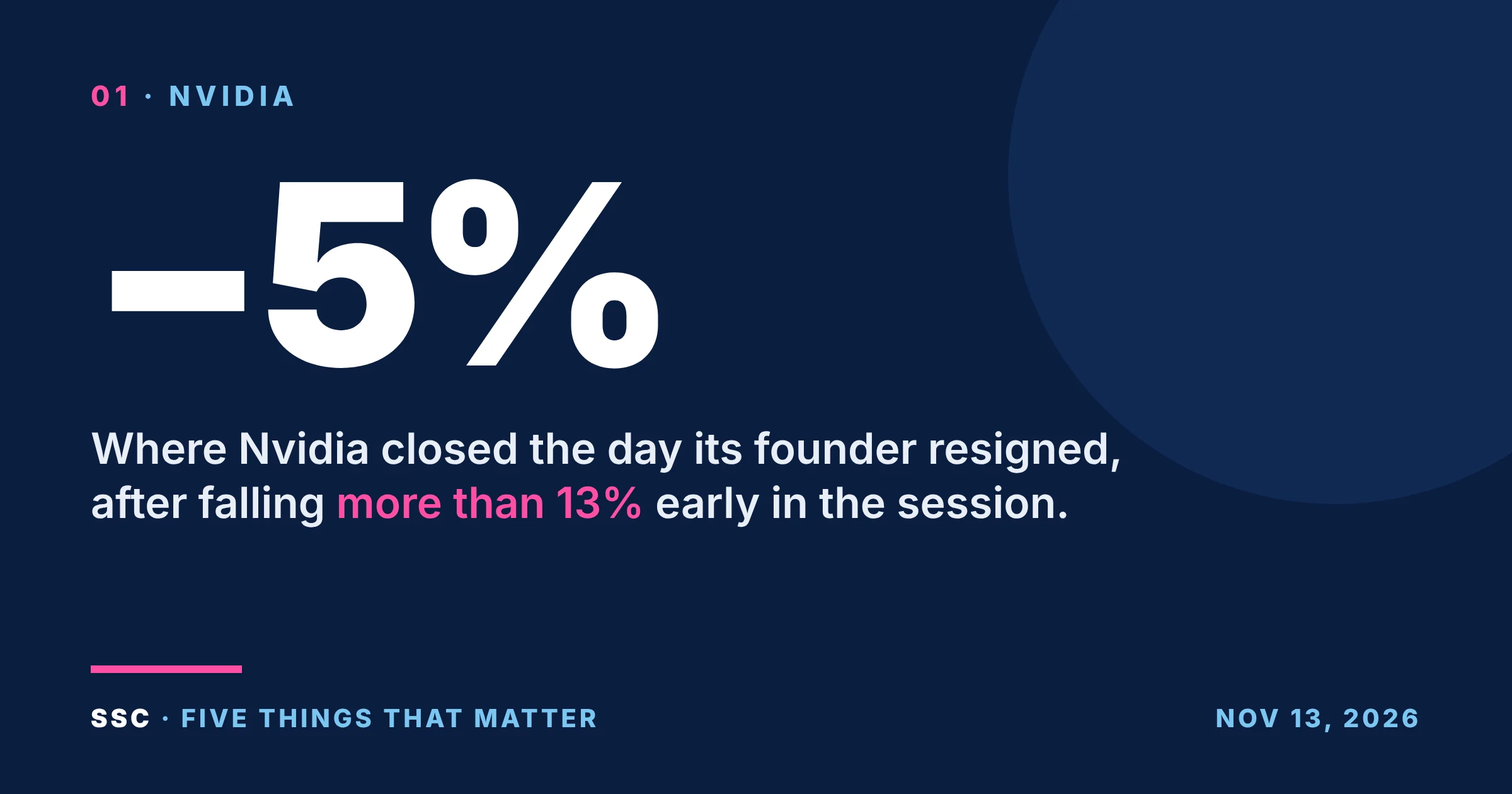
The biggest company in the AI boom lost its founder overnight. Jensen Huang resigned as president and chief executive of Nvidia, the company said Thursday, days after he admitted to a romantic affair with an alleged Chinese spy, setting off a U.S. national security crisis. Chief financial officer Colette Kress is now interim CEO while the board searches for a permanent successor, and she’ll keep her CFO job too. Investors noticed: Nvidia stock fell more than 13% in early trading Thursday before paring losses, then closed down about 5%.
The bigger issue is how the company was built. Huang wasn’t just running Nvidia. Product decisions, strategy and Wall Street’s confidence all ran through him, so there was no succession plan, only an assumption that he’d always be there. Now one person is doing two jobs, and Kress steps in with quarterly earnings looming next week, as Fox Business’ Eric Revell reported. When a whole market leans on one company, and that company leans on one founder, a personal scandal becomes everyone’s portfolio risk.
What to watch: next week’s earnings call. It’s Kress’s first test, and the question is whether Nvidia’s customers are nervous enough to start hedging with rival chipmakers.
2. Workers Are Getting the Smallest Slice Since 1947

Fed Governor Michael Barr said out loud what the paychecks have been showing for a while. Labor’s share of national income hit a record low of 52.8% in the second quarter of 2026, he noted, after holding between 60% and 65% for decades after World War II and sliding since 2001. He also warned that AI could be what researchers call capital-biased innovation, where the returns flow mainly to owners rather than workers.
Here’s how that works. Most of a middle-class household’s income comes from a paycheck. Most of a wealthy household’s income comes from owning things: stocks, dividends, business profits. When productivity rises and the gains flow to owners instead of wages, the gap widens even while the economy grows. Fortune put it plainly in September: corporate margins hit a record 14.9% of GDP while labor’s share fell to 52.8%. Don’t expect help from rates either. Barr said he expects the AI boom is “unlikely to be a reason for lowering policy rates.” As SSC reported, real pay has lost to inflation for seven straight months.
What to watch: whether the new Congress treats the labor-share decline as a policy problem in January, or leaves it to the Fed, which says it can’t fix it.
3. Microsoft Went Down, and Took the Alarm System With It
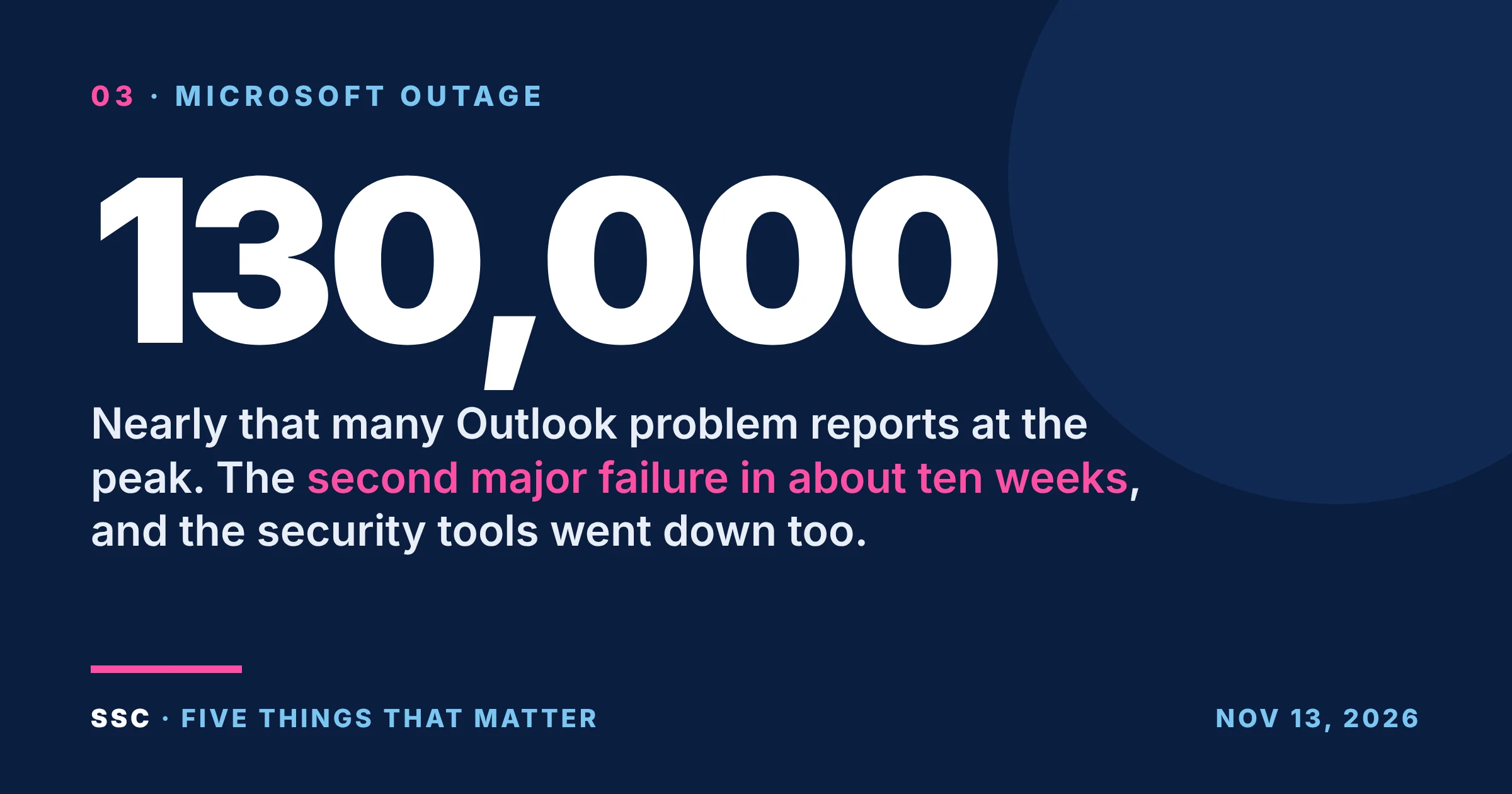
Thursday’s outage hit Outlook, Teams, OneDrive, Copilot and Defender XDR, Microsoft’s security platform. It was the second major failure in about ten weeks. Microsoft said “a large number of servers” became “unexpectedly unavailable,” and it hasn’t given a cause or a timeline.
The outage itself isn’t the scary part. What matters is what failed alongside it. Companies bundled email, chat, file storage and security into one provider because it was cheaper and simpler. That works fine until the provider goes down. Then the tools meant to spot an attack disappear at the exact moment the network is most exposed. As SSC broke down here, consolidation saves money until the day it costs you everything at once.
What to watch: whether Microsoft publishes a real explanation of why so many servers failed at once. Two outages in ten weeks is a pattern, and enterprise customers will want answers before renewal season.
4. Burberry Found Out Who’s Still Buying Luxury
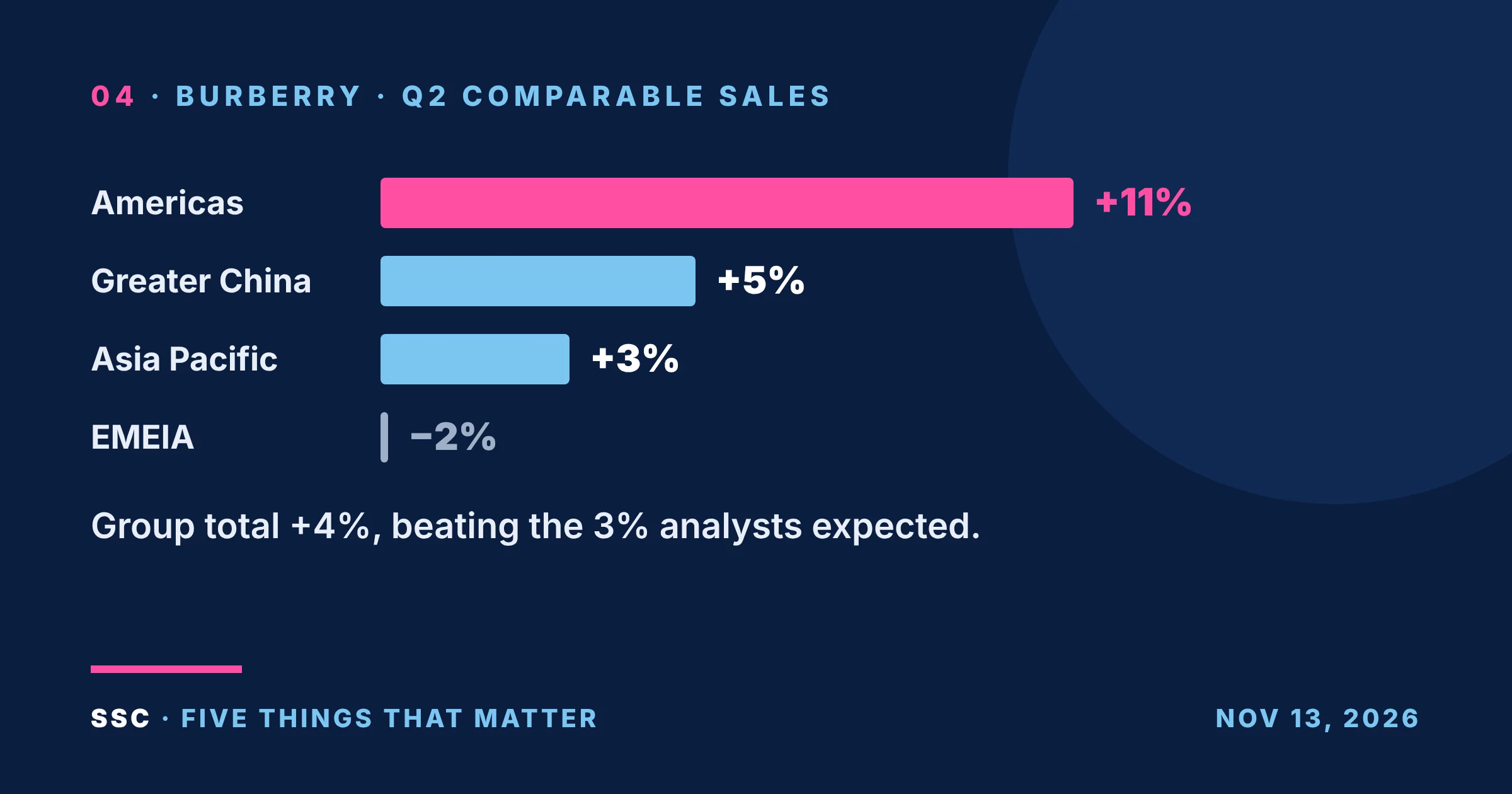
While the rest of luxury struggles, Burberry is quietly recovering. The company reported second-quarter comparable retail sales growth of 4%, beating the 3% analysts expected, and its stock jumped about 9% in European trading, Quartz’s Cris Tolomia reported. Most of the lift came from the U.S., where growth was driven by local customers and strong conversion in stores.
The strategy is the story. Burberry didn’t win by charging more. It won by letting more people in. Price trims and a focus on entry-level luxury helped it beat expectations, and accessories like handbags and shoes are pulling in first-time buyers. Compare that with Rick Owens and Adidas, who are turning a 2013 running sole into an $850 boot. Luxury is splitting in two: cheaper ways in for new buyers, and higher prices at the top for people who will pay anything.
What to watch: whether Burberry’s entry-level push holds through the holidays, or whether discounting the brand starts to dilute it.
5. Two Americas Walk Into the Holiday Season
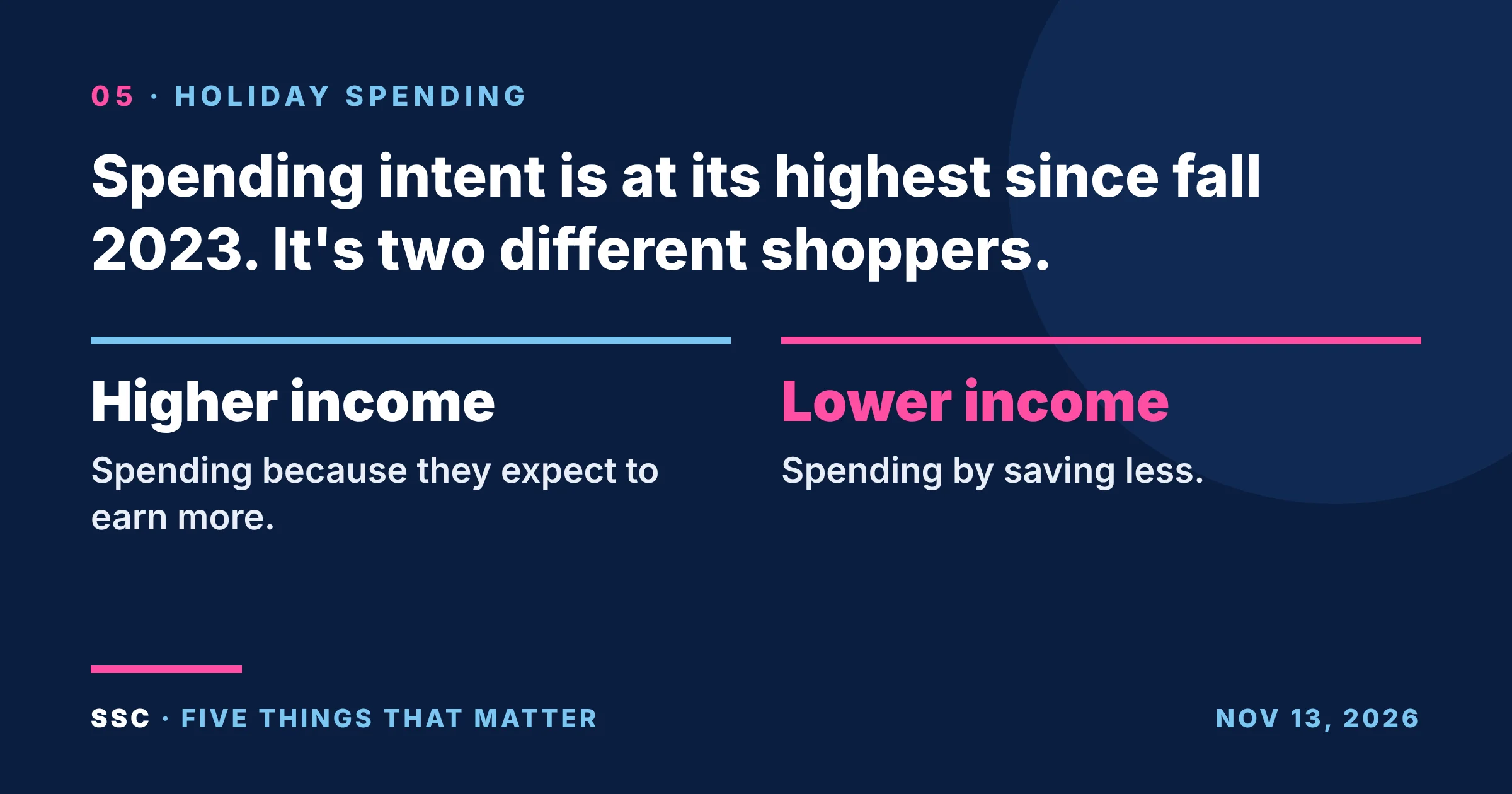
Consumers say they’re ready to spend, but not for the same reasons. Alvarez & Marsal’s Fall 2026 Consumer Sentiment Survey of more than 2,000 adults found spending intent at its highest level since fall 2023. Higher-income households are spending because they expect to earn more, while lower-income households are spending by saving less. “The headline number hides two very different consumers,” said Chad Lusk, a managing director at the firm.
Put that next to everything above. Wealthier households earn from capital, which is booming, so they spend because they expect more. Lower-income households earn from wages, which are losing to prices, so they spend by draining what they’ve saved. Both groups show up in the same “consumers are spending” headline. Only one of them can keep it up into January.
What to watch: holiday retail numbers and credit card balances. If lower-income spending is running on savings, the bill comes due with the next Fed rate hike.
The through line: Thursday showed how much is resting on too few people and too few providers. One founder carried a $4 trillion company. One cloud carried the office, and capital gains are carrying the economy while paychecks shrink. Everything holds until one of them fails.
If someone forwarded you this, Five Things lands every weekday morning, and the Closing Note wraps every night. Sign up free here.