
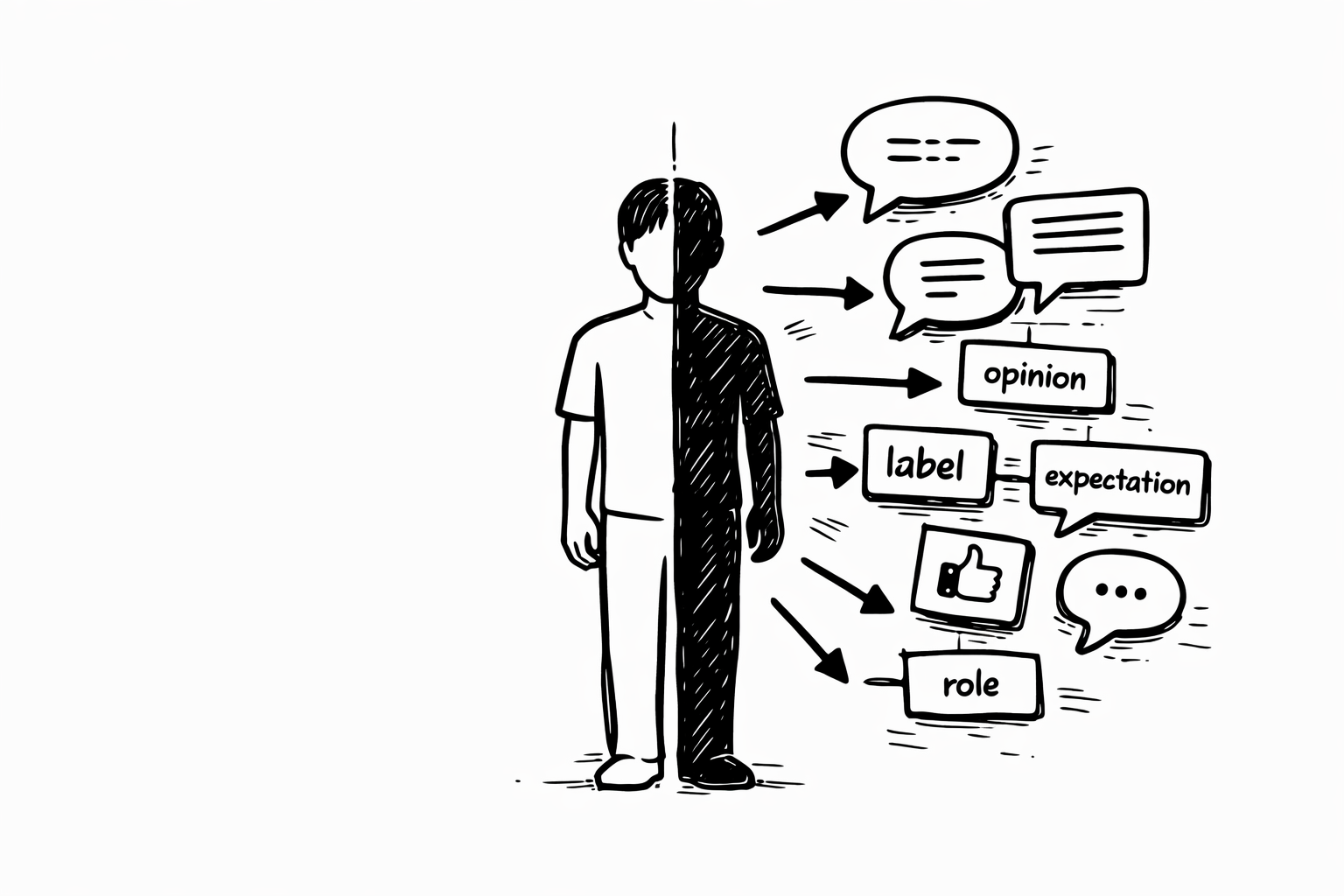
Gender used to occupy a specific lane. It was personal, mostly private, and surfaced in public settings only under particular conditions. That lane no longer exists — or rather, it has widened into the road itself.
What was once a largely individual aspect of identity now moves through professional environments, dating culture, social media feeds, and everyday conversation. The shift did not happen because of a single event. It happened through accumulation — a gradual expansion of where these conversations occur and who is expected to engage with them.
In the workplace, the change is visible in the data and in the daily texture of professional life. Research from McKinsey & Company and LeanIn.Org shows that women remain underrepresented in leadership roles across industries. That gap shapes not just organizational structure but the language around representation, communication styles, and visibility — all increasingly discussed through a gendered lens in settings that once would have treated such conversations as outside the scope of work.
Dating has become another site of open negotiation. Questions about who initiates, who provides, how emotional expression is received — these are no longer settled by default or handled privately. A Pew Research Center report found that a majority of single adults say dating has become harder in recent years, with differing expectations around gender roles cited as a significant contributing factor. What was once navigated implicitly is now debated explicitly, often publicly, often online.
Social media is where that public quality amplifies. Pew Research also finds that a majority of Americans now get at least some of their news and information from social platforms — which means the frameworks, language, and arguments circulating in gender conversations reach far beyond the communities that generated them. Perspectives that once lived in specialized spaces now travel at scale, embedding themselves into daily feeds and everyday life.
What changes when a conversation goes this public is the interpretive weight attached to ordinary behavior. How someone speaks, dresses, or relates to others can now be read not just as personal expression but as a position — a signal within a larger cultural argument. That is a meaningful shift in how identity functions. It means more visibility, more language, more opportunity to be understood. It also means more surface area for misreading, more pressure around presentation, more awareness of being observed.
The expansion of gender into public discourse has not resolved the underlying questions. If anything, it has made them more present, more contested, and more difficult to step away from. The conversation is no longer something that happens in specialized rooms. It is part of the environment most people are already moving through — at work, in relationships, online, in passing.
Navigating it is no longer optional. It is just part of where we are.