
Part of Culture in Motion — examining how narratives shape perception, power, and public opinion.
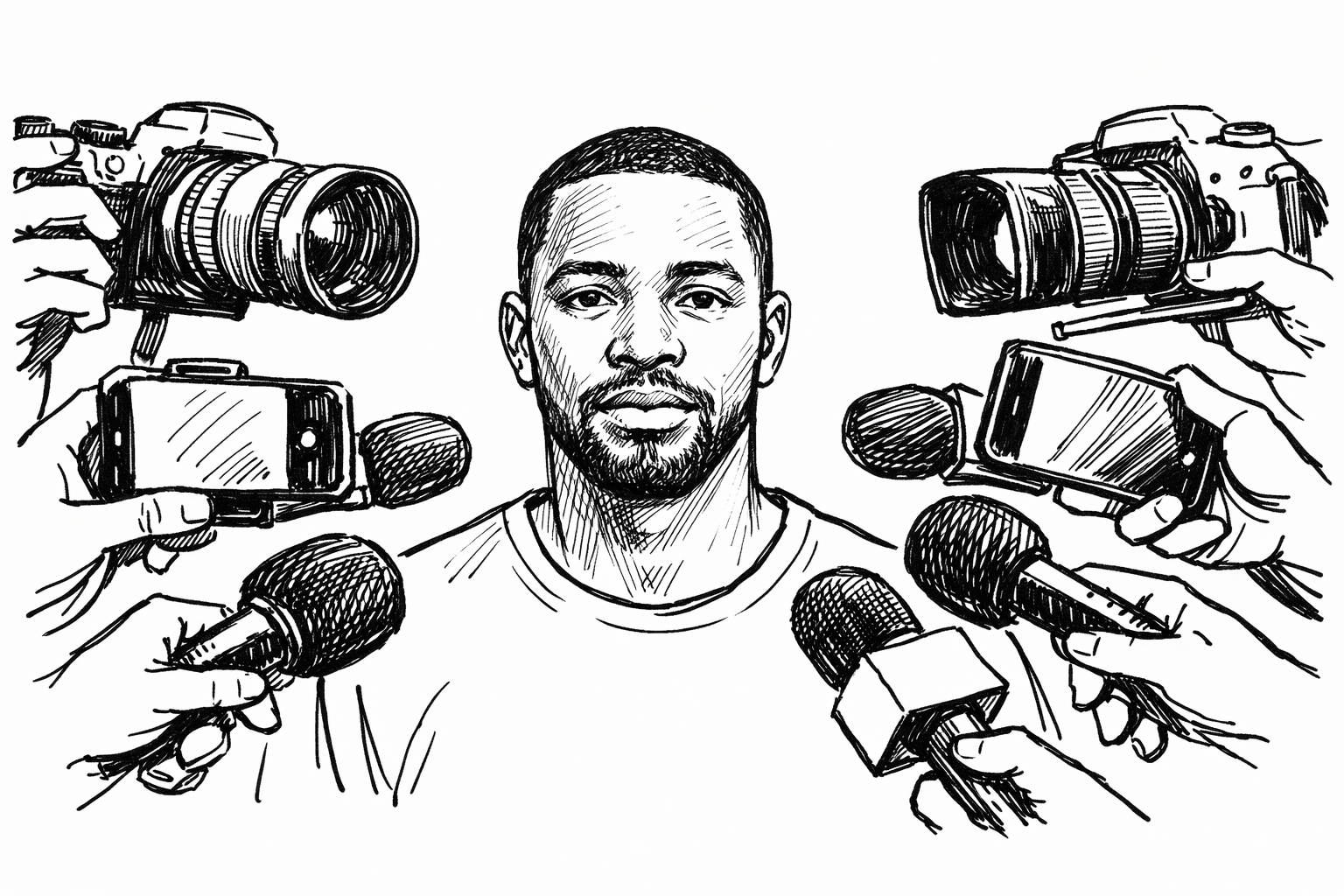
There is a moment when a real experience stops being treated as a lived reality and starts being used as evidence. That shift is subtle, but once it happens, the story no longer belongs to the people inside it. It belongs to whoever can frame it, distribute it, and make it mean something larger than itself. Over the past decade, the experiences of Black Americans — particularly around policing, inequality, and systemic access — have increasingly moved into that space. They are no longer just domestic issues. They are global content.
That content travels fast because it is rooted in truth. The disparities are documented. The history is real. The images are undeniable. But what happens after those images circulate is where the story changes. Clips of protests, footage of police encounters, and statistics about inequality are lifted out of their immediate context and inserted into a broader narrative ecosystem. Research from the Alliance for Securing Democracy documents how state-linked media from China and Iran have consistently focused on highlighting racial injustice in America — casting it as a fundamentally racist country with no standing to promote democracy or human rights. The events being amplified are not fabricated. The strategy is in the selection, the timing, and the framing — what gets chosen, when it gets circulated, and what argument it is made to serve.
For governments like the Islamic Republic of Iran, the value is straightforward. Highlighting racial injustice in the United States creates a counterargument to American criticism abroad. If the U.S. positions itself as a defender of human rights, then visible inequality at home becomes a tool to undermine that claim. The message is not subtle: a country that cannot resolve its own internal contradictions should not be trusted to judge others. The U.S. Director of National Intelligence has warned that Iran is becoming increasingly aggressive in foreign influence efforts, seeking to stoke discord and undermine confidence in American democratic institutions — with Iranian government actors observed posing as activists online, encouraging protests, and in some cases providing financial support to organizers. In that context, Black American experiences are not being engaged with as a community reality. They are being deployed as geopolitical leverage.
But foreign governments are not the only ones who benefit. The structure of social media ensures that the most emotionally charged version of any story travels the furthest. Platforms reward content that generates reaction — anger, outrage, validation — because reaction drives engagement, and engagement drives revenue. Stories about race in America sit at the center of that dynamic. They are complex, deeply felt, and historically rooted, which makes them uniquely powerful in digital spaces. What gets amplified is rarely the full picture. It is the sharpest, most immediate fragment of it. As SSC has tracked in Why Stories Are Missing and The Trust Gap, the communities whose lives generate that content are rarely the ones shaping how it moves — or who profits when it does.
Domestically, that same content becomes political currency. Different actors use the same underlying reality to argue entirely different points. For some, it is evidence that systemic reform is overdue. For others, it is framed as proof of social instability or institutional failure. The facts do not change, but the meaning does depending on who is telling the story and what outcome they are trying to produce. In that environment, the narrative becomes less about understanding and more about alignment — people are not just reacting to events, they are choosing what those events represent.
There is also an economic layer that rarely gets named directly. The creator economy thrives on attention, and attention gravitates toward conflict. Commentary around race — especially when framed as provocative or definitive — builds audiences quickly. That creates an incentive structure where nuance becomes a liability. The more complex the truth, the harder it is to package. The more simplified the narrative, the easier it is to scale. Over time, that pressure reshapes how stories are told, even by people who are not operating with any strategic intent beyond growth.
All of this produces a strange and specific reality: multiple systems extracting value from the same source material simultaneously. Governments gain leverage. Platforms gain engagement. Political actors gain mobilization. Creators gain visibility. The story continues to move, evolve, and expand. But the people whose lives form the foundation of that story are rarely in control of how it is used. Their experiences are translated into symbols, and symbols are easier to move than lived realities.
This is the part that often goes unexamined. When Black struggle becomes global content, it does not stop being real — but it does start being repurposed. It becomes a lens through which broader arguments are made about democracy, power, and legitimacy. And once that happens, the conversation shifts away from the original conditions that produced the story in the first place. The focus is no longer on resolution. It is on interpretation.
Why This Matters
Narratives shape outcomes — not immediately, and not always directly, but consistently over time. The way a story is framed determines how it is understood, and how it is understood determines what people believe is possible, necessary, or justified. When the same set of experiences is being used simultaneously to demand justice, to undermine American credibility abroad, and to drive platform engagement, clarity becomes harder to hold onto. The question is not whether the stories are true. Many of them are. The question is who controls what those stories become once they leave the communities they originate from — and whether those communities ever get to define what resolution actually looks like.
The Access Shift
The gradual redefinition of who systems are designed to serve.
Across sectors—from public infrastructure to healthcare to everyday spaces—access is no longer assumed. As costs rise and systems face increasing pressure, services once built for broad reach are becoming more selective, more conditional, and less universal. The Access Shift explores how these changes are unfolding in real time—and what they reveal about who is included, who is left out, and how the structure of everyday life is quietly being reshaped.