
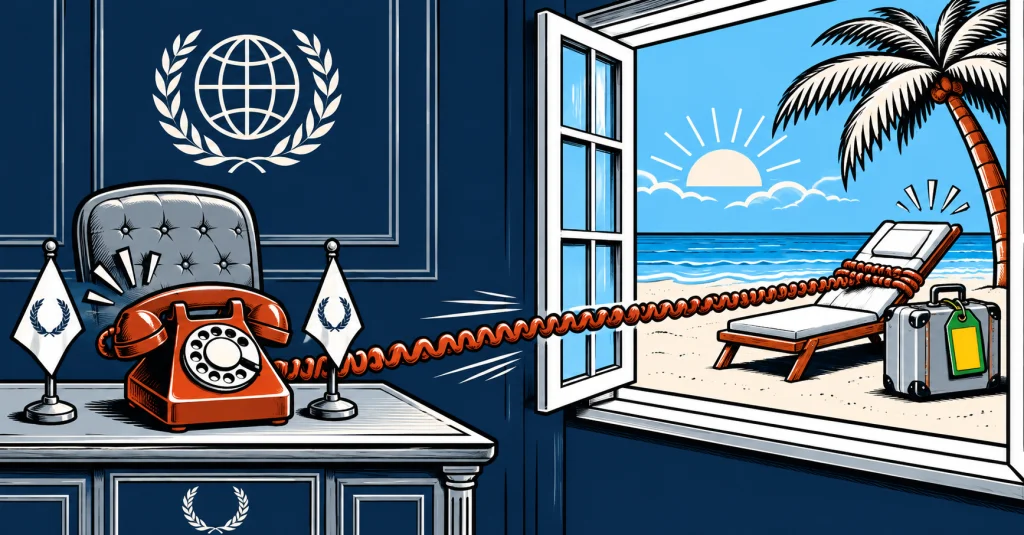
Marco Rubio is reopening talks with Lula’s government while the man Lula just defeated settles into Miami.
The U.S. is trying to patch things up with Brazil while hosting the candidate who won’t admit he lost. Secretary of State Marco Rubio spoke briefly with Brazilian Foreign Minister Mauro Vieira at the G20 foreign ministers’ meeting he hosted in Atlanta. According to Reuters’ Andrea Shalal, the two agreed to meet again before December’s G20 leaders’ summit in Miami. That meeting would come just weeks after President Luiz Inácio Lula da Silva won a historic fourth term on Oct. 25 with 51.78% of the vote, a comeback after trailing in the first round, per Brazil’s electoral court.
His opponent hasn’t moved on. Sen. Flávio Bolsonaro campaigned on a promise to pardon his father, former president Jair Bolsonaro, who is in prison for trying to stay in power after the 2022 election. After losing by about 4.4 million votes, Flávio challenged the result over a two-hour extension of voting, then landed in Miami and declared himself Brazil’s rightful leader, thanking Donald Trump and Argentina’s Javier Milei for their support. How he got there is in dispute:
- Brazil’s side: Police had ordered him to surrender his passport as a flight risk, and he’s under investigation for corruption, money laundering and tax evasion, the Associated Press reported. NPR’s Carrie Kahn reported that he traveled through Argentina and Ecuador on his way to Florida.
- The New York Times’ reporting: A White House communications staffer helped arrange the private flight out of Brazil, and Trump ordered that Bolsonaro get a visa, according to an Oct. 29 report relayed by TT News Agency.
- Washington’s side: “We didn’t facilitate anything,” Rubio said, adding that Trump decided to allow Bolsonaro to enter. Trump has since said Bolsonaro can stay in the U.S. as long as he wants, and called Brazil’s election result “a disgrace.”
Two messages, one relationship
The diplomatic channel and the political one are pulling in opposite directions. A U.S. official told Reuters that Trump has no current plans to back Bolsonaro’s political ambitions, and a Brazilian official insisted, “We’re clearly not politicizing the issue.” But a visa isn’t a neutral gesture when the person receiving it is a defeated candidate disputing the result, from a family the Trump administration openly backed during the campaign. Every week Flávio spends in Miami gives Lula’s critics a stage and Lula’s government a grievance. The friction is already stacking up, too: Brazil has stalled on approving Trump’s pick for ambassador, and the two countries have been in a separate dispute over visas.
What’s riding on the reset
Both countries have reasons to keep talking. Brazil is Latin America’s largest economy, and as SSC reported before the vote, its election was also a fight over who gets access to its minerals, resources Washington wants for its supply chains. That gives Lula’s government leverage, and it gives Washington a practical reason to keep its politics out of its diplomacy.
What comes next
Watch the Rubio-Vieira meeting before the Miami summit. If Washington wants trade, minerals and diplomacy with Brazil back on track, it will have to treat Lula’s government as the only government, in words and in what it allows its houseguest to do. If Bolsonaro keeps contesting the election from U.S. soil, expect Brasília to raise the price of every concession on the table, ambassador included.