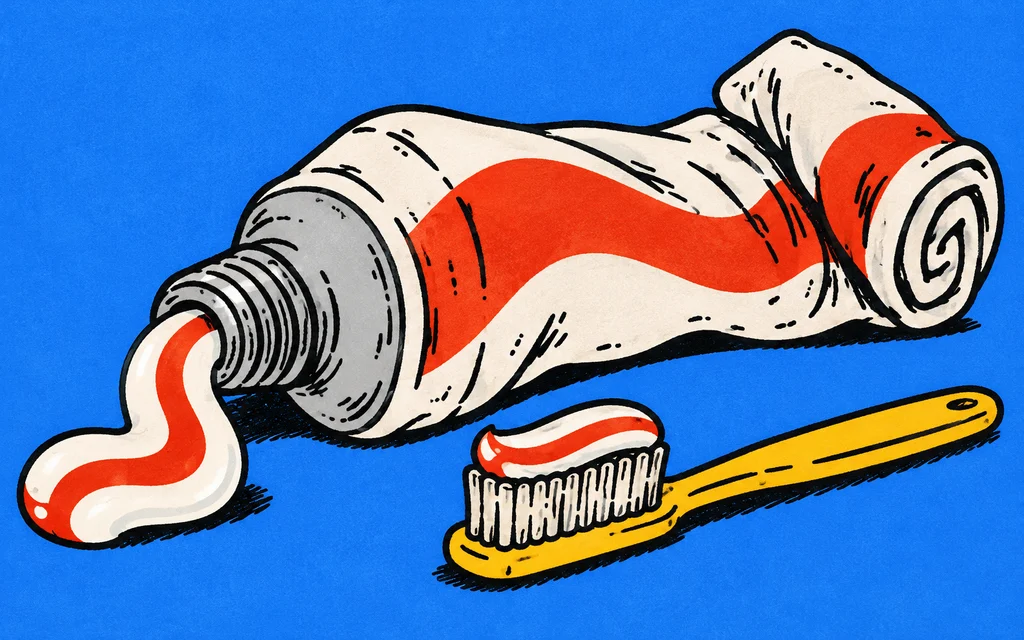
What started as an unpleasant moment in a group fitness class led me down a rabbit hole about veneers, bacteria, embarrassment and what we owe someone who may not know their breath is a problem.
There are certain things you expect to encounter during a group fitness class: loud music, sweat, heavy breathing and the occasional grunt from someone pushing through another set. What I was not prepared for was the smell. The woman beside me was repeatedly jumping onto an exercise box, and every time she landed and exhaled, a wave of warm breath traveled in my direction. It smelled less like ordinary morning breath and more like food had been sitting somewhere between or underneath her teeth for far too long. After several rounds, I was nauseous enough that I started feeling lightheaded. I moved away, finished the workout and later found myself searching for an explanation. That is how I learned about something the internet has started calling “veneer breath.”
The term has been circulating online as people discuss a less glamorous side of cosmetic dentistry. But veneers themselves are not supposed to produce an odor. In a September 2026 report from ABS-CBN News, dentist Dr. Sam Bernardo explained that persistent bad breath associated with veneers generally originates from the gums, natural tooth structure beneath them or the margins where a veneer meets the tooth. Plaque accumulation around that gumline margin, she said, is one of the most common causes. Bernardo also said that even a small ledge around a veneer can allow food and bacteria to accumulate, potentially inflaming the gums while bacteria break down proteins and release sulfur compounds.
Improperly fitted or aging dental work can create other problems. Bernardo told ABS-CBN News that spaces around poorly fitted veneers can harbor plaque, tartar and bacteria, while breath problems that begin years after veneers were installed may warrant a dental examination for possible leakage around the bond. More broadly, the American Dental Association says volatile sulfur compounds associated with food breakdown, dental plaque and bacteria are major contributors to oral odor, while Cleveland Clinic notes that persistent bad breath can be connected to oral hygiene, gum disease, dry mouth and other health conditions.
That explanation made my experience in the fitness class considerably more interesting. The perfectly straight smile someone sees from across the room does not necessarily reveal what is happening around or underneath dental work. But I also had to remind myself of something important: I did not know this woman. I did not know whether she actually had veneers. I did not know whether she had eaten something five minutes earlier, was dealing with dry mouth or had a dental problem she had not yet discovered. Bad breath has many possible causes. My experience sent me searching for an explanation; it did not give me a diagnosis for a stranger.
And then another question started bothering me: What would I have done if she had been my friend?
Most of us would probably tell a friend if something was stuck in their teeth, their zipper was down or there was toilet paper attached to their shoe. Breath feels different. It is intimate. Saying something can sound like criticism of a person’s hygiene even when that is not what you mean. So people often choose silence. We step backward, turn our heads, offer gum or find an excuse to move somewhere else. The person with the problem may continue through an entire workday, date or workout having no idea why people keep creating distance.
I think I would want someone I trusted to tell me.
Not loudly. Not as a joke. Not in front of other people. And certainly not with “your breath stinks.” I would want a friend to pull me aside and say something like, “I wanted to tell you privately because I’d want you to tell me — your breath seems a little off today. You may want to check it.” Then leave it there. No diagnosis. No interrogation. No attempt to embarrass them. Just information they can decide what to do with.
That conversation may also be more useful than handing someone a mint. Gum and mouthwash can provide temporary relief, but they do not necessarily address whatever is causing persistent odor. Cleveland Clinic recommends regular brushing, flossing and tongue cleaning, along with dental care when bad breath continues despite good hygiene. The ADA similarly notes that some mouthrinses merely mask odor while therapeutic rinses can help control bacteria and plaque. If the problem persists, particularly around veneers or other dental restorations, having a dentist evaluate the underlying cause is more useful than continually covering the smell.
That is where the conversation about “veneer breath” becomes more interesting than the viral phrase itself. Cosmetic dentistry is usually presented through transformation photos: uneven or discolored teeth disappear and an immaculate white smile takes their place. We see considerably less about the maintenance afterward. Veneers still exist inside a living mouth, surrounded by gums, bacteria and natural tooth structure. They have to be cleaned, monitored and professionally evaluated like other dental work. A beautiful smile does not make someone exempt from plaque or gum problems.
I still remember that workout because of how physically unpleasant the experience was. But I also think differently about it now. My immediate reaction was to get away from the smell. My second reaction was curiosity. The third was empathy. There is a decent chance that someone walking around with persistent bad breath has no idea everyone else can smell it.
Maybe the uncomfortable part is not telling someone. Maybe it is knowing something that could help them and choosing to let them remain unaware.
“Veneer breath” makes for a memorable social-media phrase. The underlying issue can be much more ordinary: bacteria, plaque, trapped debris, inflamed gums or dental work that needs attention. The solution is not shame. It is maintenance, a dental evaluation when necessary and, occasionally, a friend willing to have an awkward conversation in private.