
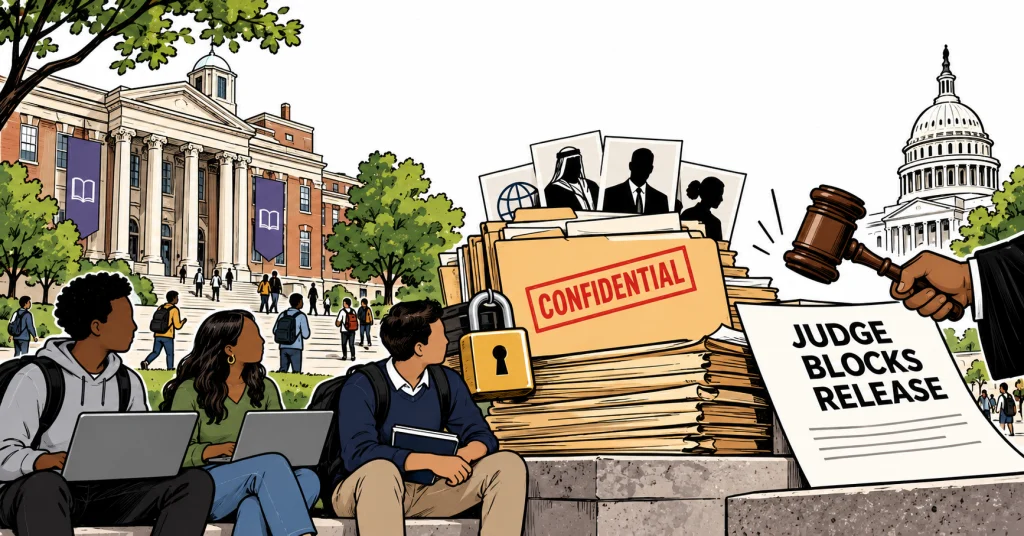
A temporary court order has stopped publication of previously confidential identities. The dispute tests how far public accountability extends—and whether Washington can change the terms after collecting information.
For six years, the Education Department collected foreign-donor identities while assuring universities in writing that names and addresses would stay out of public disclosure reports. On October 1, U.S. District Judge Tanya Chutkan temporarily blocked the government from publishing previously undisclosed identifying information supplied by Association of American Universities members. The order lasts 28 days unless extended. In her opinion, Chutkan found the association likely to succeed on its claim that the department had inadequately justified reversing its position. The ruling preserves confidentiality while the court considers longer-term relief.
Federal law already requires substantial foreign financial relationships to be reported. Section 117 of the Higher Education Act sets a threshold of $250,000 or more from a foreign source, counted individually or together with other gifts and contracts from that source during a calendar year. Its provisions distinguish among funding categories, including foreign-government support and restricted gifts. The current litigation concerns publication of identifying information the government already possesses. Reporting to federal officials and exposing that information to a public audience create different consequences for universities, donors and people assessing potential influence.
The Government Changed the Audience
The department had repeatedly delayed broader publication before setting October 2 as its release date. Its September-updated reporting notice also records an earlier disclosure involving 92 foreign entities appearing on U.S. government lists, with transactions linked to universities. That narrower release illustrates the department’s interest in making financial relationships publicly traceable. According to Reuters’ coverage, the department argues that Americans deserve transparency about overseas money flowing to campuses. Public identification would allow scrutiny to extend beyond regulators to journalists, researchers and other interested readers.
The universities’ objection centers on the conditions under which they supplied the information. In its statement announcing the lawsuit, AAU says institutions complied in reliance on confidentiality commitments. It warns that publication could expose donors to harassment, reputational harm or danger in their home countries, and discourage gifts supporting scholarships, teaching and research. Those are the association’s claims about potential consequences, rather than measured losses from the proposed release. They nevertheless identify a financial dependency: universities seeking philanthropic support also depend on being able to explain reliably how donor information will be handled.
A Name Can Reveal a Relationship. It Cannot Explain It Alone.
The public interest in university funding is substantial. A donor identity can help connect transactions, reveal repeat relationships and support questions about institutional independence. But evaluating influence also requires context: what the funding supports, whether conditions attach to it and whether a donor receives authority over research or teaching. A foreign origin alone establishes neither improper influence nor misconduct. Universities seeking confidentiality still face the responsibility to explain how they protect academic decisions, while officials promoting disclosure need to distinguish documented concerns from the implications readers might draw from a name appearing in a database.
Publication would redistribute control over that interpretation. Federal officials already have access to information universities submitted; a public release would give outside observers more ability to examine relationships while reducing institutions’ and donors’ control over exposure. Chutkan emphasized that disclosure could not readily be undone once the information entered public circulation. Her preliminary decision addressed the agency’s explanation for its policy reversal and the consequences of immediate release. She expressly left open the possibility that the department could ultimately justify its decision, rather than establishing permanent immunity from disclosure.
The Next Decision Must Address Both Trust and Scrutiny
If the government establishes a lawful, adequately explained disclosure policy, public access could expand. If the court requires stronger protection for information collected under prior assurances, officials may need to distinguish historical records from future reporting. Either outcome will shape how universities communicate with donors and how the public evaluates foreign financial relationships. Effective accountability needs usable evidence about influence; dependable reporting needs clear terms about disclosure. The next stage will determine whether Washington can strengthen scrutiny while preserving confidence in the commitments that helped it obtain the information.