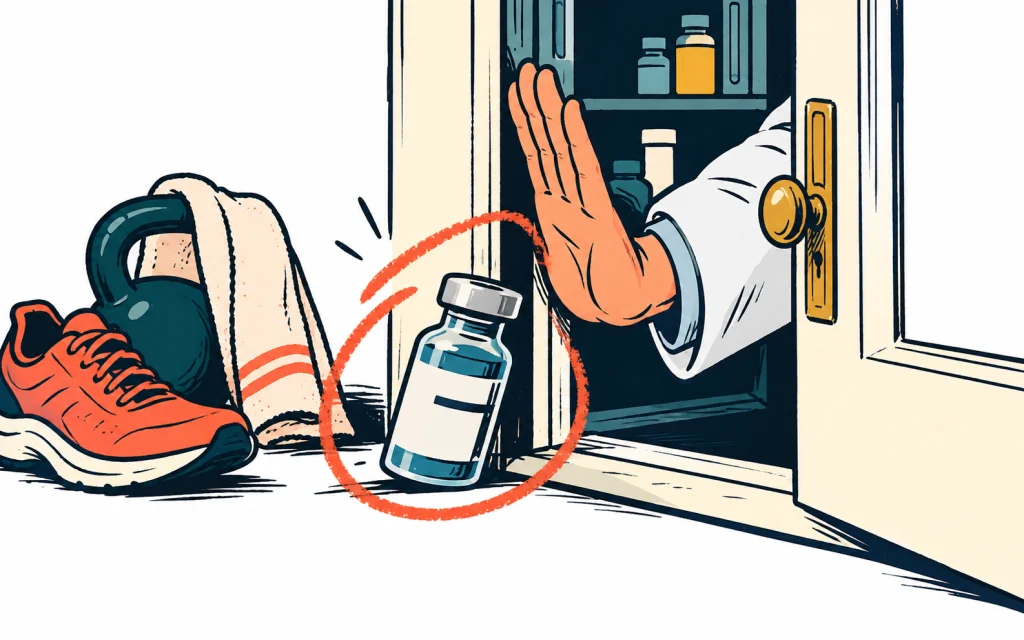
The federal government has not opened the peptide market — at least not yet. When SSC reported Wednesday that the Trump administration was considering a temporary pathway allowing some compounding pharmacies to dispense currently restricted peptides, the proposal represented the clearest indication yet that compounds such as BPC-157 and TB-500 could move from the gray market toward conventional healthcare channels. Read SSC’s earlier report, “The Trump Administration Is Opening a Door for Unapproved Peptides. The Science Hasn’t Caught Up.” Three days later, however, the important development is what has not happened: the FDA has issued no public notice or rule changing their legal status. Reporting since Wednesday also indicates that FDA drug-center staff are not recommending the proposed temporary arrangement.
The Fight Has Moved Inside the FDA
The disagreement follows an unusual regulatory sequence. In July, the FDA’s Pharmacy Compounding Advisory Committee recommended adding six peptides — BPC-157, KPV, TB-500, MOTS-c, Semax and Epitalon — to the federal list of bulk substances that may be used for certain prescription compounds. FDA career scientists had recommended against adding the substances because of limited human safety and effectiveness evidence. The advisory committee nevertheless voted in favor of all six, while rejecting emideltide. The recommendation was never the same as FDA approval and did not immediately authorize pharmacies to begin compounding the substances.
That distinction has become more important since Wednesday. The administration has reportedly discussed using temporary “enforcement discretion,” essentially allowing licensed compounding pharmacies to provide some peptides while the slower regulatory process moves forward. Such a policy could redirect consumers away from overseas manufacturers and websites selling products labeled for research use only. But as of October 10, there is no announced FDA enforcement-discretion policy, no final rule placing the six peptides on the 503A Bulks List and no FDA approval establishing that they are safe or effective treatments. The regulatory door may be moving, but consumers should not mistake movement for authorization.
Why the HYROX Crowd Should Pay Attention
The debate has particular relevance inside the rapidly growing hybrid-fitness ecosystem surrounding competitions such as HYROX. These athletes combine running with repeated high-intensity strength stations, creating exactly the kind of training environment where soreness, tendon problems and recovery become persistent concerns. Peptides marketed for injury recovery have increasingly entered adjacent online fitness conversations. One recent biohacking discussion, for example, described a protocol involving BPC-157, MOTS-c, growth hormone and other compounds alongside a training program specifically designed to prepare for a future HYROX race. Other endurance-focused conversations are openly debating BPC-157 and TB-500 for recovery. Those anecdotes do not demonstrate effectiveness, but they show why regulatory decisions made in Washington can quickly filter into gyms and training communities.
There is another complication for competitive athletes: regulatory access and anti-doping eligibility are separate questions. HYROX publishes its own Anti-Doping Code, and the World Anti-Doping Agency framework explicitly treats many of the peptides circulating in recovery culture as prohibited substances. USADA’s newly released guidance for the 2027 prohibited list specifically names BPC-157, TB-500, AOD-9604, CJC-1293, ipamorelin and several other peptides, warning that even an unnamed peptide may remain prohibited if it falls within a banned category. TB-500 is associated with thymosin-beta-4 derivatives, while BPC-157 has been listed as a non-approved substance. A peptide becoming available through a legitimate compounding pharmacy therefore would not automatically make it permissible for a tested athlete.
Access Is Moving Faster Than Evidence
The scientific problem SSC identified Wednesday has not changed. BPC-157 may be one of the most discussed recovery peptides online, yet most of its supporting evidence remains preclinical. A recent review of real-world use noted that U.S. interest has grown dramatically while researchers still struggle to determine who is using the compound, at what doses and with what outcomes. TB-500 faces a similar evidence problem, with much of the research cited by users involving full-length thymosin beta-4 rather than the fragment sold as TB-500. Meanwhile, online users continue sharing personal reports of reduced pain, faster recovery and improved mobility — observations that may generate research questions but cannot substitute for controlled human trials.
The peptide story has therefore entered a more complicated stage than simply “restricted” versus “legal.” The administration appears interested in moving some products into a regulated pharmacy channel. FDA advisers have already recommended greater compounding access. Career regulators remain concerned about the evidence supporting those products, and athletes may remain subject to anti-doping restrictions regardless of what the FDA ultimately decides. For the HYROX community and the broader fitness market, that is the line worth watching next: not whether peptides become more visible, because they already are, but whether expanding access produces better evidence, stronger quality controls and clearer rules before recovery culture races ahead of the science again.