
The NFL Draft red carpet was not designed as a cultural event. It evolved into one because Black athletes decided to use it that way. What began as pregame visual coverage of prospects arriving at the venue has become an annual fashion ritual with its own editorial cycle, social media moment, and cultural significance — built not by the league but by the players who recognized that the window before institutional identity closes is narrow and worth filling deliberately.
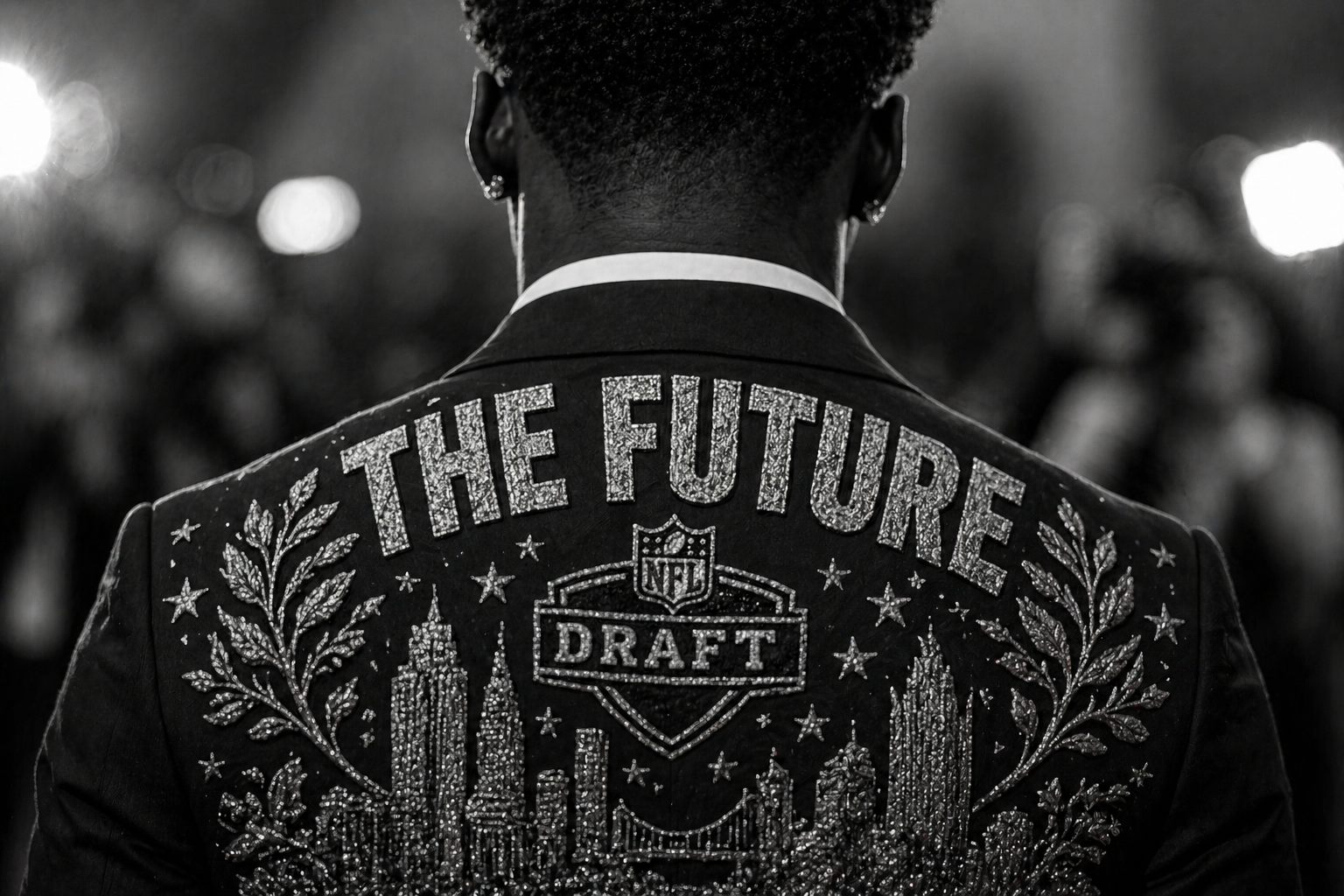
In Pittsburgh for the 2026 draft, Samoan-American Francis Mauigoa wore a suit jacket featuring painted landscapes of the Samoan landscape. Caleb Downs arrived with his parents, his suit lining filled with photographs from throughout his life — from childhood to draft day. Ohio State linebacker Sonny Styles personalized his look with a bow tie, gold cufflinks, and his initials in gold on the lapel. These are not fashion choices in the conventional sense. They are identity statements made at the precise moment these athletes are being evaluated as assets — as bodies with measurable speed, strength, and market value. The suit is the counter-narrative to the combine.
The NFL controls nearly every element of how its athletes are presented publicly. Uniform design. Press conference settings. Media access protocols. Social media guidelines. The apparatus of institutional identity is thorough and it closes quickly around a drafted player. The red carpet exists in the window before that closure — a brief, public, self-directed moment where the athlete decides what they look like before the league decides what they represent. Black athletes and multicultural players have been filling that window with intentionality for a decade, and the audience has grown proportionally because it recognizes what is actually being expressed.
What makes the 2026 draft moment worth examining specifically is the diversity of the cultural references on display. A Samoan landscape. A family photo archive. Monogrammed initials. Cultural identity markers from communities that the NFL’s broader visual identity rarely reflects. The draft class itself is one of the most demographically diverse in the league’s history, and the red carpet is where that diversity finds its most unmediated expression. The league will homogenize what follows. The suits document what was there before it did.