
We are building something new. SSC Systems & Signals is a closed LinkedIn group for professionals who want to go beyond the daily coverage — brain trust conversations, emerging trend analysis, and the kind of structural discussion that doesn’t fit in a comment section. We are just getting started, which means you get to help shape what it becomes. Early members always matter most. Request to join: linkedin.com/groups/20390015
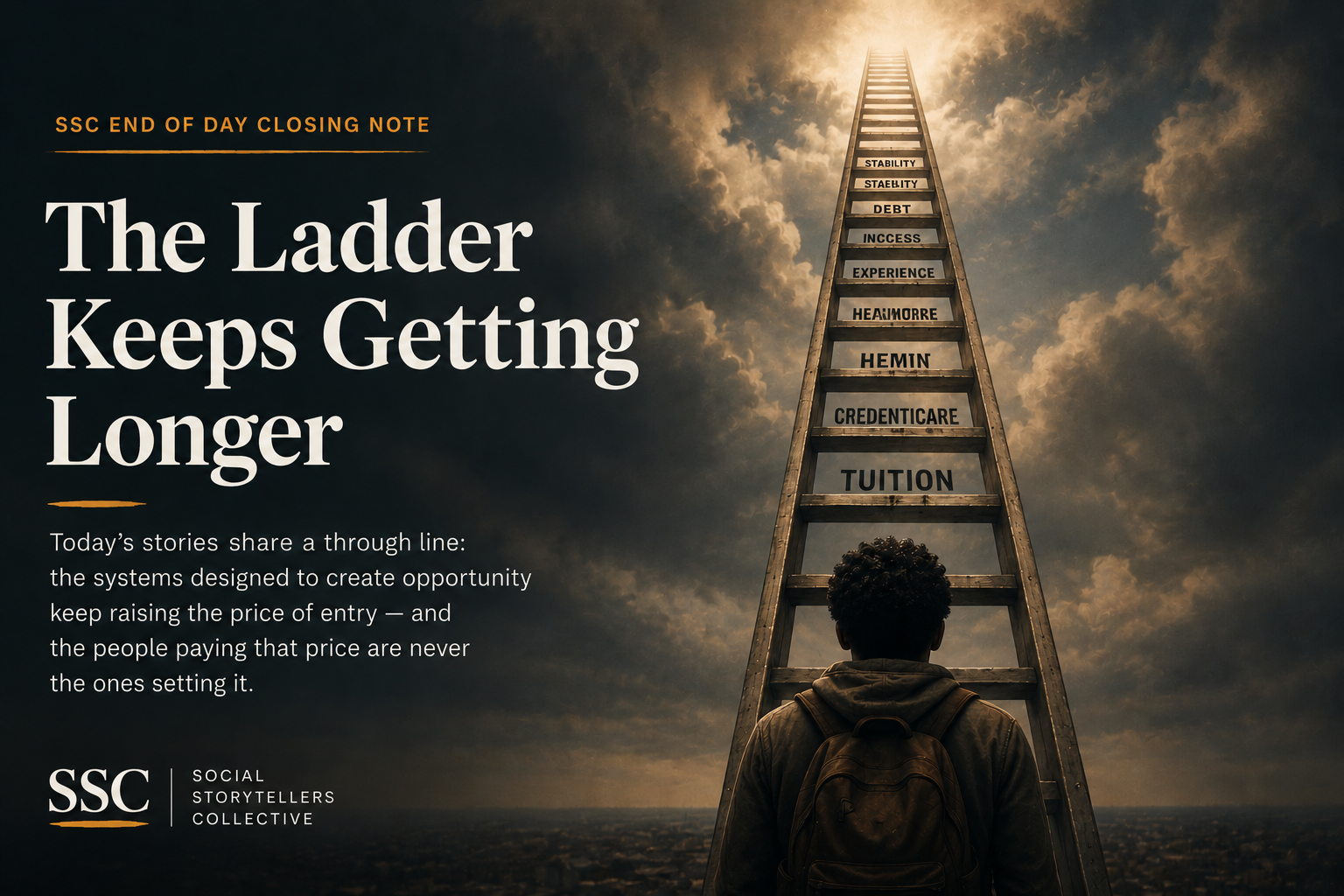
Today’s stories share a through line: the systems designed to create opportunity keep raising the price of entry — and the people paying that price are never the ones setting it.
His name is Lamont Newell. He is a senior at Verbum Dei Jesuit High School in Los Angeles. He spent much of his childhood experiencing homelessness. And this month, he was accepted to 65 colleges and universities before committing to Columbia. The story traveled fast — the way these stories always do — because it compresses everything Americans want to believe about themselves into a single headline. Resilience. Merit. Mobility. The idea that the system, however imperfect, still opens for the people who push hard enough against it.
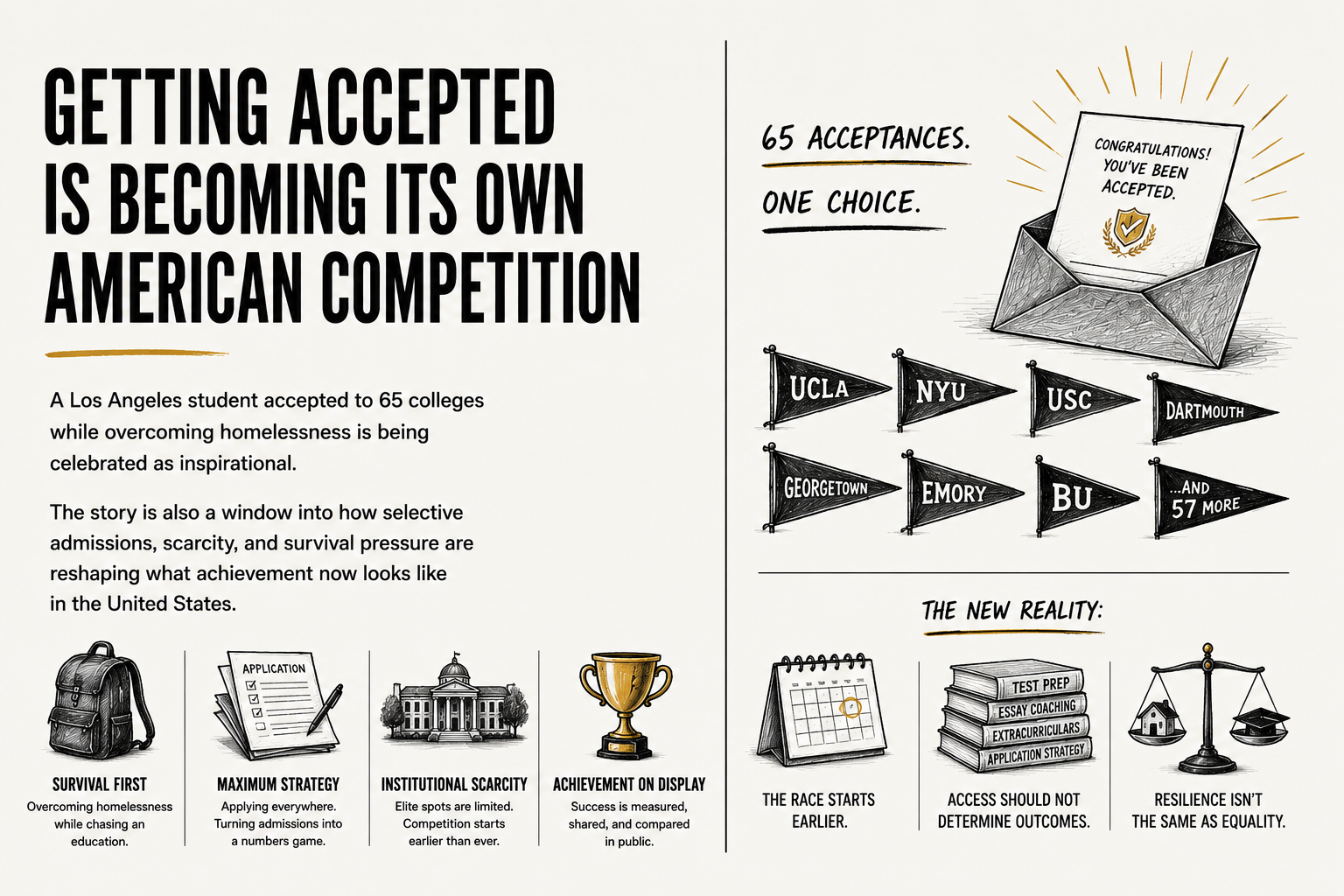
We are leading with Lamont tonight because the story deserves to be celebrated on its own terms. And because, as SSC examines in Getting Accepted Is Becoming Its Own American Competition, the number 65 is not just a measure of one young man’s extraordinary persistence. It is a window into what the American admissions system has become — a competitive accumulation exercise where volume itself signals excellence, where students are encouraged to apply broadly, optimize every metric, and transform adolescence into a long-form portfolio project. The modern admissions process increasingly resembles labor-market positioning years before students formally enter the workforce. For students navigating economic instability, the stakes attached to acceptance letters now carry the weight of long-term survival calculations. The public celebrates the outcome because the outcome feels hopeful. Embedded within the hope is another reality: students are increasingly expected to demonstrate extraordinary resilience simply to access systems that are supposed to create opportunity in the first place.
That tension runs through nearly every story we are watching today. The week that ends tonight was not a week of isolated events. It was a week of systems doing exactly what they were designed to do — and people absorbing the consequences.
The fourth annual Education Scorecard — a joint project of Stanford University’s Educational Opportunity Project and Harvard’s Center for Education Policy Research — released new data today confirming that the pandemic learning decline was not the beginning of a crisis. It was the continuation of one. The “learning recession” predates COVID-19. Most states are finally showing measurable gains in math — a signal that targeted interventions are working in at least one discipline. Reading is a different story. Most states have not made comparable progress, and the gap between math recovery and reading recovery is widening in ways that will compound over time. The states that have made reading gains share one variable: they changed how reading is taught at the legislative level, moving toward structured literacy approaches grounded in phonics and decoding. The schools recovering fastest aren’t the ones that waited for the crisis to pass. They’re the ones that changed something specific — and the data is now clear enough to say what that something was. SSC examines the full breakdown in Most States Are Finally Making Gains in Math. Reading Is a Different Story.
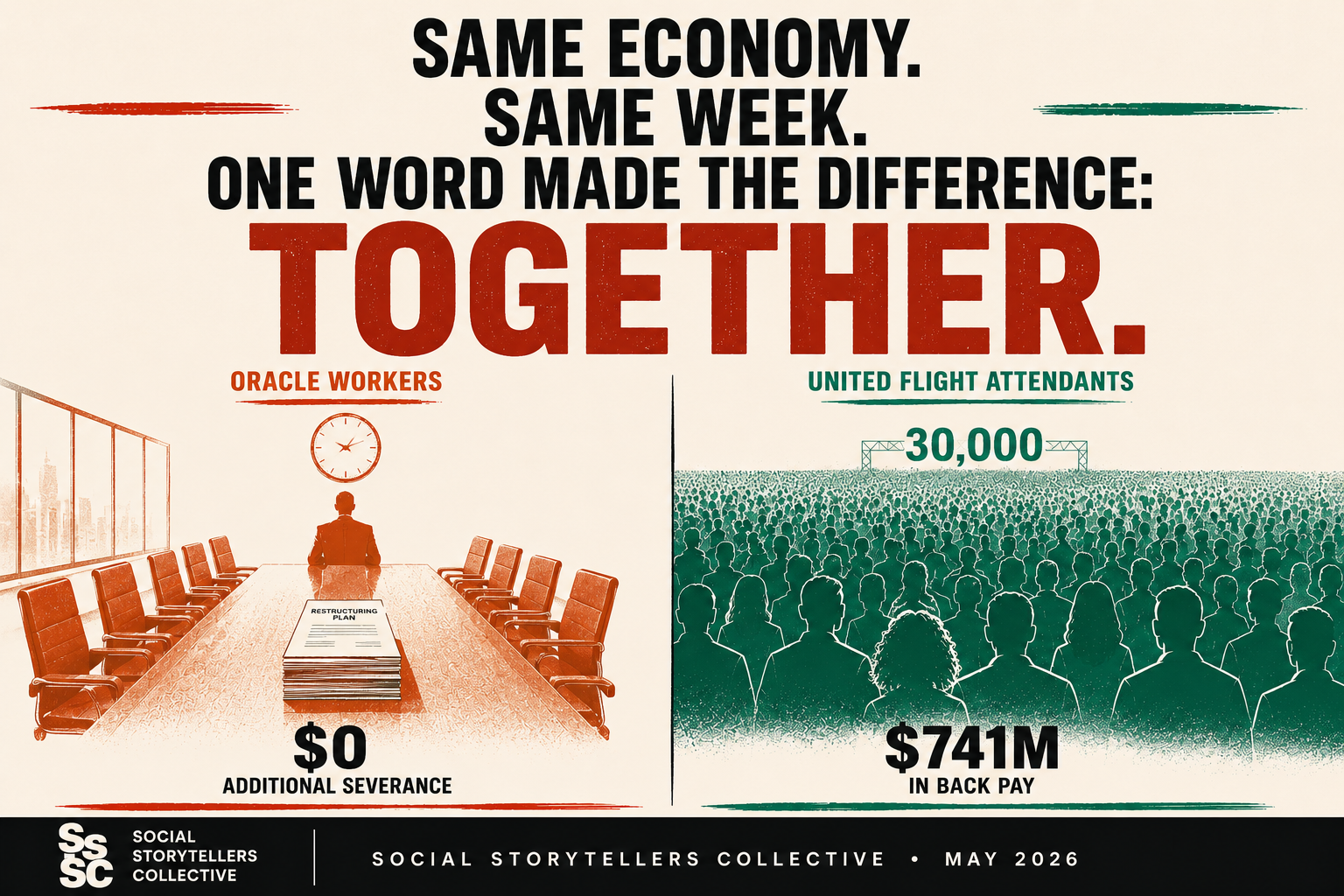
Thirty thousand United Airlines flight attendants ratified a new five-year contract this week. The agreement — approved by 82% of union voters — includes an average base pay increase of 31% by August, $741 million in back pay, and pay for boarding time, something flight attendants have fought to receive for decades. In the same week, Oracle cut between 20,000 and 30,000 workers globally. Several tried to negotiate — for stronger severance, for unvested stock, for WARN Act clarity. One worker forfeited approximately $1 million in stock that was months away from vesting. Oracle declined across the board. As SSC reports in Oracle Workers Tried to Negotiate. United Flight Attendants Just Won. The Difference Is One Word: Together. — the negotiations didn’t fail because workers asked for too much. They failed because they asked alone. Same economy. Same week. Opposite outcomes. The variable that explains the gap is not industry, not company size, not the reasonableness of the ask. It is whether the workers asking were alone or together.

The AI race is generating a new set of headlines every day. Most of them are about capability — which model is faster, which company is ahead, who raised the most capital. SSC’s OpenAI’s Real Expansion Strategy Is Infrastructure Dependence argues that the more consequential story is not who builds the smartest model. It is who becomes impossible to remove from the systems everyone already depends on. OpenAI and Microsoft quietly restructured one of the most consequential financial relationships in the technology industry this week, capping Microsoft’s revenue-sharing agreement at approximately $38 billion while giving OpenAI more flexibility to pursue additional partnerships and an eventual path to public markets. The revision signals that the AI industry is reorganizing around infrastructure dependence rather than innovation cycles. The company embedded deepest inside enterprise workflows — not the company with the single best model — may ultimately hold the most durable power. OpenAI’s valuation approached $852 billion earlier this year. The race was never just about intelligence. It is about indispensability.
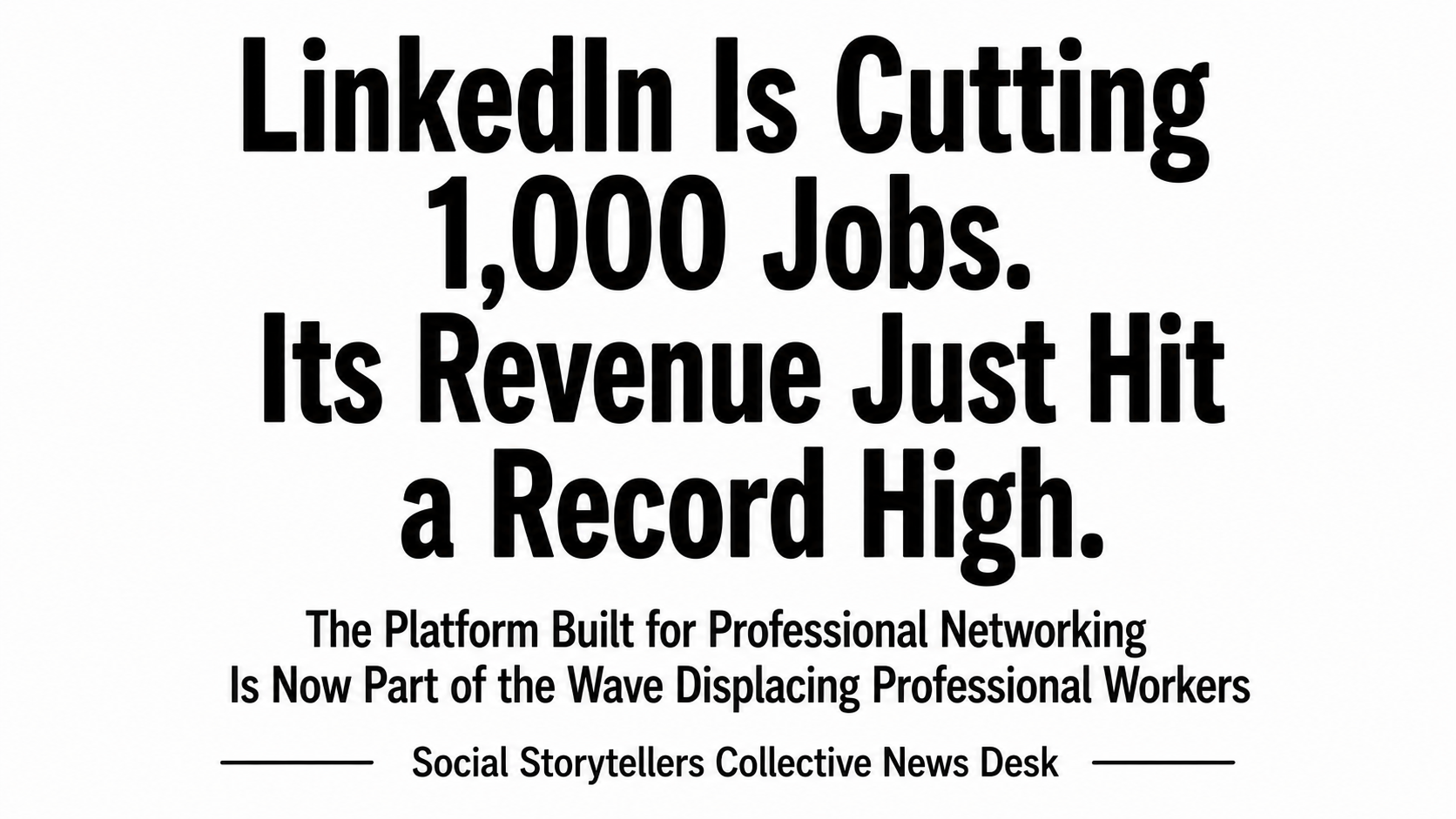
As SSC reports in LinkedIn Is Cutting 1,000 Jobs. Its Revenue Just Hit a Record High. — LinkedIn announced it is cutting approximately 5% of its global workforce — roughly 1,000 positions across engineering, product, and marketing — on the same day its parent company Microsoft reported 12% year-over-year revenue growth at the platform. New CEO Daniel Shapero framed the decision as a reorganization toward growth areas. What he didn’t say is that LinkedIn has now participated in the same pattern it spends its content feed documenting: record revenue, shrinking headcount. The platform where people publicly process layoffs and celebrate new roles is quietly executing its own. The broader number reframes everything — by May 13, the global tech sector had announced more than 100,000 job cuts across 250 separate events this year, an average of 880 workers a day. Economists have stopped describing it as cyclical. The displacement isn’t coming. It’s already the 2026 labor market.
When Pitchfork gave Chris Brown’s BROWN a 1.3, the score traveled faster than the review. That speed is the story. As SSC’s Leena Alridge reports in Music Criticism No Longer Feels Neutral — And the Internet Noticed — the publication then posted to X calling the album a real piece of shit, pulling 1.6 million views by midday, then escalated again with a second post. Each statement pulled the story further from music criticism and deeper into something that looked more like a campaign. What spread fastest on social media wasn’t the tweets themselves. It was the screenshots — Sexyy Red’s 8.0for Hood Hottest Princess placed next to BROWN’s 1.3. For most of the people sharing them, the comparison wasn’t really about lyrical complexity or production value. It became symbolic. A proxy for a longer argument about whose culture gets taken seriously by institutions that still position themselves as arbiters of taste. Audiences noticed the difference between criticism and participation immediately. The publication did not seem to.
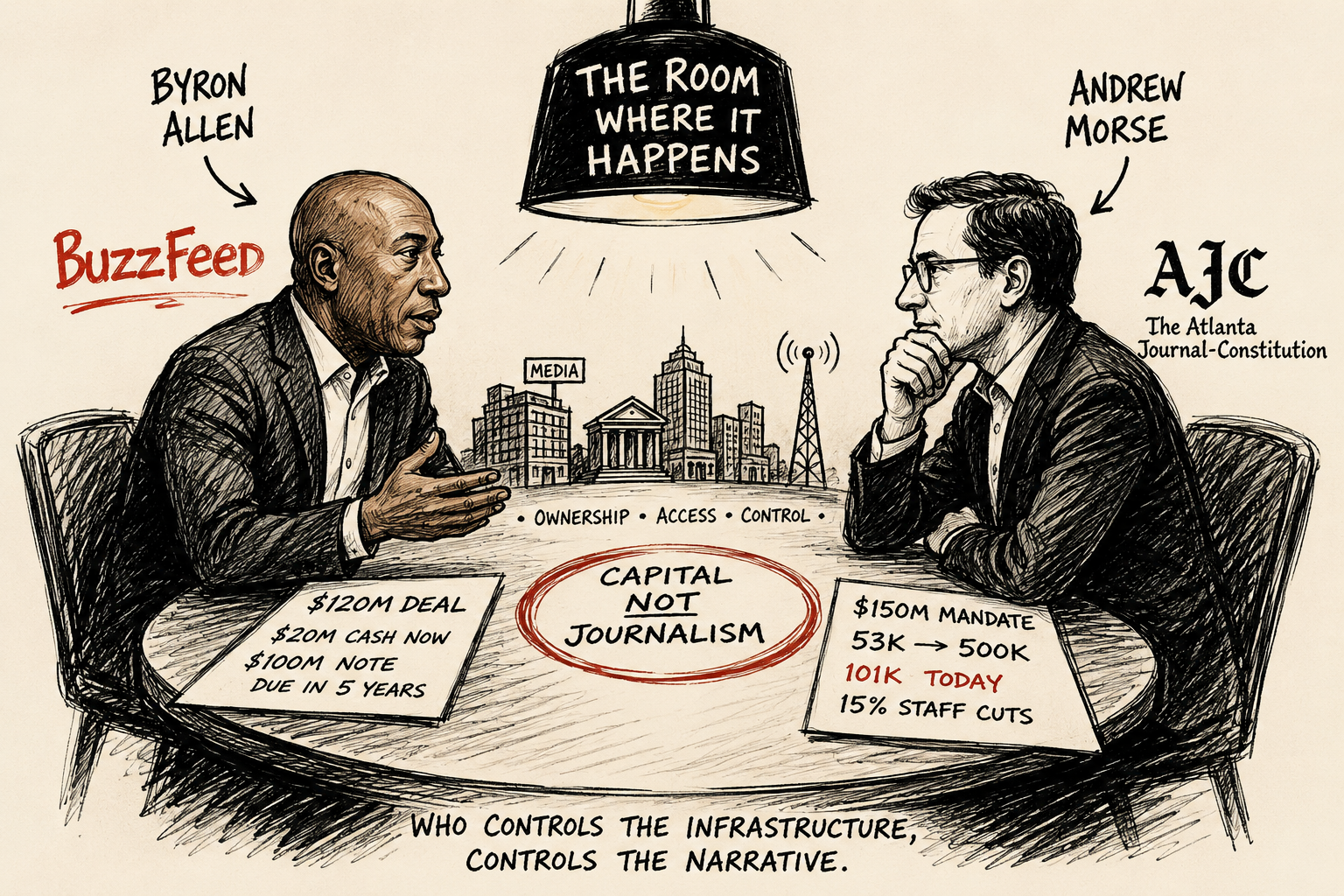
Two media stories landed this week that belong next to each other. Byron Allen’s family office agreed to acquire a 52% majority stake in BuzzFeed for $120 million — $20 million in cash at closing and a $100 million promissory note due five years out. Allen becomes Chairman and CEO. Jonah Peretti transitions to President of BuzzFeed AI. In the same week, Andrew Morse stepped down as publisher of the Atlanta Journal-Constitution — arriving in January 2023 with a $150 million mandate to grow digital subscriptions from 53,000 to 500,000 by end of 2026, leaving with 101,000 after the paper cut 15% of its staff. His replacement is a senior advertising executive. As SSC reports in The Room Where It Happens: Byron Allen, the AJC, and Who Actually Controls American Media — survival in American media runs through capital, specifically through access to capital that doesn’t require the journalism to pay for itself immediately. The question of who owns the room is the question of whose stories get told inside it.
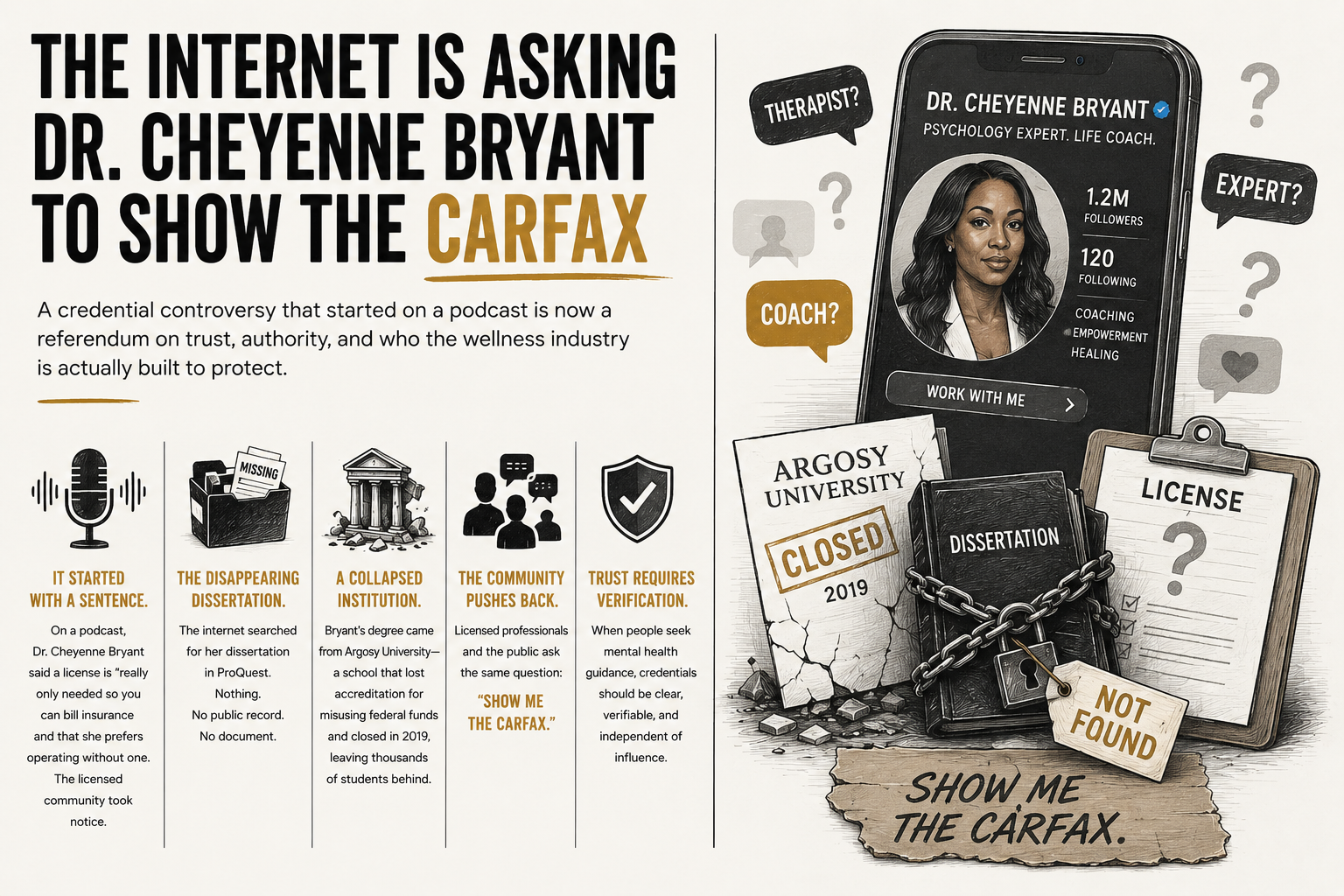
The wellness industry has spent years collapsing the distance between clinical authority and lifestyle content. This week, that collapse became impossible to ignore. As SSC reports in The Internet Is Asking Dr. Cheyenne Bryant to Show the Carfax — Bryant, who built a substantial public platform under the title “Dr. Cheyenne Bryant,” appeared on The Joe Budden Podcast and said a license is “really only needed so you can bill insurance” and that she prefers operating without one because she is “not bound by ethics boards and regulations.” The licensed mental health community responded immediately. When the questions got specific enough, Bryant appeared on The Breakfast Club to explain that she received her doctorate from Argosy University — an institution that collapsed under federal scrutiny in 2019 after the Department of Education found it had misused student aid funds, leaving thousands of students, many of them Black and brown graduate students, without verified pathways to complete their degrees. Bryant’s explanation that records were lost raised a question the internet went looking to answer: a doctoral dissertation is a public document, filed independently with ProQuest regardless of what happens to the institution. People searched. They found nothing. Licensed therapists and clinical psychologists began calling in to The Breakfast Club and posting responses in real time — and the phrase that kept circulating captured the community’s position with precision: show me the Carfax. The stakes here extend beyond one person’s credentials. Black communities have historically faced real barriers to licensed mental health care. The figures who filled that gap were trusted with something serious. When that trust cannot be verified, the damage does not stay contained to one reputation. It spreads into the credibility of every Black wellness professional who did the work, logged the hours, and earned the license.

Iceman dropped today — and then so did Habibti and Maid Of Honour. Drake’s ninth, tenth, and eleventh studio albums arrived at midnight in a triple release that sent the fanfare into a frenzy, his first full-length solo projects since 2023 and his first since the public fallout with Kendrick Lamar that reshaped how the culture talks about him. The reception is already saying more than the tracklist. What We’re Watching: Iceman and the Reception That Will Define More Than an Album — SSC has been tracking this moment since before the campaign began, from the ice block stunt in downtown Toronto to the four episodic livestreams that made the waiting itself into content. The Wall Street Journal called it a referendum on rap’s commercial cold streak. We’re calling it something bigger: a test of whether the cultural infrastructure Drake built his dominance on still works in his favor — or whether the same algorithm-driven ecosystem that amplified his loss is now the only court his comeback gets tried in. The first 72 hours will tell us everything.

There is a particular cruelty in raising the price of communication during a crisis. As SSC’s Brandon Crenshaw reports in Cuba Raised Internet Prices During a Blackout. Then the People Started Talking. — Cuba’s state-owned telecommunications monopoly ETECSA significantly increased internet prices while the island was experiencing nationwide power grid failures, prolonged blackouts, acute fuel shortages, and growing barriers to accessing food, clean water, and healthcare. The response was immediate and, by Cuban standards, extraordinary — 46 documented protestsin the weeks that followed, the highest number sparked by a single event in 2025, according to the NGO Justicia 11J. University students issued public statements and called for strikes. In Cuba, where universities are state-controlled and student political organizing is closely monitored, that is not a routine development. It is a signal that the calculation people make about the cost of speaking has shifted. The government raised the price of the internet during a humanitarian emergency. The people started talking anyway.
Most of the AI coverage this week is about who the technology is displacing. Martha Stewart met her co-founder at Easter brunch on her farm. He was her neighbor, an AI engineer describing software that notices the leaky ceiling and the expiring insurance policy before the homeowner does. She told him she’d imagined exactly that for years. The result is Hint — an AI home management platform that just closed $10 million in seed funding led by Slow Ventures, launching this summer for desktop and iOS. Stewart is 84. She is not waiting to see what the technology decides to do with her. She is building with it. Going into a weekend full of structural arguments about who absorbs disruption and who directs it, that felt worth holding onto.
The Daily Visual Signal A visual interpretation of the deeper systems, tensions, and structural shifts shaping the current moment — designed to translate complex societal changes into a single image.
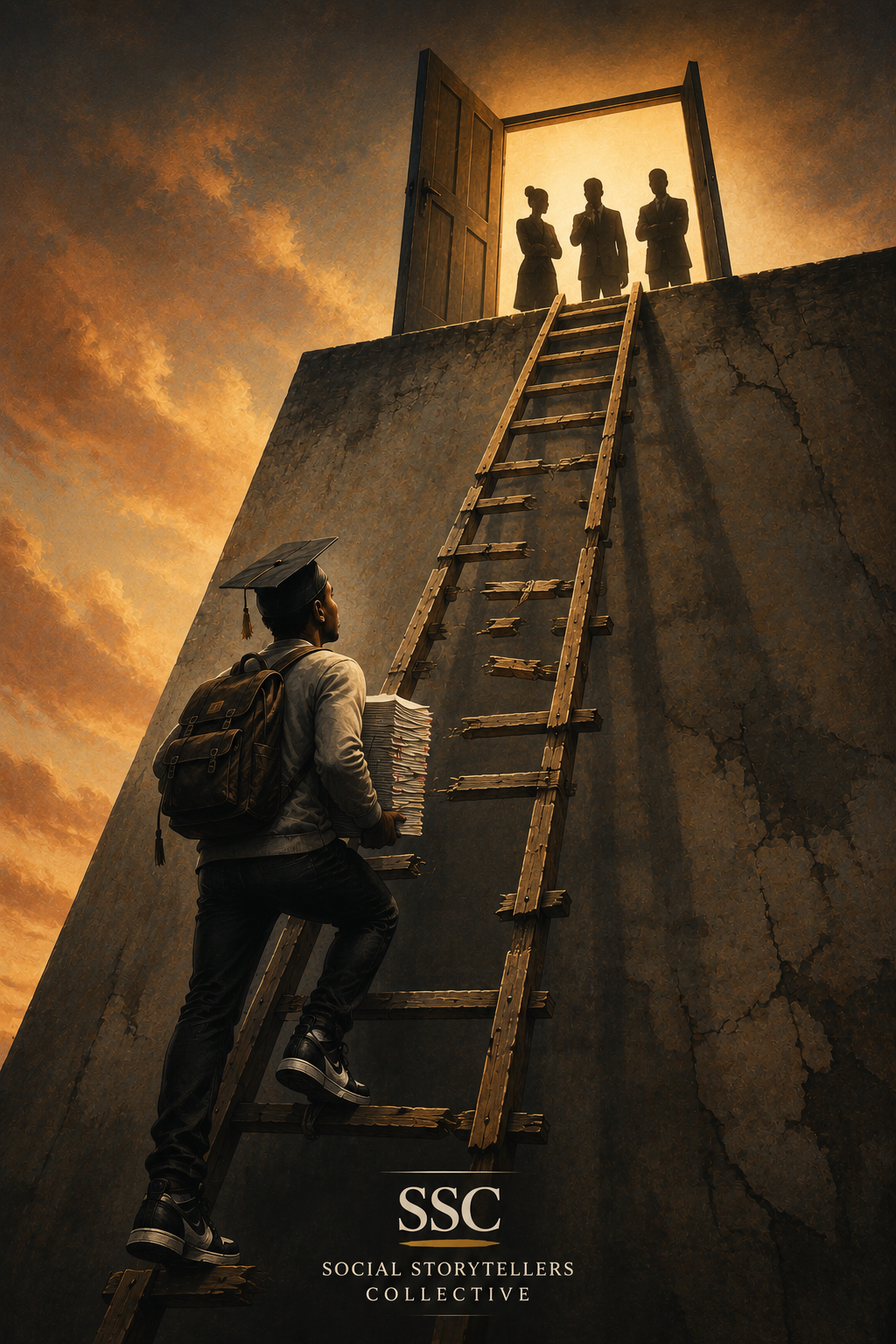
Today’s image is about the ladder. Lamont Newell climbed it with 65 applications in hand, from homelessness to Columbia, and the country celebrated him for it. What the image asks you to sit with is not whether the climb is possible — he proved it is. It is about how long the ladder keeps getting, how many rungs are missing for the people who need them most, and who is standing at the top deciding whether it stays in place at all. Every story in tonight’s note lives somewhere on that ladder. The workers who organized and won. The ones who negotiated alone and lost everything. The institution that pardoned corruption while a student had to apply to 65 schools just to access opportunity. The ladder is the through line. The question is who gets to stop climbing.
FEATURED STORY

As SSC’s Brandon Crenshaw reports in The GLP-1 Economy Is Becoming a Control Battle — Hims & Hers reported quarterly revenue of $608.1 million this week, a 111% increase year over year, while simultaneously posting a surprise quarterly loss that triggered a double-digit stock decline. The numbers tell a structural story more than a financial one. For two years, telehealth platforms benefited from GLP-1 supply shortages that allowed consumers to bypass traditional pharmaceutical and insurance infrastructure. That window is closing. Pharmaceutical manufacturers are restoring supply while tightening enforcement around compounding practices — and as shortages ease, the companies controlling patents, regulatory approval, and insurance negotiations are reclaiming leverage over who gets access, at what price, and through whose system.
The scale of what is at stake explains why the fight is intensifying. Analysts project the global obesity treatment market will exceed $100 billion annually within the next decade — making GLP-1 medications not just a pharmaceutical category but an economic variable touching insurance, food consumption, fitness, workplace health costs, and hospitality behavior. Restaurants, snack brands, and alcohol companies are already modeling how widespread appetite suppression reshapes consumer spending. What began as a medical treatment is becoming a control battle over one of the fastest-growing health economies in the world. The question is not whether GLP-1 changes everything. It is who gets to decide the terms.
This week’s note opened with Lamont Newell climbing a ladder with 65 applications in hand. It ends with another image worth holding onto. On May 8, at Reynolds Coliseum in Raleigh, 176 bachelor’s and 26 master’s degree recipients from NC State University’s Wilson College of Textiles walked into their graduation expecting a commencement speech. What they got instead was Anil Kochhar — the ceremony’s keynote speaker — stepping to the podium and announcing that he and his wife Marilyn were covering every final-year student loan taken out by the graduating class during the 2025-2026 academic year. The room erupted. Kochhar’s motivation was personal. His father, Prakash Chand Kochhar, arrived at NC State from Punjab, India in 1946 with nothing but ambition and found a school that said welcome. “My father could not have imagined this moment,” Kochhar told the audience. “Not just me standing here, but all of you sitting here.” The average American student borrower carries more than $39,000 in debt. The federal court just ended the SAVE repayment plan that had reduced monthly bills for millions of low-income borrowers. Against that backdrop, one man walked into a graduation and decided the ladder should have one less rung missing. That’s the note we’re ending on tonight.
Today’s coverage is not happening in separate lanes. It is the same story arriving from different directions. A student who had to outperform every reasonable expectation just to access what the system promises everyone. Workers who learned that individual leverage in a mass restructuring is almost no leverage at all. A government quietly dismantling the infrastructure designed to hold it accountable. A music publication that stopped observing culture and started participating in it. And an 84-year-old who looked at a week full of displacement and decided to build something instead.
The thread running through all of it is consistent. Systems reorganize around their own continuity. The distribution of consequences follows existing lines of access and power. And the people expected to absorb the most disruption are almost never the people designing the systems producing it.
We will be back tomorrow with more.
— Social Storytellers Collective
All of today’s coverage lives at socialstorytellers.substack.com. The full archive, beat navigation, and every linked piece are best experienced on a computer. If you have been reading and have not yet subscribed, we would be glad to have you with us.