
Part of The Access Shift — an ongoing series examining how access is being quietly reshaped across American life.
I covered what this story feels like from inside the braiding chair — the personal calculus, the community knowledge, the exhaustion of navigating a market that has always been willing to take Black women’s money and none of the responsibility for what that money buys. This brief covers what the science now confirms and what the regulatory record shows about why it has taken this long for anyone in a position of authority to respond.
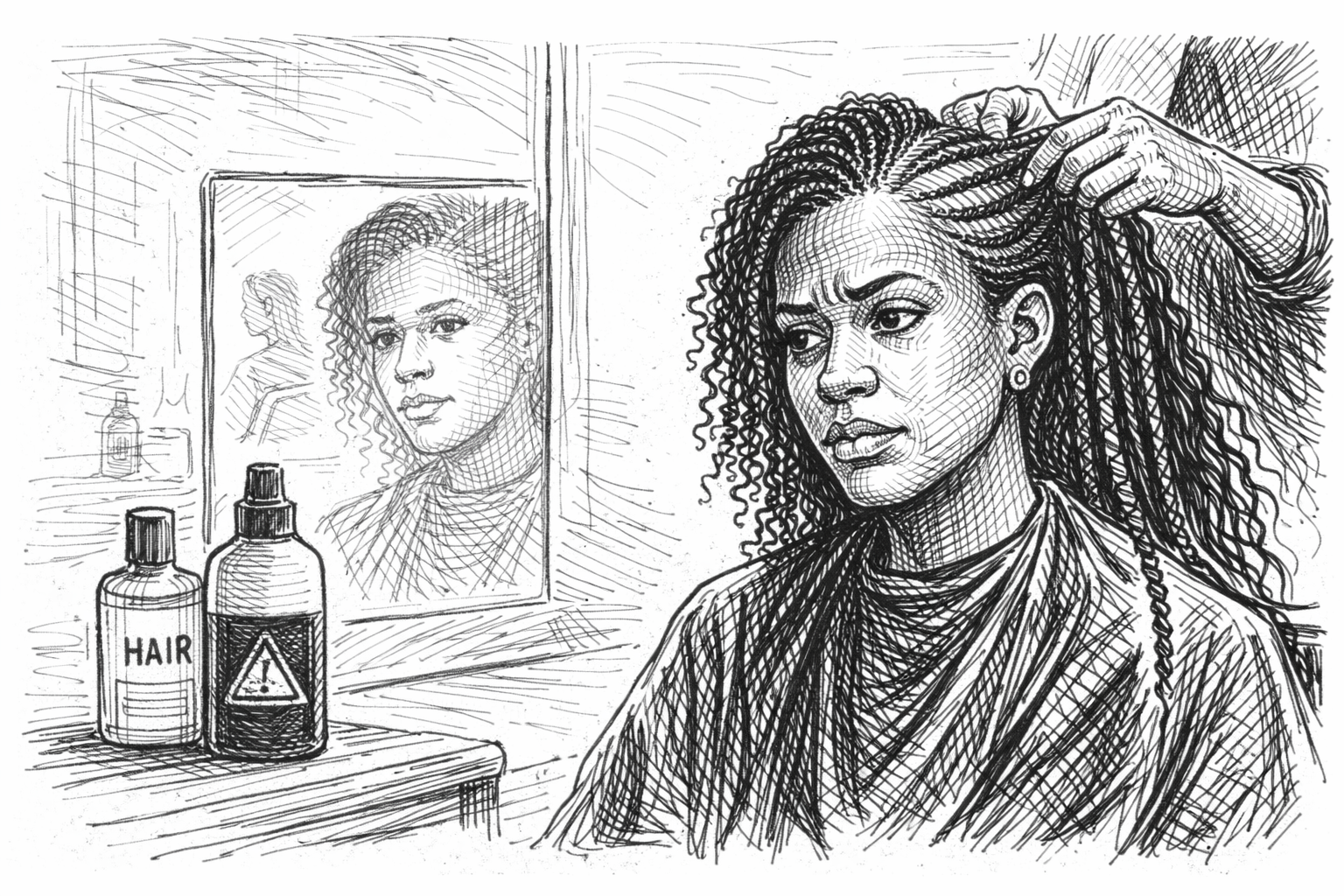
Two studies published in early 2026 have produced the most comprehensive chemical analysis of hair extensions to date. Researchers at the Silent Spring Institute analyzed 43 hair extension products and identified 169 distinct chemicals — including flame retardants, phthalates, pesticides, and organotins linked to cancer, hormone disruption, developmental harm, and immune system effects. All but two of the 43 samples contained known hazardous chemicals. A separate Consumer Reports investigation found lead in 29 brands of extensions currently on shelves. Neither finding required sophisticated laboratory access to confirm. Both findings required someone to decide the question was worth asking — something the federal regulatory apparatus had not prioritized in the decades the industry grew to $14 billion.
The data behind that industry’s health burden has been building for years. Black women who regularly use permanent hair dyes face a 60% increased risk of breast cancer and a 44% higher risk of uterine fibroids. Those who regularly straighten their hair are 30% more likely to develop breast cancer and twice as likely to develop uterine cancer. Extensions were widely understood as the safer alternative to chemical relaxers — the product Black women could trust because it did not involve direct chemical application to the scalp. What the 2026 research confirms is that extensions introduce their own chemical burden, often more comprehensive than previously documented, and that the scalp exposure is ongoing rather than episodic.
The regulatory gap is not accidental and it did not begin with the current administration. The European Union has banned or restricted more than 2,400 chemicals from cosmetics. In the same period, the FDA added only five chemicals to its banned or restricted list. The Biden-era FDA had moved toward a formaldehyde ban in hair products — a proposal supported by years of scientific evidence and more than 400 pages of FDA’s own documented consumer complaints. Since Donald Trump returned to office, the FDA missed the proposed ban deadline while the EPA moved to loosen restrictions on the same carcinogen. The Safer Beauty Bill Package — federal legislation that would direct the FDA to regulate synthetic braids and extensions for the first time — was reintroduced in Congress in 2025. It has not advanced. New York has introduced legislation requiring full ingredient disclosure for extensions and wigs. New Jersey is considering a bill to ban harmful chemicals from synthetic hair outright. The federal government has not moved.
What remains is a market operating without safety standards, a consumer base absorbing documented health risks without informed consent, and a regulatory system that has found, across multiple administrations, that this particular gap is not urgent enough to close. In SSC’s The Industry Built on Black Women’s Hair Is Poisoning Them, I elaborate— the maternal mortality crisis in Harris County and the chemical exposure crisis in hair extensions are not separate issues. They are the same pattern playing out in different rooms.
That pattern is one SSC has documented across The Access Shift series. As covered in 250 Million Americans Facing Health Insurance Premium Increases and HIV Treatment Didn’t Collapse — But What’s Holding It Up Should Concern You, the communities absorbing the most risk are consistently the communities with the least regulatory protection and the fewest resources to absorb the consequences when that protection fails. The hair extension industry built its market on Black women’s patronage. The regulatory system that was supposed to set the floor for that market’s safety standards has, consistently and across decades, decided that floor could wait.
Why This Matters
Hair extensions remain federally unregulated, leaving Black women to navigate a market filled with untested products. The research is documented. The harm is peer-reviewed. The legislative pathway exists. What is missing is the political will to treat a $14 billion industry’s chemical burden on Black women’s bodies as a public health emergency — which is what the evidence says it is. Until regulation moves, the burden falls entirely on the consumer. In this case, that means almost exclusively on Black women.
The Access Shift
The gradual redefinition of who systems are designed to serve.
Across sectors—from public infrastructure to healthcare to everyday spaces—access is no longer assumed. As costs rise and systems face increasing pressure, services once built for broad reach are becoming more selective, more conditional, and less universal. The Access Shift explores how these changes are unfolding in real time—and what they reveal about who is included, who is left out, and how the structure of everyday life is quietly being reshaped.