
On the morning of May 6, 2026, millions of Instagram users refreshed their profiles and watched their numbers fall in real time. Not by dozens. By millions. Kylie Jenner shed over 15 million followers overnight. Cristiano Ronaldo lost nearly 18 million. BLACKPINK dropped 10 million from their official group account alone. Ariana Grande, Taylor Swift, BTS, Selena Gomez — nobody was exempt. By the time the six-hour sweep was over, users across Threads and X had already given it a name: the Great Purge of 2026.
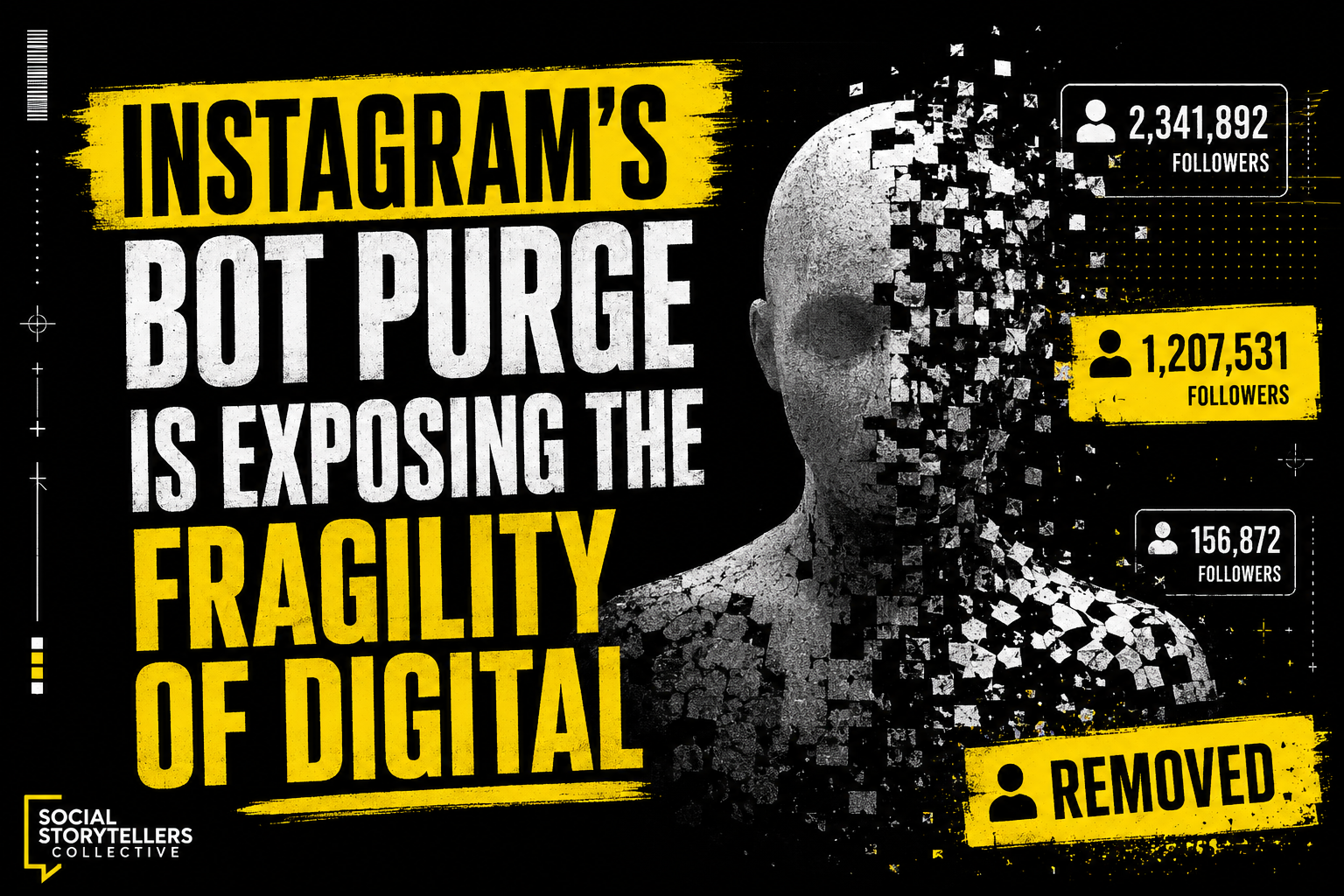
Meta described it as routine. A spokesperson issued a statement calling it part of the platform’s standard process to remove inactive accounts, clarifying that active followers remained unaffected. What Meta did not say — and what the scale of the purge made impossible to ignore — is that this wasn’t a glitch, an accident, or an overcorrection. It was a controlled demolition of a metric the platform had spent over a decade allowing people to treat as currency.
The Vanity Metric Collapse
The follower count was never a clean number. It was a negotiated fiction — one that platforms, brands, creators, and advertisers collectively agreed to treat as meaningful because the alternative required admitting that the entire influence economy was built on an audience that was, in significant part, not real.
Influencer rate cards are built on follower counts. Brand deals are negotiated on follower counts. Sponsored post pricing, partnership tiers, exclusivity agreements — all of it flows downstream from a number that, as of this week, a significant portion of the industry now has to reckon with as partially fictitious. Mid-sized creators who lost meaningful percentages of their audience are now facing uncomfortable conversations with brand partners. Accounts that relied on third-party growth services could see drops of 30 to 60 percent of their total follower base in a single purge cycle. Even creators who never purchased followers got hit — bot accounts routinely follow trending creators automatically to appear more legitimate, meaning organic accounts absorbed collateral damage from inauthentic networks they never opted into.
The metric that actually matters — engagement rate — just became a lot more transparent. A smaller audience that actually interacts with content is worth more to advertisers than a massive dormant one. Instagram’s 2026 algorithm is explicitly structured around that logic. But the transition period is going to be uncomfortable for anyone whose pitch deck was built around a number that no longer exists.
The Platform Power Story
Strip away the routine process framing and the strategic logic becomes clear. Advertisers pay based on real reach. Regulatory pressure around social media authenticity has been mounting across multiple markets. And Instagram’s long-term relevance in the creator economy depends on whether brands trust that the audiences they’re paying to access actually exist.
The purge is Meta making a calculated business decision dressed as platform hygiene. By clearing bot and inactive accounts, Instagram improves the signal quality of its advertising product and positions itself favorably ahead of continued regulatory scrutiny around inauthentic behavior. The creators and celebrities absorbing the public embarrassment of visible follower drops are, functionally, paying the reputational cost of a problem the platform allowed to develop for over a decade.
What the Great Purge of 2026 actually reveals is something more fundamental than fake followers or advertiser metrics. It reveals who controls the terms of visibility — and how quickly those terms can change. Overnight, without advance notice, Instagram restructured the public-facing credibility of hundreds of thousands of accounts. Careers built on follower count thresholds woke up on the wrong side of a number they didn’t control and couldn’t appeal.
That’s not a moderation story. It’s a power story.
What the Business Story Is Actually Saying
The brand deal economy is entering a reckoning it has been avoiding for years. For every dollar spent on influencer marketing premised on inflated follower counts, there was a corresponding gap between what brands thought they were buying and what they were actually getting. The purge has now forced that gap into the open — and the industry’s response will reveal whether it is capable of building something more durable on the other side.
The creators who will emerge from this strongest are not the ones with the largest numbers. They are the ones who built genuine communities — where the comments are real, the shares are intentional, and the audience shows up because it actually wants to. That was always the point. It just took a six-hour AI sweep to make it impossible to pretend otherwise.
Meta’s Threads saw engagement surge during the purge as users flooded the platform to compare screenshots and vent in real time. In the middle of Instagram’s most chaotic morning in years, its sister app quietly had one of its best days. That detail, more than any of the celebrity follower numbers, is the one worth sitting with.
The follower count was always a vanity metric. Instagram just forced everyone to reckon with that — whether they were ready to or not.