
I have been doing this work long enough to know that outrage without analysis is just noise. I have written about systems, structures, and the mechanisms through which power operates at distance from the people it harms. I have tried, deliberately and consistently, to stay in the analytical register — to name what is happening without performing a reaction to it. That discipline still matters to me.
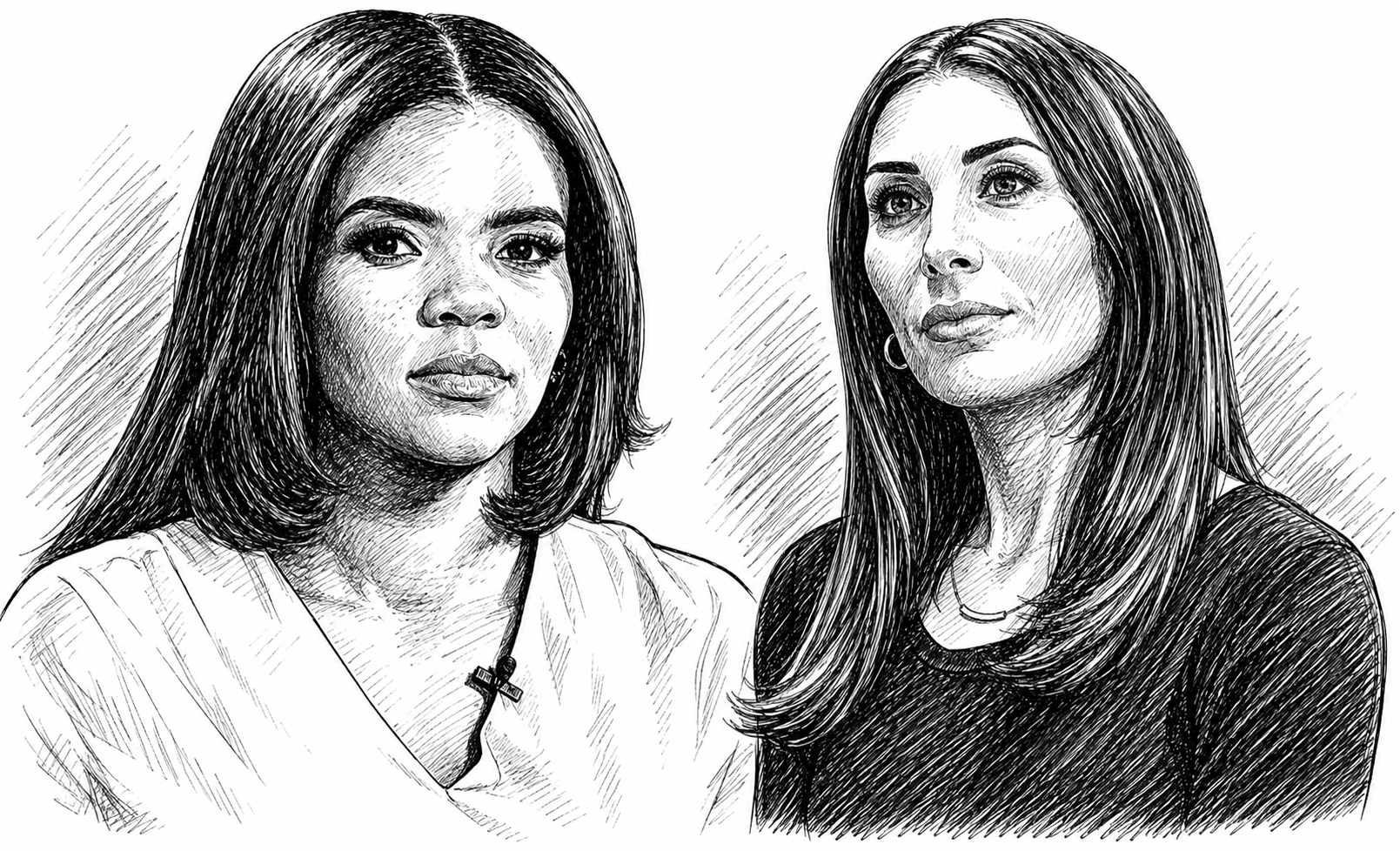
But I want to be honest with you about something. When I read Laura Loomer’s April 22 post on X — in which she called Candace Owens a “nappy headed Black bitch” and a “resentful, ghetto, Black bitch” in a public thread that has remained visible on the platform, been screenshot and reshared across communities, and generated hundreds of thousands of impressions — I did not feel analytical. I felt something older and more visceral than that. I felt the specific exhaustion that comes from watching a phrase with that much historical weight get deployed in public, in 2026, by a woman with a White House pass, and watching the world mostly shrug.
That exhaustion is the story I want to tell today. Not just what Loomer said. But what it means that she could say it and face no structural consequence whatsoever.
Respectability politics — the idea that Black people could earn protection from racial hostility through comportment, achievement, and adherence to a shared civic standard — has always been a conditional bargain. Its logic was never that racism would end. It was that conformity to dominant norms would provide some measure of insulation. You dressed a certain way, spoke a certain way, achieved a certain way, and the expectation was that these choices would create a buffer between you and the worst of what the culture was willing to do to you in public.
That bargain was always flawed, always contested, and always more available to some Black people than others. But it operated within a system that had enforced floors — floors maintained by institutional gatekeepers who could impose consequences on public figures whose behavior crossed certain lines. Advertisers pulled support. Platforms enforced bans. Employers terminated contracts. Networks refused bookings. The consequences were inconsistent and racially asymmetric, but they existed. They created a shared understanding that certain things, said in certain ways, in public spaces, would cost you something.
Laura Loomer is the most complete case study available of what happens when every one of those mechanisms fails simultaneously — and what that failure produces in the broader culture.
She has been banned from Facebook, Instagram, Twitter, Uber, Lyft, Venmo, and multiple other platforms. She was fired from Project Veritas, left Rebel Media, and was rejected for a White House job because Trump’s own aides feared that hiring her would be too damaging to the administration. She has described herself publicly as “pro-white nationalism” and a “proud Islamophobe.” She has been denied jobs, credentials, and institutional standing repeatedly. And then — she kept going. Her income increased. Her access expanded. She gained a direct line to the president that has resulted in the firing of NSC officials she deemed insufficiently loyal.
Every consequence that was supposed to function as a floor did not hold. And here is what the culture absorbed from that failure: if nothing stops her, nothing is stopping anything. The floor is not structural. It is optional. And once enough people understand that it is optional, the behavior that the floor was supposed to contain begins to spread — not just among provocateurs trying to build an audience, but among ordinary people who have watched the consequences not come and drawn the obvious conclusion.
Open X on any given day and look at what is being said in reply threads to Black public figures, Black journalists, Black politicians, Black athletes. The language is not coded anymore. The slurs are direct. The dehumanization is explicit. The accounts posting them are not anonymous in many cases — they are real names, real profile pictures, real people who have calculated, correctly, that the cost of saying what they are saying is approximately zero. Loomer did not just call Candace Owens a “nappy headed Black b—.” She announced that she was “happy to wrestle in the mud” and that “there’s really honestly nothing that this woman can do to me. There’s nothing that Candace Owens can say about me that’s going to harm me.” That is not a personality statement. It is a structural description. She has tested the system and found it empty.
I want to be precise about something here because I think it matters. This is not primarily a story about Candace Owens. Owens has made political choices I disagree with sharply, and the irony of her being targeted with anti-Black language by a woman whose political project she spent years enabling is not lost on me. But that irony does not reduce the harm of what was said. A racial slur directed at a Black woman is a racial slur directed at a Black woman. The political alignment of the target does not change what the language does, what history it carries, or what it signals to the broader culture about who is considered available for that kind of attack.
The week she has been navigating makes that context even sharper. As SSC documented in Conflict as Currency: How Trump’s Attack on Candace Owens Reveals the Attention Economy’s Racial Logic, Trump spent fifteen days escalating his own public attacks on Owens — three Truth Social posts, each more visually and racially specific than the last, culminating in a doctored magazine cover designed to make her look criminal and sexually exploitative. Loomer’s post arrived in the middle of that same fifteen-day window. Two public figures in Trump’s orbit, using two different registers of anti-Black language, targeting the same woman simultaneously. The coordination may not have been intentional. The convergence is not coincidental.
And that is the signal I want SSC readers to understand clearly. Loomer posted “God hates you. He really does. You are a demonic and evil person” in the same thread. The racial slurs and the spiritual condemnation arrived together, publicly, on a platform that the current administration has positioned as the primary venue for free political expression. No ban came. No suspension came. No consequence from the White House, whose occupant Loomer speaks with regularly, came. The court that dismissed Loomer’s defamation suit against Bill Maher this week noted that her income increased after the controversy and that she continues to receive White House invitations. A comedian joking about her relationship with Trump caused her no measurable harm. Calling a Black woman a “nappy headed b—” caused her no measurable harm either. The asymmetry is the argument.
What Loomer has demonstrated — and what the culture is now metabolizing — is that respectability politics’ enforcement mechanism is gone. The floor was not a law. It was a social agreement maintained by institutional actors who have either lost the will or the power to enforce it. Platforms have been restructured around a theory of speech that treats consequence as censorship. Political institutions have been restructured around loyalty rather than conduct. The media ecosystem has been fragmented to the point where being banned from one venue is a marketing opportunity for the next. And the attention economy rewards intensity, not decency — which means that every escalation generates more reach, more followers, more revenue, more access.
I do not say any of this to suggest that respectability politics was ever a just or sufficient framework for Black people navigating American public life. It was not. It placed the burden of managing white discomfort on Black bodies, demanded performance in exchange for partial protection, and consistently failed the people most vulnerable to racial violence regardless of how they dressed, spoke, or achieved. Its collapse does not represent a loss of something worth preserving wholesale.
But what replaced it is not freedom. It is a system in which the people with the least institutional protection — which is disproportionately Black people, and disproportionately Black women — absorb the most exposure from the disappearance of the floor, while the people who dismantled it experience it as liberation. Loomer gets a Rumble show and a White House pass. The rest of us get a timeline full of slurs and the knowledge that the people saying them have done the math and found no reason to stop.
I am tired of doing that math with them. And I think you should know that.