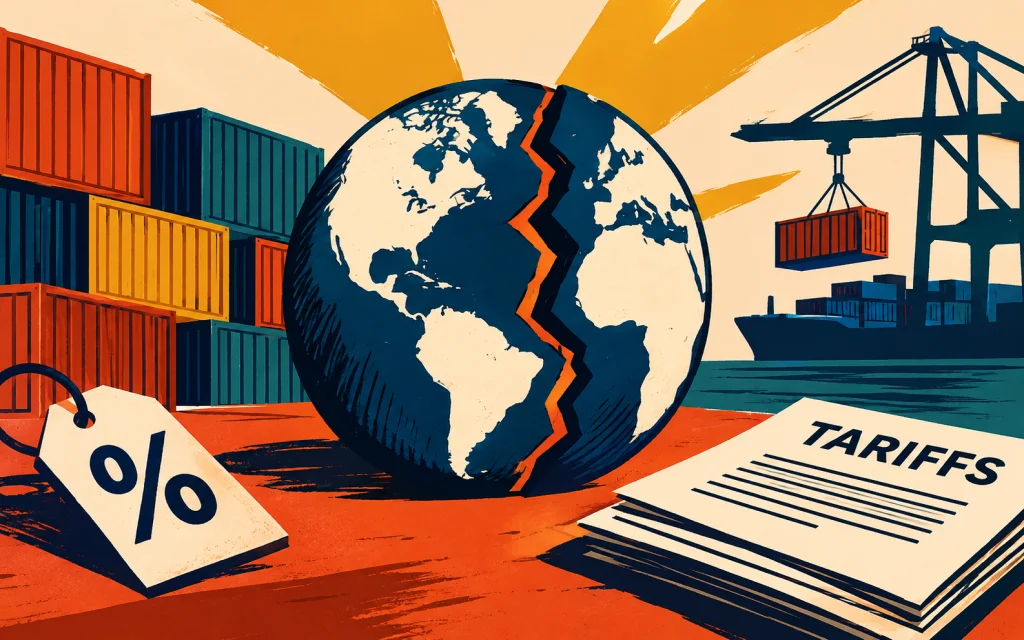
Import duties were intended to strengthen American manufacturing. For companies dependent on overseas components, the added costs are colliding with longstanding pressures on factory employment.
BY SOCIAL STORYTELLERS COLLECTIVE NEWS DESK
OCTOBER 13, 2026
At a Michigan clockmaker, the debate over tariffs is no longer an abstract argument about trade deficits. It is a closed factory. Howard Miller, a century-old company in Zeeland, shut down manufacturing, sold its inventory and brand and laid off nearly 200 employees, according to Associated Press reporting published October 11. The company depended on imported parts even while assembling products in the United States. Its experience captures a tension inside American trade policy: an import tax intended to encourage domestic production can also raise the costs of businesses that manufacture domestically. Whether those businesses can adapt depends on their supply chains, margins and the availability of substitutes.
The cost of making things here
Howard Miller did not enter the tariff period without challenges. Consumer demand for traditional grandfather and mantel clocks had weakened, and the company had diversified into furniture and related products. Those goods also relied on imported materials. The closure therefore cannot responsibly be attributed to a single policy decision. But AP’s interviews with former employees and other manufacturers describe how import costs intensified an already difficult business environment. A factory may be located in Michigan while its glass, components or specialized materials cross borders before reaching the assembly line. A tariff on those inputs can increase the price of making the finished product at home.
The pattern extends beyond one clockmaker. AP reported layoffs at businesses including Winnebago Industries and Vornado Air as manufacturers navigated higher imported-input costs and uncertain demand. These are company-specific examples, not proof that tariffs caused every job loss or that all manufacturing sectors are contracting. The relevant question is more precise: which industries benefit from protection against finished imported goods, and which pay more because they depend on imported parts? Those two groups can exist within the same manufacturing economy.
What the policy promises
The administration argues that tariffs encourage companies to build factories, invest in domestic capacity and ultimately hire more American workers. A White House spokesperson told AP that construction and manufacturing investment today can support employment when new facilities begin operating. That argument depends on timing. Announced investments, factories under construction and operating plants with permanent employees are different economic milestones. Workers losing paychecks this year cannot spend a promised job that may arrive after a new facility is completed.
The politics of that delay are visible in AP’s interviews with displaced factory workers ahead of the November midterm elections. Some blame the administration’s trade approach for increasing pressure on their employers, while others continue to support the broader goals of protecting American industry. The AP-NORC polling cited in the report found that roughly three in ten adults approved of the administration’s handling of trade negotiations in September, compared with about four in ten in March. Those measurements describe public opinion, not a direct causal estimate of tariff-related job losses.
The measurement that counts
Manufacturing policy should be evaluated across several measures: net factory employment, investment that becomes operational capacity, domestic sourcing, productivity and the prices paid by businesses and consumers. A rise in factory construction is relevant, but so is a closure caused in part by higher input costs. Likewise, a struggling manufacturer may have been vulnerable before tariffs changed. Separating those forces requires more than a headline about one company, however compelling the workers’ accounts may be.
For communities built around industrial employers, the distinction between future investment and present employment is immediate. A factory closure affects suppliers, local spending, household plans and the ability of experienced workers to find comparable positions nearby. The promise of bringing production back to America will ultimately be judged not just by where companies announce new plants, but by whether people can continue making a living in the factories already here.