
Part of Culture in Motion — an ongoing series examining who defines culture, how race is interpreted, and how both are reshaped over time.
Part of The Access Shift — an ongoing series examining how access is being quietly reshaped across American life. New stories every Wednesday at 12:00pm CDT.
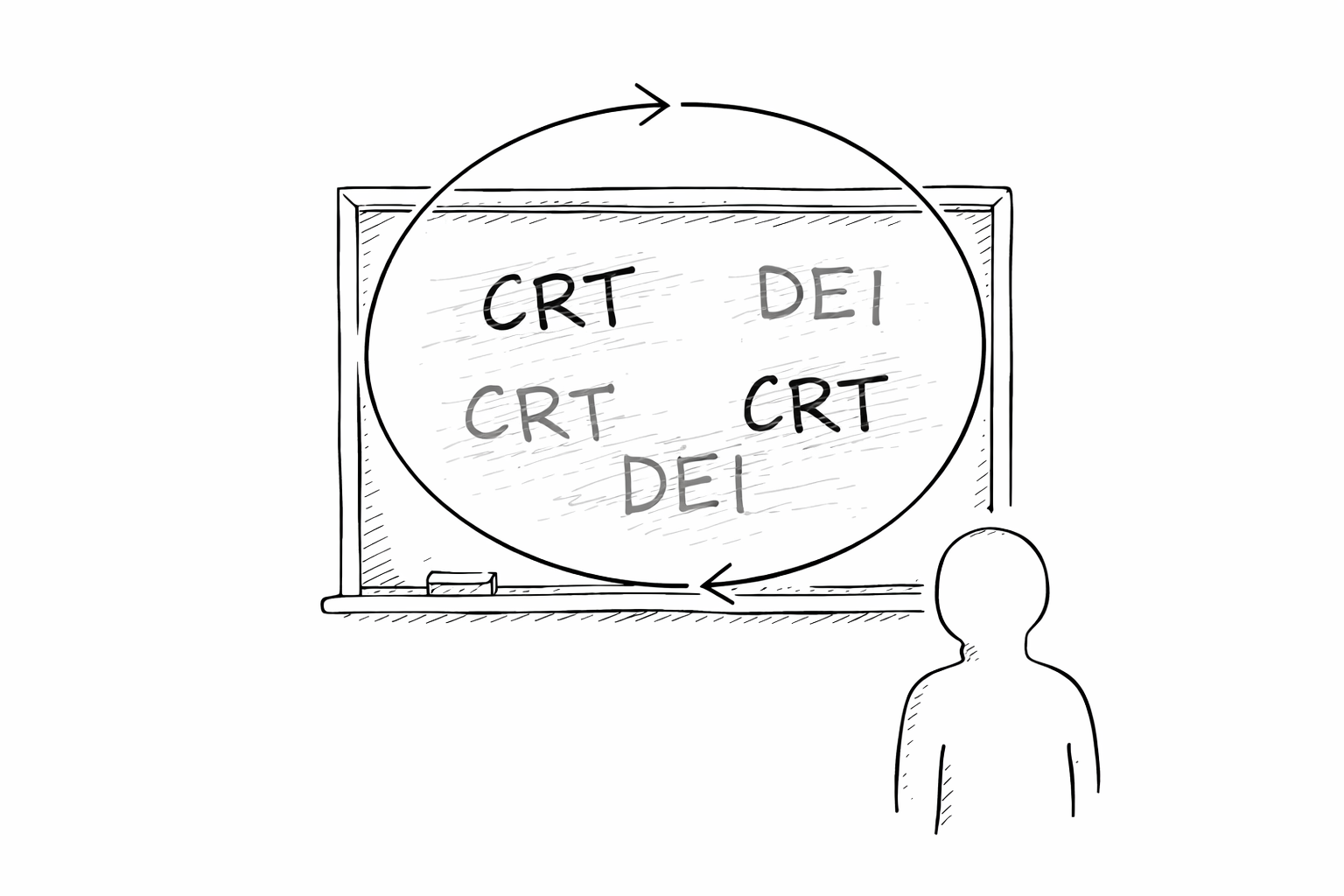
A few years ago, “CRT” became a flashpoint in national conversations about education. Today, that focus has shifted to “DEI.” The language has changed. The structure of the conversation has not.
Both moments carry the hallmarks of a moral panic — periods in which a concept, often loosely defined, is framed as a widespread threat demanding immediate response. Critical Race Theory was never widely taught in K-12 classrooms. DEI means different things in different contexts. Neither fact slowed the momentum of the debate. The power of a moral panic is not in the accuracy of its premise — it is in the urgency it generates and the responses that urgency produces.
This is not a new pattern. Moral panics in American public education have historically clustered around moments of perceived social change — particularly those involving race, integration, and who the curriculum is understood to serve. The framing follows a recognizable arc: a shift occurs, it gets amplified, and the response consolidates around the idea that something foundational is under threat. What follows moves faster than the institutions it targets can respond to, producing legislation and structural change that outlasts the panic itself.
That last part is what tends to get lost in the noise. The debate eventually cools. The language shifts. But the policy consequences remain — in what gets taught, what gets funded, who gets hired, and which students navigate a system that has quietly changed around them. As Federal Education Shift Moves From Policy Debate to Structural Reality documented, the dismantling of federal education infrastructure is already underway — not through dramatic announcement, but through the quiet redistribution of functions and the fragmentation of a system millions of students and families depend on. The panic generates the political will. The restructuring does the lasting work.
What makes this cycle particularly consequential for Black and Brown students is that the communities most affected by the underlying questions — about curriculum, representation, and who the system was built to serve — are rarely centered in the debate itself. The panic is about them, in the sense that race is almost always the organizing anxiety. But the terms are set elsewhere, the legislation moves quickly, and the students left navigating a restructured system are rarely the ones whose voices shaped it. The loudest debates happen at the policy level. The consequences accumulate quietly in the daily experience of the people least positioned to absorb them.
The language evolves. The structure remains. And somewhere between the last panic and the next one, the system changes in ways that are rarely fully reversed — while the debate has already moved on to the next term.
Why This Matters
Each new focal point in this cycle arrives with urgency and departs without resolution. The terms change; the underlying tension — around identity, power, and who controls the story institutions tell — does not. Understanding the pattern doesn’t defuse it, but it does change which questions are worth asking.